How to Implement Desk Booking Without Friction

A desk can be technically available and still be unusable. A missing monitor cable, an unsuitable chair setting, yesterday’s paperwork or no room for a laptop bag can turn a booked workspace into a daily compromise. Learning how to implement desk booking means designing the full experience around the reservation, not simply adding a calendar to the office.
For workplace teams, the aim is not maximum desk utilisation at any cost. It is a flexible workplace that feels calm, fair and ready to use. The strongest desk-booking programmes combine clear rules, reliable workspace standards and portable personal tools that help people settle in quickly.
How to implement desk booking with a clear brief
Start by defining the problem desk booking is expected to solve. It may be uneven attendance across the week, a move towards activity-based working, pressure on office space, or a need to give teams more certainty before travelling in. These are related, but they require different decisions.
A workplace with high Tuesday-to-Thursday attendance may need booking rules that distribute demand. A project-based organisation may need bookable team neighbourhoods. An office used for concentrated work, meetings and collaboration needs a booking system that reflects those different modes rather than treating every desk as interchangeable.
Before choosing settings or software, establish three practical answers: who needs to book, what they are booking, and how far ahead they can reserve it. Keep the first version simple. Employees should be able to understand whether they need a desk, a quiet area, a collaboration table or a specialist setup without reading a policy document.
It also helps to set a service standard for every bookable desk. Decide what a person should find on arrival: a clean surface, working power, suitable seating, clear access to shared equipment and enough space to work comfortably. If desks vary significantly, label the differences honestly. A standard desk, a dual-screen desk and an accessible workstation should not appear as identical choices in the booking interface.
Measure demand before setting desk ratios
Desk-sharing ratios are often chosen too early. A ratio that looks efficient on a floor plan can create unnecessary friction when most people prefer the same days, teams need to sit together, or certain work requires fixed equipment.
Use attendance patterns, meeting-room use and team feedback to understand real demand. Look beyond average occupancy. The busiest two-hour period matters more than the average day, as do patterns by department, floor and type of work. A workplace that is 55 per cent occupied on paper may still feel full if everyone arrives at 10am and needs a focused desk near their team.
Run a short observation period if data is limited. Count occupied desks at several points during the day, note which settings are consistently avoided and ask employees what prevents them from using a space. The answer may be simple: poor acoustic conditions, too few screens, a lack of lockers, or desks that do not support left-handed users or accessible needs.
Set the initial desk ratio conservatively, then adjust from evidence. It is easier to release more capacity after a successful pilot than to recover trust after employees repeatedly cannot find a suitable workspace.
Design bookable zones, not a sea of identical desks
A useful desk-booking system mirrors the way people actually work. Instead of presenting one long list of desk numbers, create understandable zones with a purpose. This improves choice and makes office planning more intentional.
Consider a mix of:
- quiet zones for focused individual work
- team neighbourhoods for colleagues working together
- touchdown desks for short visits between meetings
- ergonomic or specialist desks with defined equipment
- accessible workstations and spaces with specific requirements
Zone design also prevents a common mistake: using desk booking to solve meeting behaviour. If people regularly take calls at individual desks because private rooms are unavailable, adding more bookable desks will not improve the experience. The workspace mix needs attention first.
Create rules people can remember
The best rules are short enough to use on a busy morning. Excessive booking windows, complicated approvals and obscure exceptions make employees work around the system rather than with it.
Set a reasonable advance booking period based on how predictable attendance is. Many organisations benefit from allowing bookings far enough ahead to plan a commute, while reserving some capacity for spontaneous visits. Limit the number of future bookings one person can hold if demand is high, and define when an unused desk returns to the pool.
No-show rules require care. Automatic release after a set time can improve availability, but only if check-in is straightforward and employees understand why it exists. A fair approach accounts for delayed trains, external visitors and meetings that overrun. The objective is not to police attendance. It is to ensure booked space is genuinely available to colleagues.
Clean-desk expectations deserve equal prominence. A booking system only works when the previous user leaves the desk ready for the next person. This means removing personal items, clearing waste, returning shared equipment and reporting faults rather than quietly moving elsewhere.
Make every desk fast to set up
Booking gives employees a place to work. It does not automatically give them a working setup. For desk sharing to feel premium rather than temporary, people need an easy way to bring their essentials and establish a consistent workstation in moments.
That means providing dependable shared infrastructure, such as power, displays where required and a clear cable arrangement. It also means recognising the personal layer: laptop, charger, notebook, stationery, headphones and the small items that otherwise spread across lockers, meeting rooms and desks.
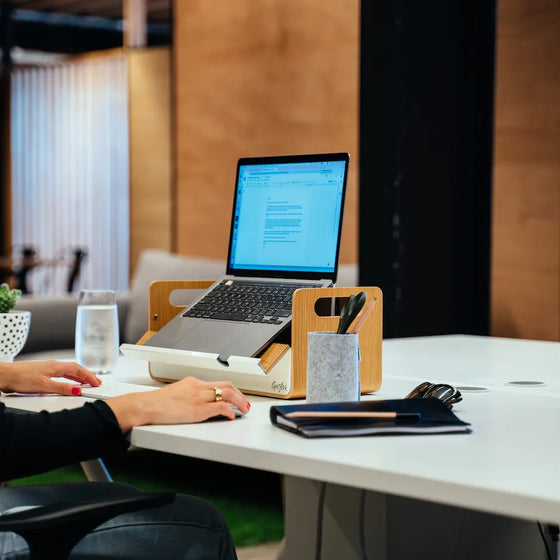
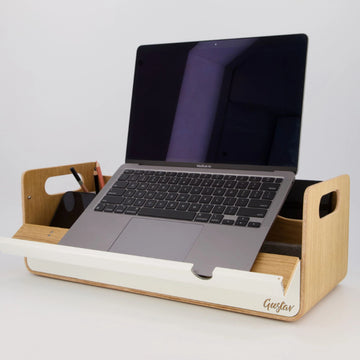
Portable organisers are particularly valuable in this transition. A desk-sharing bag can carry work essentials between a locker, a desk and a meeting room while keeping them contained. A portable laptop stand and desk organiser can create a more comfortable screen height and give frequently used items a defined place. Rather than turning each desk into a storage problem, employees arrive with a compact office of their own.
Gustav’s approach to mobile work is built around this principle: a workspace should travel well, set up quickly and still feel considered. For employers, products designed for portability can support a clean-desk policy without asking people to compromise on comfort or organisation.
Pilot the experience before scaling it
A pilot is not merely a technical test. It is a chance to see how space, behaviour and equipment perform together. Choose an area with a representative mix of teams, work styles and attendance patterns. Give the pilot enough time to include both busy and quieter days.
Brief participants in practical terms. Show them how to book, where to find different desk types, what to do if a desk is unavailable and how to report a problem. On-site signage should reinforce this information without cluttering the environment. A concise desk label and a clear zone name are usually more effective than a wall of instructions.
During the pilot, watch for small failures that create a disproportionate amount of frustration. Are people unable to locate booked desks? Do colleagues reserve desks beside friends rather than the settings they need? Are chargers, chairs or screens becoming a source of friction? Is personal storage sufficient? These observations are more useful than a single satisfaction score.
Review the data, then refine the workplace
After launch, review booking data alongside employee feedback and facilities reports. High demand for a particular zone may signal a genuine need for more of that setting. Low use may indicate that a space is poorly located, badly described or simply not useful.
Look for repeat patterns rather than reacting to one busy day. The relevant measures are booking lead time, cancellations, no-shows, zone demand, equipment faults and comments about setup quality. Speak with teams that use the office differently, including regular users, occasional visitors and those with access requirements.
Refinement should be visible. If you change a booking rule, explain the reason. If you add more focused desks or improve storage, show employees that their feedback shaped the decision. Desk booking earns acceptance when it is treated as an evolving workplace service, not a fixed administrative system.
A well-implemented programme leaves people with a simple feeling: when they arrive, there is a place for them, the desk is ready, and their workday can begin without rearranging the room. That is the standard worth designing for.