Choisir un tapis de bureau pour le travail à domicile

Un tapis de bureau pour le télétravail à domicile semble souvent un détail mineur – jusqu’au moment où votre bureau commence à paraître bruyant, encombré ou improvisé. L’ordinateur portable laisse des traces sur la surface, la souris accroche, les câbles s’emmêlent, et l’ensemble paraît moins soigné que le travail que vous y faites. Un tapis bien choisi résout plusieurs problèmes à la fois. Il délimite l’espace de travail, améliore le confort et offre une place dédiée aux outils du quotidien.
Cela prend encore plus d’importance dans les logements où une pièce remplit plusieurs fonctions. Une table à manger devient un poste de travail. Une chambre d’appoint fait office de studio. Un bureau compact doit permettre un travail concentré, des appels vidéo et de l’administration sans paraître constamment occupé. Dans ce contexte, le bon tapis de bureau n’est pas une décoration. Il fait partie intégrante de la manière dont un espace de travail devient utilisable, organisé et apaisant.
Pourquoi un tapis de bureau est important pour le télétravail
Un bureau à domicile doit être efficace sans paraître surchargé. Contrairement à un bureau traditionnel, l’installation à la maison est généralement plus visible, plus personnelle et souvent plus limitée en espace. Chaque objet doit justifier sa place.
Un tapis de bureau aide en créant une zone de travail claire. Cela semble simple, mais cela change la façon dont le bureau fonctionne. Votre clavier, souris, carnet et ordinateur portable paraissent visuellement connectés au lieu d’être dispersés. La surface en dessous est protégée des rayures, de la chaleur et de l’usure quotidienne. Même l’acoustique s’améliore légèrement, car taper et poser des objets devient plus doux et moins abrasif.
Il y a aussi un effet psychologique. Quand les limites de l’espace de travail sont visibles, il devient plus facile de passer en mode travail et, tout aussi important, d’en sortir. Pour les travailleurs hybrides et les professionnels du savoir, ce changement est crucial. Les meilleurs produits pour le télétravail ne sont pas seulement pratiques. Ils favorisent de meilleures routines.
Ce qui fait un bon tapis de bureau pour le télétravail
Le matériau est la première décision, car il influence à la fois le confort, l’apparence et la durabilité. Le feutre offre une expérience plus douce et silencieuse, et fonctionne bien dans les espaces où la chaleur et la texture comptent. Il peut rendre une installation compacte moins technique. Les textiles recyclés séduisent aussi les utilisateurs qui souhaitent des matériaux à faible impact sans compromettre la finition.
Les surfaces imitation cuir ou synthétiques créent une esthétique plus nette et plus propre, et sont plus faciles à nettoyer. Elles conviennent souvent à des installations plus formelles, notamment lorsque le bureau est visible lors des réunions vidéo ou intégré dans un espace de vie. Le compromis est que certaines peuvent paraître plus froides ou moins tactiles sur de longues heures de travail.
Ensuite, il y a la stabilité. Un tapis de bureau haut de gamme doit rester à plat, résister au roulis des bords et être suffisamment épais pour ancrer l’installation. S’il bouge à chaque fois que vous déplacez la souris ou redressez votre carnet, il ajoute de la friction au lieu de la réduire. L’objectif est de rendre l’espace de travail cohérent.
La taille est tout aussi importante. Trop petit, le tapis paraît accessoire. Trop grand, il domine le bureau ou ne laisse pas de place pour d’autres essentiels. La plupart des gens travaillent mieux avec un format assez grand pour accueillir le clavier, la souris et un peu d’espace pour écrire. Si le tapis doit aussi supporter un support pour ordinateur portable ou un organiseur, mesurez correctement avant d’acheter. Les approximations mènent souvent à des compromis.
Le design doit être fonctionnel, pas seulement esthétique
Les produits pour le télétravail sont souvent vendus uniquement sur leur esthétique. Des couleurs minimalistes, des textures douces et des images de style de vie soignées peuvent rendre presque tout désirable. Mais un tapis de bureau mérite sa place par sa performance.
Les bords doivent être nets et durables. La surface doit permettre un mouvement fluide de la souris sans être glissante. L’épaisseur doit apporter du confort sans gêner l’écriture. Si vous annotez régulièrement des documents à la main, un tapis très rembourré peut sembler raffiné mais manquer de précision.
C’est là que la rigueur du design compte. Les meilleurs produits équilibrent sobriété visuelle et utilité claire. Ils ne cherchent pas à attirer l’attention, mais améliorent l’expérience de travail de manière évidente avec le temps. Cela est particulièrement important pour les professionnels qui accordent de l’importance aux spécifications, aux matériaux et à la qualité durable des outils de travail.
Comment le bon tapis favorise l’organisation
Un tapis de bureau n’organise pas votre espace de travail tout seul, mais il crée la base pour une meilleure organisation. Il offre à vos outils principaux une zone fixe, ce qui réduit la tendance des objets à s’étaler sur le bureau. C’est utile dans n’importe quel bureau à domicile, et encore plus quand il faut ranger rapidement en fin de journée.
Pour les personnes qui alternent entre domicile et bureau, la cohérence est aussi importante. Si votre installation à la maison reflète la logique d’un bureau partagé bien conçu – zone de travail définie, encombrement limité, seuls les essentiels visibles – il devient plus facile de maintenir de bonnes habitudes partout. Le tapis agit presque comme un système visuel d’exploitation pour le bureau.
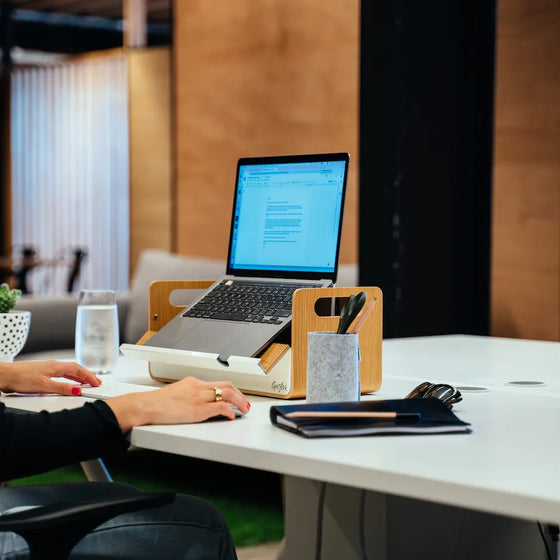
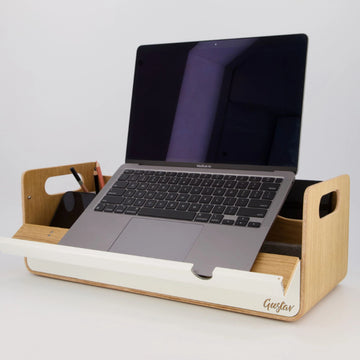
C’est une des raisons pour lesquelles les marques haut de gamme considèrent le tapis de bureau comme une partie d’un écosystème plus large plutôt qu’un simple accessoire. Associé à un support pour ordinateur portable, un organiseur portable ou une pochette tech, il contribue à rendre l’espace de travail réfléchi dès le départ. Gustav aborde cette catégorie exactement de cette manière, avec des produits conçus pour soutenir une installation de bureau complète et mobile.
Un tapis de bureau pour l’ergonomie du télétravail
L’ergonomie ne concerne pas seulement les chaises et la hauteur des écrans. Le confort de la surface influence aussi la journée de travail. Si vos poignets reposent des heures sur un bureau en stratifié dur, la fatigue s’accumule progressivement. Si votre souris ne glisse pas bien, les petits mouvements demandent plus d’effort qu’ils ne devraient. Un bon tapis de bureau adoucit les points de contact sans introduire d’instabilité.
Cela dit, il faut trouver un équilibre. Un tapis ne remplace pas une hauteur de bureau adaptée, un positionnement correct de l’écran ou les pauses actives dans la journée. C’est un élément de soutien, pas la solution ergonomique complète. Mais dans un bureau à domicile où chaque amélioration compte, il peut rendre l’installation plus confortable et plus réfléchie.
Pour les bureaux compacts, ce rôle de soutien est particulièrement précieux. Vous n’avez peut-être pas la place pour plusieurs couches d’accessoires, de repose-poignets et de tapis de souris séparés. Un tapis bien dimensionné peut répondre à plusieurs besoins à la fois tout en gardant le bureau visuellement épuré.
Durabilité et longévité font partie du choix
Dans un espace de travail haut de gamme, les matériaux ne sont pas qu’une question d’apparence. Ils déterminent comment un produit vieillit, combien de temps il reste en usage et s’il s’intègre dans un environnement pensé avec soin.
Un tapis de bureau bon marché peut sembler acceptable le premier jour et usé dès la sixième semaine. Les bords s’effilochent, les surfaces se tachent, les coins se soulèvent et l’ensemble finit par nuire au bureau plutôt que de l’embellir. Remplacer sans cesse des articles de faible qualité n’est ni efficace, ni durable, ni vraiment économique.
Une meilleure approche consiste à choisir un tapis fabriqué avec des matériaux durables et responsables, capables de supporter un usage quotidien sans perdre leur structure ni leur finition. Pour les acheteurs qui commandent en grande quantité, cela devient encore plus important. Les allocations pour le télétravail, les kits hybrides et les programmes d’équipement des employés bénéficient tous de produits qui durent, voyagent bien et conservent une apparence professionnelle dans le temps.
Ce qu’il faut vérifier avant d’acheter
Commencez par le bureau lui-même. Mesurez la surface utilisable, pas seulement les dimensions du plateau. Prenez en compte l’emplacement de la lampe, si un support d’écran occupe déjà de la place, et combien d’espace vous avez besoin pour écrire.
Pensez ensuite à votre rythme quotidien. Si la plupart de votre travail se fait sur ordinateur portable avec quelques prises de notes occasionnelles, un tapis plus fin et raffiné peut être idéal. Si vous utilisez un clavier, une souris, un carnet et des accessoires de charge toute la journée, optez pour un format plus grand avec assez de poids visuel pour tout ancrer.
Considérez aussi l’emplacement du bureau dans la maison. Dans un bureau dédié, vous privilégierez peut-être la fonction avant tout. Dans une chambre ou un espace de vie partagé, le tapis doit aussi être esthétique car il reste visible même après le travail. Les tons neutres, les matériaux tactiles et un profil épuré s’intègrent plus facilement.
Enfin, soyez honnête sur l’entretien. Si le café est souvent à portée de main et que le bureau est utilisé constamment, choisissez une surface facile à nettoyer. Les matériaux beaux doivent aussi être pratiques.
La petite amélioration qui change tout le bureau
L’intérêt d’un tapis de bureau est qu’il résout des problèmes discrets. Il protège la surface, améliore le confort, réduit le bruit visuel et donne au bureau une impression d’intention. Rien de spectaculaire, mais ensemble, cela change la performance de l’espace de travail.
Pour les professionnels qui construisent un bureau à domicile reflétant les standards d’un lieu de travail bien conçu, ces améliorations discrètes comptent. Le bon tapis ne se contente pas de se placer sous vos outils. Il donne le ton à la manière dont tout le bureau fonctionne.
Choisissez-en un qui s’adapte à l’espace, soutient votre façon de travailler et mérite sa place chaque jour. C’est généralement là que commence un meilleur travail.