9 tendances essentielles en matière de conception d'espaces de travail hybrides

Le lundi matin commençait autrefois avec un bureau familier. Aujourd’hui, il débute souvent par un choix : bureau à domicile, bureau partagé, salle de projet, espace de passage, cabine silencieuse. Ce changement explique pourquoi les tendances de conception des espaces de travail hybrides ne concernent plus seulement l’esthétique. Elles visent à aider les personnes à s’installer rapidement, à travailler confortablement et à traverser la journée avec moins de friction.
Pour les stratèges en aménagement, les architectes, les équipes de gestion des installations et les entreprises axées sur le design, le défi est clair. Un bureau hybride doit paraître efficace sans devenir impersonnel, et flexible sans sombrer dans le chaos visuel ou opérationnel. Les concepts d’espaces de travail les plus solides équilibrent désormais mobilité, ergonomie, rangement, technologie et qualité des matériaux de manière à soutenir à la fois les personnes et le lieu.
Les tendances de conception des espaces de travail hybrides évoluent du fixe au flexible
Le plus grand changement est aussi le plus fondamental. Les bureaux sont conçus moins autour d’une attribution fixe et plus autour d’une utilisation adaptable. Cela semble évident, mais cela modifie presque toutes les décisions de conception.
Un bureau fixe peut absorber le désordre personnel, une ergonomie improvisée et une gestion des câbles incohérente parce qu’une seule personne y revient chaque jour. Un bureau hybride ne le peut pas. Les environnements partagés nécessitent des surfaces plus propres, des remises en ordre plus rapides et une organisation plus intuitive. C’est pourquoi la conception s’oriente vers des agencements modulaires, un langage visuel plus léger et des outils de travail qui facilitent une installation instantanée.
Cette tendance est particulièrement visible dans les environnements de partage de bureau. Les utilisateurs ont besoin d’un espace de travail prêt en quelques secondes, pas après dix minutes à réarranger chargeurs, carnets et accessoires empruntés. Le bureau doit désormais soutenir le mouvement comme une condition normale, pas une exception.
La personnalisation devient portable
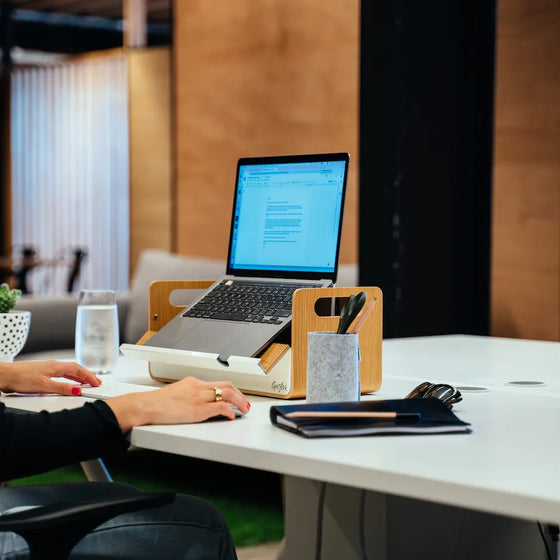
Une des tendances les plus intéressantes en matière de conception d’espaces de travail hybrides est le passage de la personnalisation permanente à une installation personnelle mobile. En pratique, cela signifie moins d’objets fixes sur le bureau et plus de systèmes portables qui accompagnent l’utilisateur.
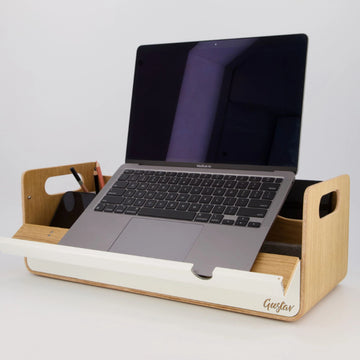
Cela importe car le travail hybride a créé une nouvelle attente. Les personnes veulent toujours un sentiment de contrôle sur leur espace de travail, mais elles n’attendent plus que ce contrôle vienne d’un bureau dédié. Il vient plutôt du fait de transporter les essentiels adaptés – support pour ordinateur portable, organiseur, pochette, tapis, clavier, souris, carnet – dans un format compact et bien pensé.
Pour les employeurs, cette approche favorise les politiques de bureau propre et une meilleure efficacité de l’espace. Pour les utilisateurs, elle crée une continuité entre les lieux. Les meilleures configurations réduisent la charge mentale liée au passage entre domicile, bureau et tiers lieux car les outils de travail essentiels restent constants.
Il y a bien sûr un compromis. La portabilité ne fonctionne que lorsque les produits sont réellement faciles à transporter et simples à déployer. Si une installation mobile paraît encombrante ou maladroite, les utilisateurs l’abandonneront. Un bon design résout cela en réduisant à la fois le bruit visuel et l’effort physique.
L’ergonomie est repensée pour le mouvement
La planification ergonomique traditionnelle supposait un poste de travail statique. Le travail hybride ne le fait pas. Cela pousse l’ergonomie vers une approche plus agile.
Au lieu de concevoir autour d’une position idéale unique, les organisations planifient de plus en plus une qualité ergonomique répétable dans plusieurs contextes. Supports pour ordinateurs portables, accessoires compacts, sièges réglables, hauteurs de table variées et zones de travail clairement délimitées contribuent à cela. L’objectif n’est pas la perfection en un seul lieu, mais un standard fiable de confort où que le travail ait lieu.
Cela est particulièrement pertinent pour le bureau partagé et le travail basé sur l’activité. Les employés peuvent passer une journée dans une zone de concentration, la suivante dans un espace de collaboration, puis travailler à domicile. Si chaque environnement impose un compromis physique différent, l’inconfort s’accumule rapidement. Si chaque environnement soutient une routine ergonomique familière, les personnes s’installent plus vite et travaillent avec moins de fatigue.
Pour les concepteurs et les équipes des installations, cela signifie penser au-delà de la simple spécification du mobilier. Les accessoires jouent désormais un rôle plus important dans la performance du lieu de travail. Un support ou un organiseur portable bien conçu peut avoir un impact considérable car il aide les utilisateurs à recréer une installation adéquate en quelques instants.
Un design visuel apaisant remplace les bureaux surchargés
Pendant un temps, la flexibilité dans la conception des espaces de travail se traduisait souvent par un excès – trop de zones, trop de couleurs, trop de signaux en concurrence pour attirer l’attention. La nouvelle orientation est plus calme et plus aboutie.
Parmi les tendances les plus pratiques, on note un mouvement vers la retenue visuelle. Des lignes plus épurées, des palettes plus douces, des matériaux naturels et un rangement mieux intégré aident les environnements partagés à paraître plus professionnels et moins temporaires. Ce n’est pas du minimalisme pour lui-même, mais une réponse à la charge cognitive.
Quand les personnes se déplacent entre différents lieux, l’espace de travail doit réduire la friction, pas l’augmenter. Des environnements calmes aident les utilisateurs à s’orienter rapidement. Ils vieillissent aussi mieux en photo et dans le temps, ce qui est important pour les marques investissant dans des identités de lieu de travail durables.
C’est là que la qualité des matériaux devient plus qu’une préférence stylistique. Des matériaux réfléchis signalent soin, durabilité et cohérence. Dans un contexte hybride, où les travailleurs n’ont pas toujours un lieu permanent, ces signaux contribuent à ce que le bureau reste perçu comme réfléchi et humain.
Le rangement évolue du mobilier au flux de travail
Dans les bureaux classiques, le rangement était surtout architectural – caissons, casiers, étagères, crédences. Dans les environnements hybrides, le rangement concerne de plus en plus le flux de travail. Que doit-on transporter, accéder, stocker temporairement et ranger en fin de journée ?
Ce changement est subtil mais important. Un casier résout une partie du problème, mais pas l’installation elle-même. Les personnes ont toujours besoin que leurs outils soient accessibles, organisés et portables pendant qu’elles travaillent. Le résultat est un intérêt croissant pour des systèmes d’organisation de bureau compacts qui font le lien entre mouvement et ordre.
Pour les planificateurs de bureaux, cela a des implications pratiques. Si chaque bureau partagé repose sur des utilisateurs qui étalent leurs affaires de manière désordonnée, le bureau paraîtra toujours en désordre. Si les travailleurs disposent d’un moyen simple de contenir leurs outils et de remettre rapidement le bureau en ordre, l’espace fonctionne mieux. Une meilleure organisation facilite aussi les routines de nettoyage, les transmissions et une expérience employé plus soignée.
La technologie s’intègre plus discrètement
Le travail hybride dépend de la technologie, mais la tendance de conception n’est pas à plus de technologies visibles. C’est à moins de technologies intrusives.
Cela inclut une meilleure gestion des câbles, des points de connexion plus simples, un accès à l’alimentation facilité et des espaces de réunion qui ne paraissent pas dominés par les écrans et le matériel. Dans de nombreux bureaux, les meilleures décisions technologiques sont celles que les utilisateurs remarquent à peine car elles éliminent les sources évidentes d’irritation.
Il en va de même au niveau du bureau. Un poste de travail partagé ne doit pas nécessiter de travail de détective. Les utilisateurs ont besoin d’un accès intuitif à l’alimentation, d’un support stable pour leurs appareils et d’une surface suffisamment dégagée pour travailler sans improvisation. Plus l’installation est épurée, plus la transition entre utilisateurs est rapide.
C’est une des raisons pour lesquelles les accessoires mobiles sont devenus plus pertinents. Ils aident à standardiser l’expérience utilisateur même lorsque l’environnement varie. Plutôt que de forcer chaque bureau à tout faire, les organisations peuvent combiner une infrastructure intelligente avec des outils contrôlés par l’utilisateur.
Le domicile et le bureau sont conçus comme un seul écosystème
La vieille séparation entre espace de travail d’entreprise et bureau à domicile s’estompe. Une stratégie hybride bien pensée considère désormais les deux comme faisant partie du même écosystème de travail.
Cela ne signifie pas copier le bureau à la maison ni rendre le bureau domestique. Cela signifie créer une continuité dans la posture, l’organisation et la qualité visuelle entre les deux environnements. Si un utilisateur travaille avec les mêmes outils essentiels dans chaque lieu, les transitions deviennent plus faciles et la journée de travail plus cohérente.
Pour des marques comme Gustav, c’est là que le design produit peut soutenir une stratégie d’espace de travail plus large. Une installation portable et bien conçue n’est pas seulement une commodité pour le consommateur. C’est aussi une réponse pratique à la manière dont les organisations modernes équipent leurs collaborateurs pour un travail flexible sans sacrifier la cohérence.
La durabilité devient plus pratique et moins ostentatoire
La durabilité reste une considération majeure, notamment dans les projets européens d’espaces de travail, mais l’accent devient plus concret. Les prescripteurs et acheteurs examinent de plus près la longévité, les choix de matériaux, la réparabilité, la durabilité et la fréquence de remplacement des produits.
Dans les environnements hybrides, cela importe car les produits portables et les espaces partagés peuvent être soumis à une utilisation intensive quotidienne. Les articles qui s’usent rapidement génèrent des déchets et perturbent l’expérience. Un meilleur design dure plus longtemps, vieillit mieux et réduit le besoin de remplacements fréquents.
La clé ici est la crédibilité. Les acheteurs d’espaces de travail sont généralement moins intéressés par des affirmations générales que par la qualité de fabrication, la spécification sensée et l’aptitude à un usage répété. La durabilité pratique est souvent plus discrète que le langage marketing, mais elle a plus de valeur.
Le choix compte, mais trop de choix crée de la friction
Un dernier changement mérite d’être souligné. Les bureaux hybrides sont souvent décrits comme des espaces de choix, et à juste titre. Les personnes ont besoin d’espaces pour la concentration, la collaboration, les appels et le travail informel. Mais lorsque chaque zone suit une logique différente, le bureau devient plus difficile à utiliser.
La meilleure tendance est le choix structuré. Une gamme d’espaces, oui, mais avec des principes cohérents – objectif clair, installation facile, soutien ergonomique et ordre visuel. Les utilisateurs ne devraient pas avoir à réapprendre l’espace de travail à chaque changement de place.
Cette cohérence est souvent ce qui distingue un bureau flexible qui paraît haut de gamme d’un bureau qui semble simplement inachevé. Un bon design hybride offre des options sans demander aux utilisateurs de fournir plus d’efforts pour commencer.
Les espaces de travail les plus utiles font aujourd’hui quelque chose de très simple, très bien. Ils aident les personnes à arriver, à organiser ce dont elles ont besoin et à se mettre au travail. C’est la direction à suivre en matière de conception.