Recycled Desk Mat for Calm, Flexible Work

A desk can change owners three times before lunch. In a home office, it may become a dining table by evening. A recycled desk mat creates a defined work surface in both settings: somewhere for a laptop, notebook, mouse and everyday tools to sit with purpose. It protects the table beneath, reduces visual noise and gives a temporary workstation the feeling of a considered place to work.
For flexible workplaces, that distinction matters. A clean desk policy should not result in anonymous, uncomfortable or improvised workstations. The right mat adds structure without adding permanence, making it easier for people to arrive, set up and focus.
What a recycled desk mat should do
A desk mat is often treated as a finishing touch. In practice, it is a working surface. It needs to make the desk more useful from the first moment of the day, whether that means creating a smooth area for a mouse, protecting a shared tabletop from daily wear or keeping small essentials visually contained.
A recycled desk mat also makes material choice part of the everyday experience. Recycled PET felt, for example, can give the surface a soft, tactile quality while putting recovered material to practical use. The result should not feel worthy but compromised. It should feel durable, precise and appropriate for a premium workspace.
The best designs bring several functions together quietly. They create a boundary around the work zone, soften the acoustics of objects placed on the desk and introduce a warmer texture than hard laminate, glass or veneer alone. On a large bench desk, this can help each user establish a personal area without cluttering the space with dividers and accessories.
Why material matters in shared workspaces
In desk-sharing environments, surfaces work hard. They carry laptops, mobile phones, coffee cups, notebooks and the occasional hurried meeting-room setup. A mat protects the underlying desk from light marks and everyday friction, but its value goes beyond protection.
Felt has a naturally calm, non-reflective appearance. That is useful in offices designed around focus, material restraint and visual consistency. Unlike a glossy surface, it does not compete with screens or catch every overhead light. It can make a workstation feel less temporary, even when it is used by someone different tomorrow.
There are trade-offs. Felt is not intended to replace a hard writing board for detailed handwriting or technical drawing. If most of the day involves a heavy desktop computer, the mat should be sized around the keyboard and mouse rather than expected to carry the whole workstation. And while a soft surface helps reduce the sharp sound of keys, cups and accessories, it still needs sensible care. Regular shaking or gentle cleaning keeps it looking considered.
For workplace planners, specifying recycled materials should be paired with a clear question: will this object stay useful long enough to justify its place? A desk mat that is pleasant to use, easy to move and designed to suit changing work patterns is more likely to remain in daily circulation.
Choosing the right recycled desk mat
The right choice depends on how the desk is used, not simply on its dimensions. Start with the working tools that need a home. A laptop user who works primarily from a compact desk may need a mat that frames the device, mouse and notebook without overwhelming the table. Someone using an external keyboard and display may benefit from a wider surface that creates a coherent zone beneath both.
Size should support the setup
A mat that is too small can look accidental and leave the mouse travelling between surfaces. One that is too large may consume valuable desk space, particularly in compact home offices and shared touchdown areas. Leave enough bare surface for a drink, task light or documents that need to be handled separately.
For hot-desking, consistency matters. When the same mat size appears across a workspace, each desk becomes easier to read and reset. People know where their equipment belongs, cleaning teams can work around a clear layout, and the office retains a composed visual rhythm.
Colour should work with the space, not against it
Neutral tones are an obvious choice for large workplace roll-outs because they sit comfortably with different desk finishes and interior schemes. They also tend to make cables, stationery and devices feel less visually scattered.
Colour can be useful, however, when it is intentional. A deeper shade can anchor a pale desk. A softer hue can add warmth to a minimal home office. In project spaces, colour may help distinguish a team zone without relying on signage. The aim is not decoration for its own sake. It is to make the workstation easier and more enjoyable to use.
Portability changes the value
A desk mat becomes more relevant when it can move with the user. Professionals who work between a home office, shared workplace and client site often need a setup that can be established quickly without carrying a collection of loose accessories.
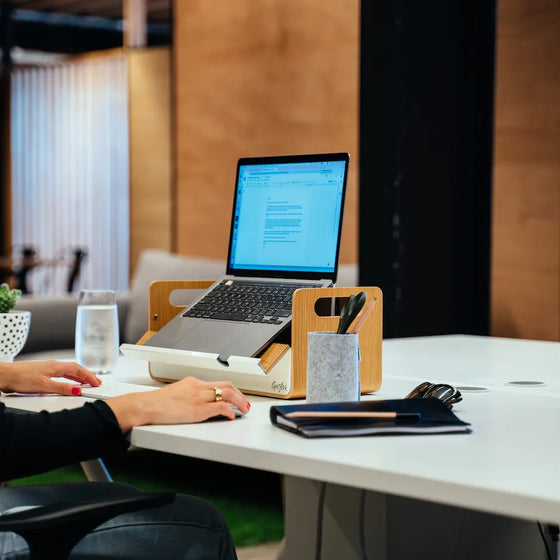
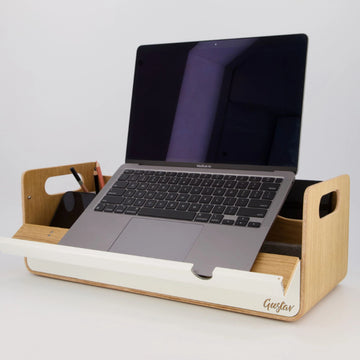
This is where the mat works best as part of a wider system. Pair it with a portable organiser for pens, chargers and small tools, and an ergonomic laptop stand where screen height needs attention. The mat defines the surface; the organiser removes clutter; the stand helps create a more comfortable viewing position. Each item has a clear role, and the desk remains easy to reset.
A better way to set up a shared desk
The most effective desk setup is usually the least complicated. Place the recycled desk mat first, aligned with the seat rather than the edge of the room. This establishes the central work zone. Position the laptop or keyboard where your shoulders can remain relaxed, then keep the mouse within easy reach rather than extending the arm across the desk.
Use the remaining surface deliberately. A notebook can sit beside the keyboard, while cables and chargers belong in a compact organiser rather than spreading along the desk edge. If the workday requires a laptop stand, place it on the mat or directly behind it depending on the mat’s size and the stability of the stand. The goal is a setup that feels personal while leaving no trace when it is time to move on.
For facilities and workplace teams, this repeatable arrangement can support adoption of desk-sharing without over-instructing employees. A thoughtfully equipped desk communicates how the space is meant to work. It also gives people a better first experience than an empty tabletop and a search for somewhere to put their things.
Design that earns its place
Sustainability in workplace accessories is not only about what an item is made from. It is also about whether it is used, valued and kept. A recycled desk mat should have enough material integrity to withstand everyday movement, enough visual restraint to suit changing interiors and enough practical benefit to become part of the daily setup.
That is why details matter: a surface that feels good beneath the hand, edges that lie flat, proportions that suit real equipment and colours that continue to work as offices evolve. Gustav approaches mobile work in this way, with tools designed to bring order and comfort to the places where work actually happens.
A well-chosen mat will not transform every task. It will do something more useful: make the desk feel ready. When work can begin with a calm, organised surface, moving between locations becomes less of a disruption and more of a natural part of the day.