How a Recycled Felt Desk Mat Improves Flexible Work

A clear desk is easier to return to. That matters when the surface is shared by several people, used for focused work one day and meetings the next, or simply expected to feel considered at home. A recycled felt desk mat gives a temporary workstation a defined working zone: somewhere for a laptop, notebook, mouse and everyday tools to sit with purpose.
Unlike a heavy desk pad or a permanent piece of furniture, felt changes the character of a surface without claiming it. It softens the visual noise of cables and accessories, protects the table beneath, and makes a standard desk feel more personal within seconds. For hybrid workers and workplace planners, that combination is more useful than it first appears.
Why a recycled felt desk mat earns its place
Modern desks need to support more than one way of working. In a desk-sharing office, a person may arrive with a laptop and a small set of essentials, work for several hours, then leave the desk ready for someone else. At home, the same table may switch between work, meals and family life. A desk mat creates a visible boundary that helps each mode feel intentional.
Felt is particularly suited to this role because it brings texture without excessive bulk. Its soft, matte finish reduces the hard, reflective look of laminate, glass or polished timber surfaces. It also helps prevent minor scuffs caused by keyboards, notebooks and desk accessories moving across the table. The result is quieter visually and more composed, rather than merely more decorated.
Choosing recycled felt adds another consideration. Many felt desk accessories are made using recycled PET fibres, often recovered from post-consumer plastic. This gives material that would otherwise be discarded a practical second use. The meaningful question is not whether an item simply carries a recycled label, but whether it is durable enough, well made enough and useful enough to remain in daily service for years.
That is where premium design matters. A mat that curls at the edges, pills quickly or slides around the desk creates friction rather than reducing it. Look for a dense felt construction, cleanly finished edges and proportions that suit the way people actually work.
Surface protection without a permanent setup
The most obvious function of a desk mat is protecting the desk. This is valuable in offices with shared furniture, where repeated movement of equipment can leave marks over time. It is equally relevant for a dining table, a rented flat or a carefully specified home office desk.
A recycled felt desk mat offers a gentler contact layer between the table and daily equipment. Laptop feet, charging bricks, pen pots and notebooks rest on the mat rather than directly on the surface. It can also reduce the small scraping sounds that make a quiet workspace feel less settled.
There is a trade-off. Felt is not a waterproof barrier. A spilled drink should be dealt with immediately, and the mat may not be the best choice for work involving paint, food, adhesives or frequent cleaning with harsh products. In those environments, a wipeable hard-wearing surface may be more appropriate. For laptop-based knowledge work, however, felt provides a balanced mix of protection, comfort and refinement.
A more controlled mouse and writing area
Desk mats are often judged by one question: will a mouse work on them? It depends on the density and finish of the felt, as well as the mouse sensor. Many modern optical mice perform well on a smooth, tightly pressed felt surface, but users who rely on highly precise cursor movement, such as detailed design or technical work, may prefer a dedicated mouse pad on top.
Writing also feels different on felt. A notebook or document has a softer base than it would on timber or laminate. Some people find this more comfortable for short notes; others prefer a firmer surface. The best approach is to treat the mat as an organised foundation, not a universal replacement for every specialist tool.
Defining a personal workspace in shared offices
Desk sharing works best when people can settle in quickly without colonising the workspace. A desk mat helps by marking a compact, temporary territory. It tells the user where the core setup belongs, while keeping the remainder of the desk available for documents, collaboration or a colleague sitting alongside them.
For facility managers and workplace strategists, this is a small intervention with a clear behavioural benefit. When each desk has a consistent visual language, it is easier to maintain clean desk standards without making the office feel anonymous. People gain a sense of ownership during the workday, then pack away cleanly at the end of it.
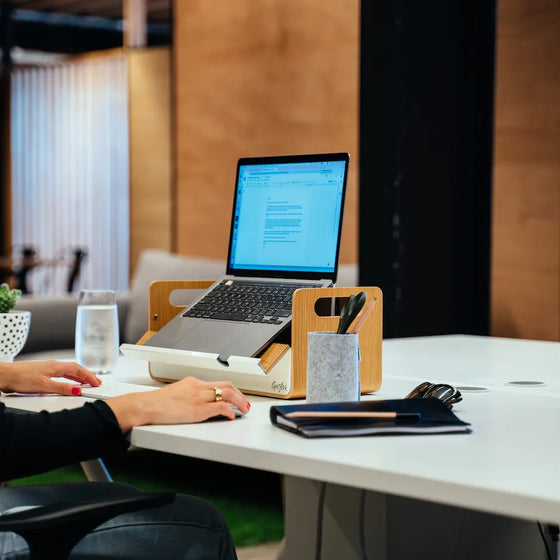
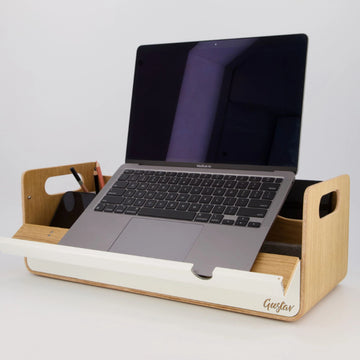
The mat is especially effective when paired with portable organisation. A laptop stand supports a more comfortable screen height, while a compact organiser holds chargers, cables, pens and headphones. Together, these pieces turn any suitable table into a repeatable workstation rather than a collection of loose objects.
Gustav designs this kind of mobile workspace around a simple principle: your office should be ready wherever work happens. A felt mat can be the visual base layer of that system, bringing calm to the desk while portable organisers keep essentials together before and after use.
Choosing the right size, colour and material
The right mat should frame the work rather than overwhelm the furniture. Start with the desk itself. On a compact home-office table, a smaller format that accommodates a laptop, mouse and notebook may be enough. On a wider shared desk, a larger mat can bring order to a broader setup, provided it still leaves room for the work surface to breathe.
Colour has a practical role as well as an aesthetic one. Dark charcoal and deep tones can disguise everyday marks and work well in busy offices. Lighter grey, sand or muted colours can make a workspace feel more open, though they may show ink, dust or coffee marks more readily. A restrained colour palette generally integrates better with changing desks and varied interior schemes than a loud statement shade.
Material specifications deserve a closer look. Recycled content is valuable, but it should be clearly described rather than assumed. Check whether the felt is recycled PET, whether the backing or any non-slip layer uses additional materials, and how the edges are finished. A mat with no backing may be easier to move and shake clean, while a grippier base can be useful on very smooth desks. Neither is automatically better. The choice depends on how frequently it will travel and the surfaces it will meet.
Care that keeps the material looking considered
Felt rewards simple, regular care. Shake or brush away crumbs and dust before they settle into the fibres. For small dry marks, a lint roller or a soft brush is often enough. If a spill occurs, blot it promptly with a clean, damp cloth rather than rubbing, which can push the stain further into the surface.
Avoid soaking the mat or using aggressive cleaning agents unless the manufacturer specifically recommends them. Heat can affect shape, and prolonged moisture can leave marks. When carrying the mat between locations, keep it flat where possible or roll it loosely rather than folding it sharply. This helps preserve a clean edge and an even surface.
In a workplace setting, care instructions should be easy to find and realistic to follow. A product that needs specialist treatment is unlikely to stay presentable in a high-use environment. Good material design accounts for everyday use, not just a pristine desk at launch.
The quieter value of a well-made mat
A recycled felt desk mat will not transform an unsuitable chair into an ergonomic workstation, nor will it organise cables that have nowhere to go. Its value is more focused. It gives the desk a centre, protects the surface, reduces visual clutter and makes a mobile setup feel complete.
For flexible workplaces, those details influence whether people experience a desk as temporary and impersonal or as ready for good work. Choose a mat that is durable, proportionate and easy to live with, then let it do what the best workspace accessories do: make the practical feel effortless.