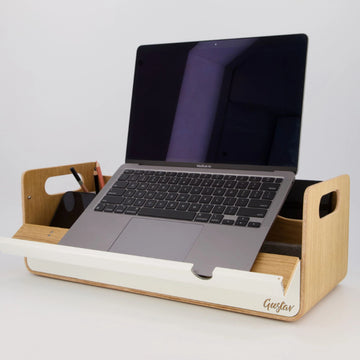
Trousse Tech pour les Essentiels de Travail Qui Fonctionne

Vous remarquez le problème à 08h57. La réunion commence dans trois minutes, votre ordinateur portable est ouvert, et le seul câble dont vous avez besoin se trouve au fond d’un sac avec des stylos, des clés et les reçus d’hier. Une bonne trousse technologique pour les essentiels du travail n’est pas un simple accessoire agréable à ce moment-là. C’est la différence entre commencer sereinement et commencer stressé.
Pour les travailleurs hybrides, les utilisateurs de bureaux partagés et toute personne se déplaçant entre domicile, bureau et sites clients, les petits outils créent la plupart des frictions. Chargeurs, adaptateurs, écouteurs, souris, stylet, cartes SD, peut-être un pointeur de présentation – aucun de ces éléments ne prend beaucoup de place individuellement. Ensemble, ils créent du désordre, des retards et une installation qui ne semble jamais vraiment maîtrisée. Une trousse bien conçue résout cela discrètement, ce qui explique son importance.
Pourquoi une trousse technologique pour les essentiels du travail est importante
La plupart des problèmes liés à l’espace de travail ne sont pas dramatiques. Ils sont cumulatifs. Vous perdez quelques minutes à chercher un câble. Vos écouteurs finissent emmêlés. Votre chargeur est dans un autre sac. À la fin de la semaine, le travail mobile paraît plus chaotique qu’il ne devrait.
Une trousse technologique dédiée crée de la constance. Elle donne à votre kit de travail un emplacement fixe, ce qui rend le rangement plus rapide et l’installation presque automatique. Cela compte dans les environnements de travail flexibles où les personnes se déplacent entre des zones de travail temporaires, des salles de réunion et des bureaux à domicile. Cela compte aussi dans les organisations avec des politiques de bureau propre, où tout doit être rangé à la fin de la journée sans devenir une collection désordonnée d’accessoires.
Il y a aussi un aspect professionnel. Lorsque vos outils sont organisés, votre espace de travail paraît intentionnel. Dans les bureaux partagés et les environnements en contact avec les clients, cela a de la valeur. Une installation calme signale la compétence avant même que vous ne prononciez un mot.
Ce qui doit se trouver dans une trousse technologique pour les essentiels du travail
La meilleure trousse n’est pas la plus grande. C’est celle qui contient les outils que vous utilisez chaque jour sans devenir un fourre-tout pour des objets dont vous avez rarement besoin.
Pour la plupart des professionnels, le kit de base est simple : chargeur d’ordinateur portable, câble de téléphone, adaptateur secteur, écouteurs ou casque compact, souris et peut-être un hub USB-C. Certains métiers ajoutent des éléments spécialisés. Les designers peuvent transporter des cartes mémoire ou un stylet. Les consultants peuvent vouloir un pointeur et un adaptateur HDMI. Les gestionnaires d’installations et planificateurs d’espaces de travail peuvent ajouter des badges d’accès, des batteries portables ou un carnet compact.
Le principe est simple : si un objet vous ralentit quand il manque, il mérite une place. S’il reste inutilisé pendant des semaines, il appartient probablement ailleurs.
C’est là que beaucoup de trousses montrent leurs limites. Elles encouragent le sur-remplissage. Plus de compartiments peuvent être utiles, mais trop de petites poches forcent souvent un système qui ne correspond pas aux habitudes réelles de travail. Une meilleure approche est la flexibilité structurée – assez d’organisation pour séparer les essentiels, sans rendre la trousse rigide.
Un bon design se voit dans les petits détails
Une trousse technologique haut de gamme gagne sa place grâce à des détails que vous cessez de remarquer une fois qu’ils fonctionnent correctement. L’ouverture doit être assez large pour tout voir d’un coup d’œil. Les matériaux doivent paraître durables sans devenir encombrants. Les compartiments doivent maintenir les objets stables, tout en permettant un accès rapide.
La forme compte plus que beaucoup ne le pensent. Une trousse qui s’effondre sur elle-même devient frustrante sur un bureau chargé. Une trousse qui garde sa forme est plus facile à ranger, à utiliser et à poser à côté d’un support pour ordinateur portable ou d’un carnet sans ajouter de bruit visuel.
Le choix des matériaux est aussi important. Dans le travail mobile, les accessoires sont constamment déplacés. Ils sont jetés dans des sacs, transportés entre différents lieux et ouverts plusieurs fois par jour. Les tissus doivent résister à l’usure, les fermetures éclair doivent être fiables, et la construction doit justifier un usage quotidien. Les trousses bon marché échouent souvent aux endroits que vous touchez le plus – poignées, coutures et fermetures.
Il y a aussi un aspect durabilité. Acheter un produit bien conçu et durable est une meilleure décision que de remplacer un produit médiocre chaque année. Pour les environnements de travail soucieux du design, matériaux et longévité ne sont pas des préoccupations séparées. Ils font partie du même standard.
L’équilibre entre portabilité et capacité
Il n’y a pas de taille unique idéale car les styles de travail diffèrent. Quelqu’un qui fait la navette avec seulement un ordinateur portable et un téléphone peut utiliser une trousse compacte confortablement. Quelqu’un qui passe entre présentations, appels et visites de sites peut avoir besoin de plus de volume.
Le compromis est simple. Une trousse plus petite impose de la discipline et allège votre sac. Une trousse plus grande offre de la flexibilité, mais peut rapidement devenir un espace de stockage plutôt qu’un outil d’organisation. Si vous transportez régulièrement des câbles en double, des adaptateurs de secours et plusieurs objets « au cas où », votre trousse compense probablement un système qui a besoin d’être révisé.
Pour la plupart des configurations hybrides, le juste milieu est une trousse assez grande pour un kit technologique complet quotidien, plus un ou deux objets spécifiques au rôle. Au-delà, la portabilité commence à souffrir.
Comment la bonne trousse améliore le partage de bureau
Le partage de bureau ne fonctionne bien que si l’installation est rapide. Si les employés passent les dix premières minutes de la journée à chercher leurs outils, démêler des câbles et s’installer à un bureau temporaire, l’expérience paraît improvisée plutôt qu’intentionnelle.
Une trousse technologique soutient une routine d’installation répétable. Vous arrivez, sortez la trousse, posez les essentiels sur le bureau, branchez l’alimentation et commencez. En fin de journée, la même routine s’exécute à l’inverse. Cela semble basique, mais dans la conception des espaces de travail, la friction se trouve souvent dans ces moments simples.
Pour les employeurs et les planificateurs d’espaces, il ne s’agit pas seulement de propreté. Il s’agit de soutenir l’adoption de modèles de bureau flexibles. Les gens sont beaucoup plus enclins à accepter des environnements partagés lorsqu’ils peuvent rapidement établir un espace de travail familier. L’organisation portable aide à créer cette continuité.
C’est une des raisons pour lesquelles les accessoires conçus avec soin comptent plus qu’ils ne paraissent sur une liste d’achats. Ils améliorent les comportements, pas seulement le rangement.
Ce qu’il faut rechercher avant d’acheter
Commencez par l’accès. Si vous ne pouvez pas voir rapidement votre équipement, la trousse vous ralentira. Ensuite, regardez la structure interne. Vous avez besoin d’assez de séparation pour éviter que câbles et accessoires ne s’emmêlent, mais pas trop de complexité pour que le rangement ne devienne pas un casse-tête.
Pensez ensuite à son intégration dans votre installation globale. Est-ce qu’elle tient bien dans un sac de travail ? Peut-elle se déplacer facilement de l’étagère au bureau puis à la salle de réunion ? Complète-t-elle un support portable, un organiseur ou un tapis de bureau si ceux-ci font déjà partie de votre routine ? Les meilleurs produits fonctionnent en système.
L’apparence compte aussi, surtout dans les environnements de travail haut de gamme. Une trousse doit paraître raffinée plutôt que trop technique. Un design minimaliste vieillit mieux et s’intègre plus naturellement dans différents contextes, du bureau à domicile à la salle de réunion en passant par un espace de projet partagé.
Enfin, soyez honnête sur la fréquence d’utilisation. Si votre trousse sera ouverte plusieurs fois par jour, la qualité doit être non négociable. Ce n’est pas un accessoire qui reste dans un tiroir. C’est une partie de votre flux de travail quotidien.
Un meilleur standard pour le travail mobile
Il fut un temps où les accessoires technologiques pouvaient être considérés comme secondaires. Ce n’est plus compatible avec la façon dont les gens travaillent. Dans les organisations hybrides, la frontière entre espace de travail et sac s’est estompée. Les outils qui vous accompagnent font désormais partie du bureau.
Cela change la donne. Une trousse ne doit pas seulement stocker des câbles. Elle doit soutenir la mobilité, réduire le désordre visuel et aider à créer une expérience de travail cohérente entre les lieux. Pour les utilisateurs individuels, cela signifie moins de stress et une installation plus propre. Pour les organisations, cela signifie un meilleur soutien des habitudes de travail flexibles déjà courantes dans une grande partie de l’Europe.
Des marques comme Gustav ont bien compris ce changement. Les outils d’espace de travail portables doivent désormais répondre aux mêmes attentes que le mobilier et la planification des bureaux : design réfléchi, matériaux durables, ergonomie pratique et rôle clair dans la performance quotidienne.
La vraie valeur ne réside pas dans la trousse
La vraie valeur réside dans ce que la trousse élimine. Moins d’objets manquants. Moins de bureaux en désordre. Moins de débuts de journée lents. Quand vos essentiels sont toujours au bon endroit, le travail paraît plus léger.
C’est pourquoi choisir une trousse technologique doit être considéré moins comme l’achat d’un petit accessoire et plus comme l’amélioration d’un système quotidien. L’objet lui-même est compact. L’effet est bien plus grand.
Si votre travail bouge, votre installation doit bouger avec le même soin.