Qu'est-ce que le travail basé sur l'activité ?

Un box calme pour un travail concentré. Une table partagée pour les revues de projet. Un coin lounge pour des échanges informels. Si vous vous demandez ce qu’est le travail basé sur l’activité, la réponse la plus simple est la suivante : c’est un modèle de lieu de travail où les personnes choisissent l’environnement qui soutient le mieux la tâche qu’elles ont à accomplir.
Plutôt que d’attribuer un bureau fixe à chaque employé, le travail basé sur l’activité donne accès à une gamme de cadres de travail. L’objectif n’est pas la flexibilité pour elle-même, mais de créer de meilleures conditions pour la concentration, la collaboration, les appels, la planification et la mobilité tout au long de la journée.
Qu’est-ce que le travail basé sur l’activité en pratique ?
Le travail basé sur l’activité, souvent abrégé en ABW, repose sur un principe simple : différents types de travail nécessitent des environnements différents. Un analyste financier qui examine des données, un designer qui partage des concepts avec un client, et un manager qui mène une conversation en tête-à-tête n’ont pas besoin du même aménagement.
Dans un bureau traditionnel, tout le monde est souvent placé dans un environnement globalement identique, que cela convienne ou non au travail. Dans un lieu de travail basé sur l’activité, le bureau est divisé en zones conçues selon leur usage. Cela peut inclure des espaces calmes, des salles de réunion, des bureaux temporaires, des tables d’équipe, des cabines téléphoniques et des espaces informels.
Les employés se déplacent entre ces espaces en fonction de leurs besoins. Certaines organisations associent cela au partage de bureau et à des politiques de bureau propre, tandis que d’autres combinent l’ABW avec des espaces réservables ou des zones d’équipe par quartier. Le modèle peut être très structuré ou relativement souple. C’est pourquoi la qualité de la mise en œuvre est si importante.
Pourquoi les organisations adoptent le travail basé sur l’activité
L’attrait de l’ABW ne réside pas seulement dans l’efficacité de l’espace, bien que cela joue souvent un rôle. Bien fait, il peut améliorer l’expérience des employés et rendre le bureau plus intentionnel.
Pour les responsables des lieux de travail, l’ABW offre un moyen d’aligner l’espace physique avec la manière dont le travail se déroule réellement. La plupart des équipes ne passent plus cinq jours par semaine à faire les mêmes tâches au même endroit. Les modes hybrides, le travail par projet et la collaboration numérique ont changé le rythme de la vie de bureau. Les bureaux doivent refléter cette réalité.
Pour les employés, le bénéfice est un choix avec un but. Un environnement ABW bien conçu peut réduire le bruit inutile, faciliter la collaboration et soutenir un travail plus ergonomique dans différents cadres. Il peut aussi rendre le bureau moins statique et plus réactif.
Cela dit, le travail basé sur l’activité n’est pas automatiquement meilleur que l’attribution de places fixes. Si les espaces calmes sont limités, le rangement insuffisant, ou si les gens passent la moitié de la matinée à chercher un endroit où s’asseoir, le modèle perd rapidement en crédibilité. Le concept est solide. L’exécution doit l’être tout autant.
Les éléments clés d’un lieu de travail basé sur l’activité
Au mieux, l’ABW est un système plutôt qu’un simple aménagement de mobilier. Il dépend de la relation entre l’espace, le comportement, la technologie et les routines quotidiennes.
Le premier élément est la variété. Les personnes ont besoin d’un mélange clair d’espaces pour le travail concentré, la collaboration, les conversations privées, les courts séjours et les sessions plus longues. Si chaque zone se ressemble, le lieu de travail n’est pas vraiment basé sur l’activité.
Le deuxième est la clarté. Les utilisateurs doivent pouvoir comprendre où aller et à quoi sert chaque espace sans difficulté. Les zones calmes doivent être réellement calmes. Les zones collaboratives doivent favoriser la discussion, le partage d’écran et le travail d’équipe spontané.
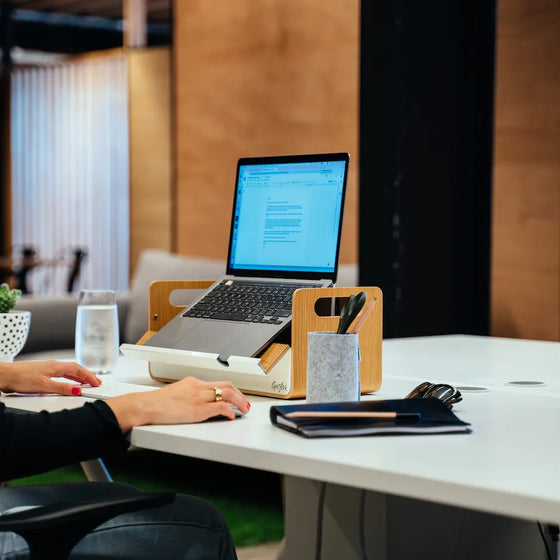
Le troisième est la mobilité. Si l’on attend des personnes qu’elles se déplacent dans la journée, elles ont besoin d’un moyen simple de transporter et d’organiser leurs outils essentiels. Ordinateur portable, chargeur, carnet, casque, souris et effets personnels doivent pouvoir les accompagner. C’est là que beaucoup de stratégies ABW réussissent ou échouent. L’espace de travail peut être flexible, mais si l’installation individuelle est désordonnée, lente à déballer ou peu ergonomique, l’expérience devient frustrante.
Le quatrième est l’étiquette. Les environnements partagés nécessitent des règles communes. Cela couvre tout, du comportement de réservation aux niveaux sonores, en passant par le rangement, la propreté et la durée pendant laquelle un bureau peut rester inoccupé.
Ce que le travail basé sur l’activité n’est pas
Ce n’est pas simplement du bureau partagé sous un nouveau nom. Le bureau partagé signifie généralement que les employés utilisent n’importe quel bureau disponible, souvent avec un focus sur l’occupation. Le travail basé sur l’activité va plus loin en concevant une gamme d’espaces adaptés aux modes de travail réels.
Ce n’est pas non plus une excuse pour réduire le nombre de bureaux sans améliorer globalement le lieu de travail. Si un bureau supprime les places attribuées sans rien ajouter d’autre, les employés remarqueront immédiatement le manque.
Et ce n’est pas un modèle universel. Certains rôles nécessitent plus de rangement, plus d’intimité ou plus d’équipement que d’autres. Les équipes juridiques, le support client, les départements de design et les groupes de direction peuvent tous utiliser le lieu de travail différemment. Une stratégie ABW crédible en tient compte.
Les avantages et les compromis
L’ABW peut rendre le bureau plus utile. Plutôt que de venir pour passer la journée à des appels vidéo à un bureau fixe, les personnes ont accès à des espaces conçus pour les raisons de leur venue. Cela améliore souvent la qualité du temps collaboratif et donne aux individus plus de contrôle sur leur travail concentré.
Il peut aussi favoriser des environnements plus propres et plus calmes. Les bureaux partagés fonctionnent mieux lorsque les installations sont portables et faciles à remettre en ordre. Pour les organisations qui tiennent à la présentation, à la cohérence et à l’utilisation efficace de l’espace, cela compte.
Il y a cependant des compromis. Certains employés apprécient la stabilité territoriale et la routine. D’autres peuvent trouver la mise en place quotidienne et les déplacements fatigants si le bureau ne propose pas le bon soutien. La cohésion d’équipe peut aussi souffrir si les personnes sont trop dispersées ou si les zones de quartier sont mal définies.
C’est pourquoi les meilleurs bureaux ABW équilibrent liberté et structure. Ils créent du choix, mais pas d’ambiguïté. Ils favorisent le mouvement, mais pas la perturbation constante.
Ce dont les équipes ont besoin pour que le travail basé sur l’activité fonctionne bien
La planification de l’espace n’est qu’une partie de la réponse. Les personnes ont aussi besoin d’outils pratiques qui rendent la mobilité facile.
Un ordinateur portable sans support peut transformer n’importe quel bureau flexible en compromis ergonomique médiocre. Un bureau partagé sans moyen simple d’organiser câbles, fournitures et équipements quotidiens peut devenir encombré en quelques minutes. Une politique de bureau propre sans rangement portable entraîne souvent des frictions mineures mais constantes.
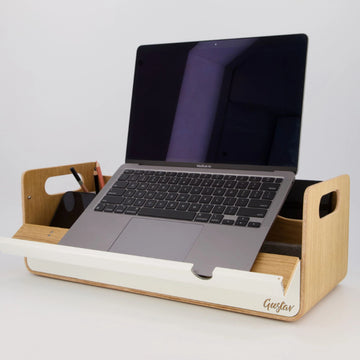
En d’autres termes, l’ABW fonctionne mieux lorsque le lieu de travail et l’installation personnelle sont conçus ensemble. Les organiseurs portables, les supports compacts pour ordinateurs portables, les tapis de bureau et les sacs de travail ne sont pas des accessoires décoratifs. Dans les environnements flexibles, ils font partie du système d’exploitation. Ils aident les employés à arriver, s’installer rapidement, travailler confortablement et laisser l’espace prêt pour la personne suivante.
Pour les planificateurs de bureaux et les équipes de gestion des installations, cela compte car l’expérience employé se construit sur de petites actions répétées. Si l’installation prend trente secondes au lieu de dix minutes, le lieu de travail paraît plus léger. Si les objets essentiels restent organisés entre la maison, le bureau et le bureau partagé, les personnes sont plus susceptibles d’utiliser le bureau comme prévu.
Concevoir le travail basé sur l’activité autour du comportement réel
Les stratégies ABW les plus efficaces commencent par l’observation, pas par la théorie. Combien de travail concentré se fait réellement au bureau ? À quelle fréquence les équipes ont-elles besoin de salles fermées ? Que transportent les personnes chaque jour ? Où s’accumule le désordre ? Quels espaces sont toujours pleins et lesquels sont évités ?
Ces questions mènent à de meilleures décisions que les seuls ratios d’espace abstraits. Elles révèlent aussi où les produits de soutien et les règles du lieu de travail doivent être renforcés.
Par exemple, une équipe créative peut avoir besoin de grandes surfaces partagées pour les sessions de revue mais aussi de kits personnels compacts qui voyagent facilement entre les bureaux. Une équipe de conseil peut avoir besoin de points de travail temporaires près des salles de réunion et d’outils légers qui maintiennent une installation cohérente où qu’ils se trouvent. Dans les deux cas, le principe est le même : la flexibilité ne paraît premium que lorsqu’elle est bien organisée.
C’est là que la qualité du design devient pratique, pas cosmétique. Des matériaux réfléchis, une construction durable et une place claire pour chaque objet aident le travail mobile à paraître maîtrisé plutôt que temporaire. Gustav aborde cela avec la même logique que la planification des lieux de travail elle-même : moins d’éléments, mieux résolus.
Le travail basé sur l’activité convient-il à tous les bureaux ?
Pas toujours sous sa forme pure. Certaines organisations ont besoin d’un modèle hybride avec un mélange de bureaux attribués, d’espaces réservables et de zones d’activité partagées. D’autres peuvent adopter les principes ABW dans certaines zones plutôt que sur un étage entier.
La bonne question n’est généralement pas d’adopter ou non le travail basé sur l’activité comme étiquette, mais de savoir si votre lieu de travail soutient les activités réelles de vos collaborateurs et si l’installation quotidienne est assez simple pour être répétée.
Quand la réponse est oui, l’ABW peut créer un bureau qui paraît plus intentionnel, plus efficace et plus facile à utiliser. Et dans un monde du travail marqué par le mouvement, cette clarté est souvent ce que les gens apprécient le plus.