Qu’est-ce qui fait un bon organiseur de bureau pour le travail hybride ?

Un organiseur de bureau mérite sa place lorsqu’il élimine les petites frictions qui interrompent le travail : chercher un câble de recharge, retrouver le stylo qui a roulé sous un écran, constater que l’ordinateur portable est placé trop bas ou se dépêcher de libérer un bureau partagé en fin de journée. Ce qui fait la qualité d’un organiseur de bureau ne se résume pas à sa capacité de rangement. C’est surtout sa capacité à aider chacun à créer un espace de travail calme et fonctionnel, où qu’il travaille.
Pour les équipes hybrides, cette distinction est importante. Un organiseur fixe avec des tiroirs profonds peut convenir à un bureau à domicile permanent, mais il est peu adapté à une personne qui se déplace entre un bureau partagé, une salle de réunion et son domicile. Les meilleurs modèles équilibrent ordre, accessibilité et mobilité sans transformer le bureau en meuble de rangement.
Qu’est-ce qui fait un bon organiseur de bureau ?
Un bon organiseur attribue aux outils essentiels une place claire et intuitive tout en laissant la surface de travail dégagée. Il doit accompagner les tâches quotidiennes — travailler sur un ordinateur portable, prendre des notes, recharger des appareils et changer de contexte — plutôt que contraindre l’utilisateur à s’adapter à un objet mal conçu.
Tout commence par une capacité pensée avec soin. Plus de compartiments ne signifie pas automatiquement mieux. Trop de petites sections peuvent sembler restrictives, notamment lorsque les outils transportés au quotidien changent. La bonne question est de savoir si l’organiseur accueille l’essentiel sans inciter à emporter du désordre partout.
Une bonne organisation dépend également de la visibilité. Les objets utilisés fréquemment doivent être faciles à voir et à prendre en un seul geste. Une poche dissimulée peut protéger un câble ou un adaptateur, mais un stylo, un carnet et un téléphone portable ne devraient pas nécessiter de fouiller. Lorsque chaque objet a une place évidente, l’installation et le rangement deviennent plus rapides et plus réguliers.
Il doit protéger le bureau, pas le dominer
Un organiseur de bureau doit créer de l’espace utile, pas en occuper la majeure partie. Cela est particulièrement important dans les environnements de bureaux partagés, où les postes de travail doivent convenir à différentes personnes et façons de travailler tout au long de la semaine. Un plateau surdimensionné peut donner l’impression que même un grand bureau est exigu. Un format compact qui regroupe les outils à la verticale ou dans un espace clairement délimité préserve la place nécessaire pour les documents, le clavier et les mouvements naturels des bras.
Le matériau et la conception de la base jouent également un rôle. Un organiseur stable doit rester bien en place sans rayer ni glisser sur la surface du bureau. Il doit être suffisamment lourd pour rester fermement posé pendant l’utilisation, sans toutefois devenir pénible à transporter. C’est l’un des compromis essentiels de la conception d’espaces de travail mobiles : la stabilité exige de la matière, tandis que la portabilité impose de la retenue.
Commencez par le travail, pas par les compartiments
Le bon organiseur de bureau dépend de l’endroit et de la manière dont il sera utilisé. Avant d’en choisir un, faites la liste des objets qui doivent être transportés et des moments où ils sont nécessaires. Un consultant qui travaille chez différents clients privilégiera peut-être un format compact et une installation rapide. Un designer installé à un bureau partagé aura besoin d’un accès immédiat à ses outils de dessin, à ses câbles et à son support pour ordinateur portable. Un responsable des espaces de travail recherchera peut-être une solution qui aide des dizaines de collaborateurs à laisser des bureaux propres et prêts pour l’utilisateur suivant.
Prenez en compte quatre exigences pratiques :
- Les essentiels du quotidien : l’ordinateur portable, le chargeur, le téléphone portable, le carnet, le stylo et les petits adaptateurs réellement transportés par l’utilisateur.
- La séquence d’installation : ce qui doit être sorti en premier et ce qui doit rester à portée de main pendant le travail.
- Les conditions du bureau : la surface disponible, la politique de partage des bureaux et la présence éventuelle de casiers ou de rangements personnels à proximité.
- Les déplacements : l’organiseur reste-t-il sur un même poste de travail, circule-t-il dans les locaux ou se déplace-t-il entre le domicile et le lieu de travail ?
Cette brève évaluation évite une erreur fréquente : choisir un organiseur pour son apparence בלבד, puis découvrir qu’il ne correspond pas à la réalité de la journée de travail. Un design haut de gamme doit être pertinent à 9 heures comme à 17 heures, et pas seulement sur une photo de produit.
La mobilité change les critères
Les organiseurs de bureau traditionnels étaient conçus pour rester au même endroit. Le travail flexible exige autre chose : un système d’espace de travail personnel qui puisse être transporté, ouvert et utilisé avec un minimum d’ajustements.
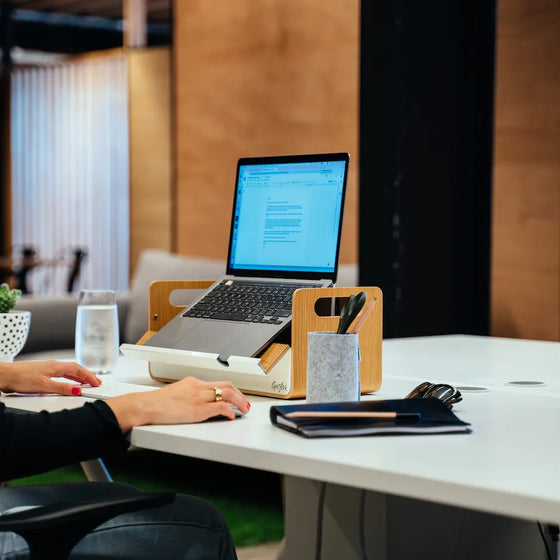
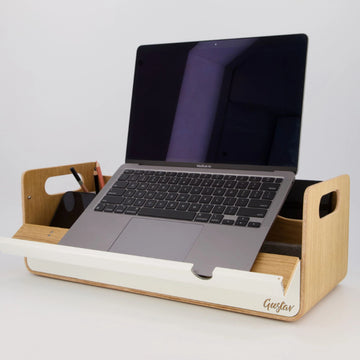
Un organiseur portable doit rendre naturelle la transition du sac au bureau. Les poignées, des proportions bien étudiées et un rangement sécurisé y contribuent, mais le véritable test consiste à savoir si l’utilisateur peut recréer un poste familier en quelques secondes. L’ordinateur portable est sorti, les objets essentiels sont disposés, les câbles sont maîtrisés et le bureau devient personnel sans devenir permanent.
Cette familiarité a une valeur qui dépasse la simple propreté. Dans un bureau organisé par activités, il est possible de ne jamais s’asseoir deux fois au même endroit au cours d’une semaine. Une installation constante réduit l’effort nécessaire pour se mettre au travail et favorise une expérience plus professionnelle d’un lieu à l’autre. L’organiseur fait le lien entre les habitudes de travail personnelles et un environnement partagé.
La portabilité exige toutefois des limites raisonnables. Un organiseur de bureau mobile ne peut pas remplacer chaque objet rangé dans un caisson. Il doit transporter les outils qui permettent de travailler efficacement, sans devenir une lourde réserve de fournitures. Pour les équipements plus volumineux, une trousse technique ou un sac de travail séparé peut être préférable. Les systèmes d’espace de travail les plus efficaces permettent à chaque élément de remplir parfaitement une fonction.
L’ergonomie doit entrer en ligne de compte
L’organisation et l’ergonomie sont souvent considérées comme deux achats distincts. En pratique, elles sont étroitement liées. Un bureau encombré de câbles, de chargeurs et de carnets rend plus difficile le positionnement correct d’un ordinateur portable, d’un clavier ou d’un écran. À l’inverse, un organiseur bien conçu peut favoriser une disposition plus nette, offrant davantage d’espace pour travailler dans une posture confortable.
Pour le travail sur ordinateur portable, vérifiez si l’organiseur fonctionne avec un support pour ordinateur portable ou s’il s’y intègre. Rehausser l’écran peut améliorer sa hauteur de vision, tandis qu’un clavier et une souris externes permettent de détendre davantage les épaules et les poignets. Le rôle de l’organiseur est de garder les outils complémentaires à proximité sans encombrer cette installation.
La gestion des câbles mérite la même attention. Les câbles de recharge qui traînent créent une pollution visuelle et peuvent gêner les mouvements sur le bureau. Un modèle efficace offre un moyen simple de contenir les câbles et les adaptateurs sans les rendre difficiles d’accès. Des mécanismes complexes sont inutiles si un cheminement clair et un espace de rangement dédié suffisent à résoudre le problème.
Les matériaux doivent accompagner l’usage quotidien
Un organiseur de bureau haut de gamme est manipulé en permanence. On le prend, on le pose, on l’ouvre, on le range et on le transporte. Les matériaux doivent donc faire plus que paraître raffinés. Ils doivent résister aux contacts quotidiens, conserver leur finition et offrir une sensation agréable en main.
Le bois apporte chaleur et sérénité visuelle aux espaces de travail dominés par la technologie, en particulier lorsqu’il provient de forêts gérées durablement. Les matériaux textiles recyclés peuvent ajouter de la douceur et contribuer à protéger les appareils ainsi que les surfaces de bureau. La meilleure combinaison dépend du contexte. Un bureau à domicile peut privilégier des matériaux tactiles et une finition plus expressive, tandis qu’un espace partagé très fréquenté peut nécessiter des surfaces particulièrement faciles à entretenir.
Le savoir-faire se révèle dans les détails : des bords nets, des assemblages précis, des coutures fiables, des charnières bien équilibrées et des compartiments qui conservent leur forme. Ces éléments passent facilement inaperçus au début, mais ils déterminent la sensation procurée par le produit après des mois d’utilisation. Un organiseur de bureau doit vieillir avec élégance plutôt que paraître rapidement usé ou provisoire.
Un bon organiseur favorise une culture du bureau propre
Pour les équipes, l’intérêt de l’organisation du bureau dépasse la seule personne qui l’utilise. Des bureaux dégagés rendent les espaces partagés plus faciles à remettre en ordre, à nettoyer et à utiliser. Ils créent également un environnement visuel plus harmonieux pour les collègues et les visiteurs.
Il ne s’agit pas de supprimer toute personnalité du lieu de travail. Il s’agit d’offrir à chacun une meilleure façon de l’emporter avec soi. Lorsque les outils personnels peuvent être rangés dans un objet unique et conçu avec intention, les collaborateurs peuvent créer une zone de travail familière sans s’approprier définitivement un bureau.
C’est là que la qualité du design devient une décision pratique pour l’entreprise. Si un organiseur est attrayant, agréable à transporter et réellement utile, les utilisateurs sont plus susceptibles de l’utiliser régulièrement. S’il paraît bon marché, encombrant ou inutilement complexe, il finira dans un casier ou sera rempli d’objets sans rapport.
Gustav relève ce défi avec des outils d’espace de travail portables et récompensés, conçus pour apporter ordre, soutien ergonomique et qualité des matériaux au travail flexible. Le principe est simple : un bureau doit être prêt pour un travail concentré, où qu’il se trouve.
Choisissez-le en fonction de la routine que vous souhaitez instaurer
Le meilleur organiseur de bureau n’est pas celui qui offre le plus de fonctionnalités. C’est celui qui facilite la répétition de la routine souhaitée : arriver, s’installer, travailler confortablement, ranger, puis laisser le bureau prêt.
Choisissez un modèle suffisamment structuré pour maintenir les essentiels en place, suffisamment flexible pour s’adapter à l’évolution des tâches et suffisamment qualitatif pour rester présent dans votre quotidien professionnel pendant des années. Lorsque les objets autour d’un ordinateur portable sont organisés avec méthode, le bureau cesse d’être une surface temporaire et devient un espace de travail prêt à vous accueillir.