10 ideeën voor bureauorganisatie in kleine ruimtes

Een klein bureau wordt frustrerend wanneer elke kabel, notitieboek en oplader concurreert om dezelfde paar centimeters. De beste ideeën voor bureauorganisatie in kleine ruimtes verbergen rommel niet alleen. Ze geven elk item een duidelijke rol, beschermen je werkoppervlak en maken het makkelijker om met een rustige, comfortabele opstelling aan het werk te gaan.
Voor thuiskantoren, gedeelde bureaus en compacte werkplekken is het doel niet om elke beschikbare hoek met opslag te vullen. Het is om een opstelling te creëren die gefocust werken ondersteunt en snel kan worden gereset wanneer de dag verandert. Dat vereist wat terughoudendheid en de juiste hulpmiddelen.
Bureauorganisatie-ideeën voor kleine ruimtes die werken
1. Begin met het werkoppervlak, niet met de opslag
Voordat je trays, planken of organizers toevoegt, bepaal wat er tijdens een normale werksessie op het bureau moet blijven staan. Voor de meeste kenniswerkzaamheden is dat een laptop of monitor, toetsenbord, aanwijzer, notitieboek en een drankje. Alles wat anders is, moet binnen handbereik zijn, maar niet per se in het zicht.
Dit onderscheid is belangrijk. Een bureau met veel kleine bakjes kan er georganiseerd uitzien, maar toch druk aanvoelen. Laat een duidelijk centraal gebied vrij voor je handen en de huidige taak. Een bureauonderlegger kan helpen die zone te definiëren, het oppervlak beschermen en een gemengde verzameling apparatuur visueel samenbrengen tot één doordachte werkplek.
Als het bureau bijzonder smal is, kies dan accessoires met een laag profiel. Diepe bureau-organizers kunnen meer bevatten, maar nemen de ruimte in beslag die nodig is om te schrijven, schetsen of simpelweg je stoel dichter bij het bureau te schuiven.
2. Bouw omhoog als de voetafdruk vaststaat
Als er geen ruimte is om een bureau breder te maken, gebruik dan het verticale vlak met een doel. Een monitorarm, slanke verhoger of wandplank kan waardevolle oppervlakte vrijmaken zonder dat de werkplek overvol aanvoelt. De belangrijke vraag is of het item zijn hoogte verdient.
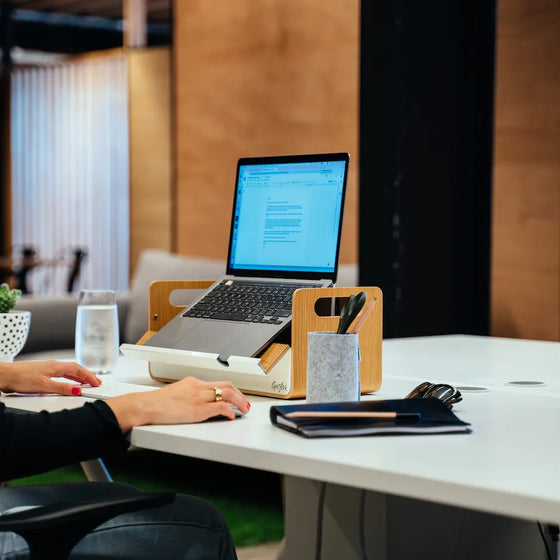
Een laptopstandaard is vaak de meest effectieve eerste stap. Het verhogen van het scherm kan het kijkcomfort verbeteren en creëert bruikbare ruimte eronder voor een toetsenbord, notitieboek of compacte organizer wanneer de laptop met aparte invoerapparaten wordt gebruikt. Voor incidenteel laptopgebruik kan een draagbare standaard geschikter zijn dan een permanente verhoger, omdat die aan het einde van de dag kan worden opgeborgen.
Vermijd het stapelen van opslag direct voor je scherm of aan de rand het dichtst bij je handen. Verticale organisatie moet visuele ruis verminderen, niet een muur van objecten creëren tussen jou en je werk.
3. Behandel kabels als onderdeel van de indeling
Losse kabels laten zelfs een goed ontworpen opstelling er tijdelijk uitzien. Ze nemen ook meer fysieke ruimte in dan verwacht en blijven haken aan stoelarmen, notitieboeken en tassen. Begin met het identificeren van de kabels die je elke dag gebruikt en leid ze langs de achterkant of onderkant van het bureau in plaats van over het werkoppervlak.
Houd oplaadkabels toegankelijk, maar geef ze een vaste rustplaats. Een eenvoudige kabelhouder aan de rand van het bureau voorkomt dat kabels op de vloer vallen en scheelt dagelijks zoeken naar de juiste connector. Gebruik waar mogelijk één oplaadpunt voor de apparatuur die op het bureau blijft, in plaats van meerdere adapters verspreid over het oppervlak.
Er is een compromis in gedeelde of gehuurde ruimtes: uitgebreide kabelbeheer kan onpraktisch zijn als het bureau vaak wisselt. In die gevallen is een compacte tech-etui het flexibelere antwoord. Die houdt opladers, adapters en kabels bij elkaar, zodat de werkplek kan reizen zonder in de knoop te raken.
4. Creëer een plek voor mobiele werkbenodigdheden
Organisatie in kleine ruimtes faalt vaak aan het begin en einde van de dag. Je komt aan met een laptop, oplader, koptelefoon, notitieboek, toegangspas en persoonlijke spullen en zet ze neer waar ruimte is. Tegen lunchtijd is de structuur van het bureau verdwenen.
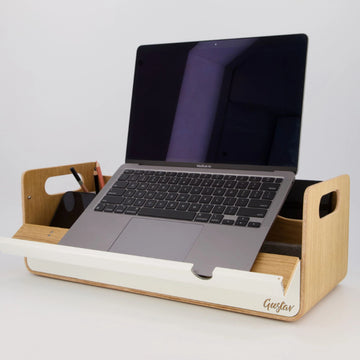
Een draagbare bureau-organizer creëert een consistente plek voor die essentials. Het is vooral handig in gedeelde bureausituaties, waar de gebruiker snel moet opzetten en geen apparatuur mag achterlaten. In plaats van mobiliteit als een onderbreking van organisatie te zien, maak je mobiliteit onderdeel van het systeem.
Kies een organizer die de items draagt die je echt gebruikt, niet elk mogelijk accessoire. Hoe selectiever de set, hoe lichter om te dragen en hoe sneller het bureau kan worden gereset. Gustav workspace organizers zijn ontworpen rond dit principe: een persoonlijke, geordende werkzone die kan meebewegen tussen thuis, kantoor en gedeeld bureau zonder logica te verliezen.
5. Scheid actieve items van opgeslagen items
Een compact bureau profiteert van twee duidelijke categorieën. Actieve items zijn vandaag in gebruik: het huidige notitieboek, referentiemateriaal, koptelefoon of oplaadkabel. Opgeslagen items zijn nuttig, maar niet nodig voor het komende uur. Die horen in een lade, doos met deksel, plank of tas.
Dit klinkt vanzelfsprekend, maar het is het verschil tussen een bureau dat bruikbaar blijft en een dat langzaam een opslagplek wordt. Als je geen lade hebt, gebruik dan een klein bakje buiten het bureaublad, zoals een plank onder het bureau of een kastje in de buurt. Het doel is niet om spullen onzichtbaar te maken, maar om te voorkomen dat inactieve items premium bureauruimte innemen.
Voor papierintensief werk, houd alleen het document dat je nu bekijkt op het oppervlak. Gebruik een verticale maphouder naast of onder het bureau voor de rest. Dat neemt minder ruimte in dan een stapel papier en maakt prioriteiten makkelijker zichtbaar.
6. Laat ergonomie passen bij de ruimte
Organisatie en ergonomie zijn nauw verbonden. Wanneer een laptop te laag staat, trekken gebruikers die vaak naar voren, kantelen hem ongemakkelijk en schuiven andere items opzij om te compenseren. Wanneer een toetsenbord te dicht bij de rand staat, is er weinig ondersteuning voor de onderarmen. Deze kleine concessies lopen op gedurende een werkweek.
Zet het scherm op een comfortabele kijkhoogte, met de bovenkant van het scherm ongeveer op of iets onder ooghoogte waar mogelijk. Plaats het toetsenbord zo dat je schouders ontspannen kunnen blijven en houd de aanwijzer dichtbij om reiken te vermijden. Een compact toetsenbord kan ruimte besparen, maar alleen als de indeling comfortabel blijft voor het werk dat je doet.
Niet elk klein bureau kan tegelijk een externe monitor, volledig toetsenbord en uitgebreide papierworkflow herbergen. Als de ruimte beperkt is, geef dan prioriteit aan de apparatuur die het langst wordt gebruikt. Een comfortabele laptop- en toetsenbordopstelling is meestal waardevoller dan elk randapparaat permanent aangesloten houden.
7. Gebruik de muur en de ruimte naast het bureau zorgvuldig
De ruimte rond een bureau kan de druk op het bureau zelf verlichten. Een smalle plank boven het scherm kan boeken of een kleine plant vasthouden, terwijl een wandrail lichte notities en koptelefoons binnen handbereik houdt. Naast het bureau kan een slanke kast of tashaak voorkomen dat werktassen de vloer of stoel innemen.
Houd deze ondersteunende zone visueel rustig. Open planken werken het beste als ze een klein aantal doelgerichte objecten bevatten. Als het een tentoonstellingsplek wordt voor allerlei spullen, kan het bureau rommelig aanvoelen, zelfs als het oppervlak schoon is.
In een woonkamer- of slaapkamerwerkplek, bedenk wat zichtbaar blijft na het werk. Gesloten opslag, een werktas en een draagbare organizer maken het makkelijker om de ruimte terug te brengen naar de primaire functie zonder een langdurige opruimroutine.
8. Kies minder, maar betere bureau-accessoires
Compacte werkplekken belonen multifunctioneel ontwerp. Een goed gemaakte laptopstandaard kan de houding verbeteren en bureauruimte vrijmaken. Een bureauonderlegger kan de werkzone definiëren en het oppervlak beschermen. Een draagbare organizer kan essentials dragen, orde scheppen tijdens de dag en ze daarna opbergen.
Dit is effectiever dan meerdere enkelvoudige houders te kopen die elk wat ruimte innemen. Premium materialen zijn ook belangrijk in een kleine omgeving omdat elk object goed zichtbaar is. Duurzaam gekweekt hout en gerecyclede materialen kunnen warmte en textuur brengen in een compacte werkplek zonder visuele overdaad, mits het ontwerp doelgericht blijft.
9. Ontwerp een reset van twee minuten
Het sterkste organisatiesysteem is er een dat je daadwerkelijk onderhoudt. Aan het einde van de dag leg je pennen, kabels en adapters terug op hun toegewezen plek, sluit je het notitieboek en maak je het centrale werkgebied vrij. Dit zou twee minuten moeten kosten, niet twintig.
Voor een gedeeld kantoor beschermt de reset een clean desk policy en geeft het de volgende gebruiker een bruikbare werkplek. Thuis creëert het een duidelijkere grens tussen werk- en privétijd. Dezelfde routine maakt de volgende ochtend ook makkelijker: open de organizer, zet de laptop neer, sluit de stroom aan en begin.
10. Evalueer wekelijks wat een plek verdient
Kleine bureaus maken overbodige items snel zichtbaar. Als iets een week onaangeroerd heeft gelegen, verplaats het dan uit de actieve zone. Als een accessoire constant herschikt moet worden, is het misschien te groot of op de verkeerde plek.
Organisatie is geen eenmalige stylingoefening. Het is een praktische reactie op hoe je werkt, waar je werkt en wat je mee moet nemen. Een grafisch ontwerper die met een tablet werkt, heeft een andere indeling nodig dan een consultant die tussen klantlocaties reist. Laat het bureau de echte workflow weerspiegelen, niet een geïdealiseerd beeld ervan.
Een compacte werkplek kan nog steeds ruim aanvoelen wanneer elk item een plek heeft en het oppervlak klaar is voor de volgende taak. Laat ruimte voor je werk om te gebeuren – dat is de meest nuttige vorm van organisatie.