Ergonomische Accessoires voor je Bureaublad die Ertoe Doen

Een bureau kan er netjes uitzien en toch slecht werken. De echte test is of het het lichaam ondersteunt tijdens een hele dag geconcentreerd werken, videogesprekken, snelle overgangen en gedeelde werkplekroutines. Daar verdienen ergonomische bureau-accessoires hun plek - niet als extra’s, maar als de onderdelen die een oppervlak veranderen in een bruikbare werkplek.
Voor hybride teams, thuiskantoren en gedeelde werkplekken is de uitdaging zelden alleen comfort. Het gaat om consistentie. Mensen hebben een opstelling nodig die ze snel kunnen reproduceren, zonder loshangende kabels, geïmproviseerde laptopstapels of een mismatch tussen stoel en scherm die de schouders al halverwege de ochtend gespannen maakt. Goede accessoires lossen dat probleem met stille precisie op.
Wat ergonomische bureau-accessoires eigenlijk doen
De term wordt vaak losjes gebruikt, vaak voor elk bureauproduct met een nette afwerking of een welzijnsclaim. In de praktijk moeten ergonomische bureau-accessoires één van drie dingen doen: het lichaam in een betere werkhouding brengen, onnodige belasting bij repetitieve taken verminderen, of die betere houding makkelijker maken om elke dag vol te houden.
Dat betekent dat hoogte belangrijk is, maar ook wrijving. Als een laptopstandaard het scherm verhoogt maar typen ongemakkelijk maakt, lost het maar de helft van het probleem op. Als een bureauonderlegger een rustigere, duidelijkere werkzone creëert, kan het gebruikers helpen om belangrijke hulpmiddelen consistenter te plaatsen en constant reiken te verminderen. Ergonomie is geen enkel object. Het is de relatie tussen de persoon, de hulpmiddelen en de manier waarop het werk zich door de dag beweegt.
In flexibele werkomgevingen is een andere factor net zo belangrijk: draagbaarheid. De beste opstelling is degene die mensen daadwerkelijk gebruiken. Accessoires die te omvangrijk, te technisch of te vast aan één plek zijn, blijven vaak achter. Daarom zijn designgerichte, mobiele oplossingen steeds relevanter geworden voor moderne Europese werkomgevingen.
De belangrijkste accessoires om prioriteit aan te geven
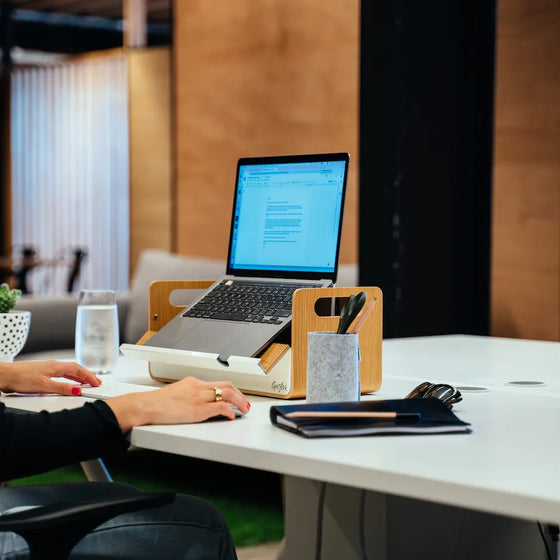
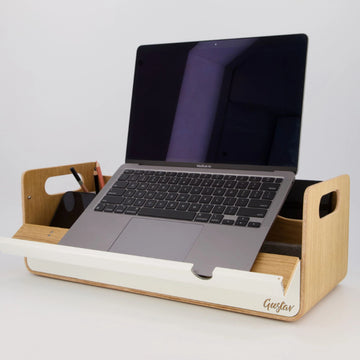
Een laptopstandaard is vaak de eerste upgrade omdat het probleem makkelijk te zien is. Urenlang naar een scherm naar beneden kijken trekt de nek en bovenrug naar voren. Het verhogen van de laptop helpt het scherm dichter bij ooghoogte te brengen en ondersteunt een openere houding. Maar er is een compromis. Zodra het scherm verhoogd is, wordt het ingebouwde toetsenbord meestal te hoog en te dicht bij elkaar voor comfortabel lang typen. In de meeste gevallen werkt een laptopstandaard het beste in combinatie met een extern toetsenbord en muis.
Die combinatie verandert een gedeeltelijke oplossing in een volwaardige werkplek. Een apart toetsenbord zorgt ervoor dat de handen lager kunnen blijven en de ellebogen dichter bij het lichaam. Een muis vermindert ongemakkelijk gebruik van het trackpad, vooral bij taken die precisie, herhaald klikken of lange navigatieperiodes vereisen. Niet elke gebruiker heeft een geavanceerde ergonomische muisvorm nodig, maar de meesten profiteren van een speciaal invoerapparaat in plaats van alleen op een laptop te vertrouwen.
Bureauonderleggers zijn minder voor de hand liggend, maar spelen een belangrijke rol in de kwaliteit van de opstelling. Een goed gemaakte onderlegger definieert de werkruimte, creëert een stabiele basis voor dagelijkse hulpmiddelen en beschermt het bureaublad in gedeelde omgevingen. Belangrijker nog, het geeft gebruikers een visueel en fysiek anker. In gedeelde kantoren is dat belangrijk. Het helpt mensen snel op te zetten, hun essentiële spullen bij elkaar te houden en een schonere werkhouding te behouden in plaats van apparaten en papieren over het hele bureau te verspreiden.
Draagbare organizers en techniektasjes verdienen meer waardering in ergonomische discussies. Op het eerste gezicht lijken ze meer over opslag te gaan dan over comfort, maar slechte organisatie veroorzaakt vaak slechte beweging. Wanneer opladers, notitieboekjes, adapters en kleine hulpmiddelen los in een tas zitten, wordt de opstelling inconsistent. Mensen plaatsen dingen waar ruimte is, draaien om te pakken wat ze nodig hebben en verspillen tijd aan het elke dag opnieuw opbouwen van dezelfde werkplek. Een compacte organizer maakt van de opstelling een herhaalbare routine. Dat vermindert rommel en ondersteunt vanaf het begin een betere positionering.
Ergonomische bureau-accessoires voor gedeeld en hybride werken
Traditioneel ergonomisch advies gaat vaak uit van een vast bureau, vast scherm en vaste gebruiker. Zo werken veel teams nu niet meer. In hybride omgevingen en activiteitgerichte kantoren bewegen mensen tussen thuis, het hoofdkantoor, flexplekken en projectruimtes. Accessoires moeten die realiteit ondersteunen.
Hier presteren lichte, draagbare producten beter dan zwaardere kantoorkits. Een opvouwbare of makkelijk mee te nemen laptopstandaard, een slank toetsenbord, een compacte muis en een gestructureerde organizer kunnen continuïteit creëren tussen locaties. Het doel is niet om een grote statische werkplek in miniatuur na te bootsen. Het is om de essentie te behouden: schermhoogte, comfortabele typepositie, toegang tot hulpmiddelen en visuele orde.
Voor leidinggevenden op de werkvloer heeft dit gevolgen die verder gaan dan individueel comfort. Wanneer teams overal een betrouwbare opstelling kunnen maken, verbetert de adoptie van desk-sharing vaak. Het bureau voelt minder tijdelijk en minder gecompromitteerd. Schoon bureaubeleid wordt makkelijker te handhaven omdat elke gebruiker een vaste plek heeft voor zijn of haar essentials. De werknemerservaring verbetert niet door decoratie, maar door kleine systemen die het werk doordacht laten voelen.
Architecten, ontwerpers en kantoorplanners moeten ook aan ergonomie denken op accessoire-niveau, niet alleen op meubelniveau. Een goed gespecificeerd bureau en stoel zijn natuurlijk belangrijk, maar zonder de juiste ondersteunende hulpmiddelen valt de gebruikerservaring toch tegen. Het verschil tussen een werkplek die er goed uitziet op foto’s en een die goed functioneert, zit vaak in deze kleinere, functionele lagen.
Hoe kies je de juiste opstelling zonder het te ingewikkeld te maken
De beste mix van accessoires hangt af van hoe vast of mobiel de gebruiker is. Iemand die vooral vanuit één thuiskantoor werkt, kan baat hebben bij een meer permanente opstelling met een dedicated monitor en minder draagbare elementen. Iemand die tussen locaties wisselt, heeft accessoires nodig die snel in te pakken zijn, makkelijk mee te nemen en toch premium genoeg aanvoelen voor dagelijks gebruik.
Er is ook een verschil tussen af en toe ongemak en aanhoudende belasting. Als het probleem simpelweg is dat een laptop te laag staat, kan een standaard voldoende zijn. Als de gebruiker lange uren typt, wisselt tussen applicaties en vergaderingen bijwoont, moet de opstelling completer zijn. Dat betekent meestal dat de laptop als scherm wordt gebruikt in plaats van als volledige werkplek.
Materiaalkwaliteit mag niet als cosmetisch worden gezien. Accessoires die dagelijks worden gebruikt, moeten stabiel, duurzaam en makkelijk te onderhouden zijn. Wiebelende, slecht afgewerkte en slappe constructies veroorzaken een laaggradige frustratie die mensen snel opvalt, vooral in professionele omgevingen. Premium materialen en nauwkeurige afwerking zorgen voor vertrouwen in gebruik. Ze sluiten ook beter aan bij hedendaags werkplekdesign, waar functie en visuele helderheid samen moeten werken.
Duurzaamheid is een andere praktische overweging, niet alleen een merkstatement. Producten gemaakt van verantwoord gewonnen hout, gerecyclede materialen en duurzame componenten hebben doorgaans een langere levensduur en passen beter bij organisaties met milieunormen. In deze categorie hoort levensduur bij prestaties.
Een betere opstelling is meestal een eenvoudigere
De fout die veel mensen maken, is meer toevoegen voordat de basis is opgelost. Ze kopen accessoires die productiviteit beloven, maar blijven werken met een slecht geplaatst scherm en een rommelige bureaukant. Ergonomie begint met de essentials die goed zijn gerangschikt. Verhoog het scherm. Scheid de typehulpmiddelen. Houd de belangrijkste items binnen handbereik. Draag wat je nodig hebt in een formaat dat snelle opbouw en snelle reset ondersteunt.
Dat principe is een van de redenen waarom doordacht ontworpen systemen belangrijker zijn dan losse producten. Accessoires moeten visueel en functioneel samenwerken, vooral in premium werkomgevingen waar het bureau rustig moet aanvoelen in plaats van geïmproviseerd. Gustav pakt dit goed aan door draagbaarheid, organisatie en ergonomische ondersteuning als één werkplekprobleem te behandelen, niet als losse aankopen.
Wanneer meer ondersteuning nodig is
Accessoires kunnen veel verbeteren, maar zijn geen wondermiddel. Als een stoel niet geschikt is voor de gebruiker, de bureauhoogte niet klopt of het ongemak aanhoudt, kan een bredere ergonomische beoordeling nodig zijn. Hetzelfde geldt in organisatorische omgevingen. Medewerkers betere accessoires geven helpt, maar moet samengaan met verstandige meubelstandaarden, duidelijke opstellingsrichtlijnen en realistische verwachtingen over mobiel werken.
Toch maken de juiste accessoires vaak het snelst het grootste zichtbare verschil. Ze zijn de laag waarmee mensen het meest omgaan. Ze bepalen hoe snel een bureau bruikbaar wordt, hoe netjes een werkplek wordt gereset en hoe comfortabel het werk de hele dag door gaat.
Een betere bureau-opstelling hoeft niet technisch of over-engineered te voelen. Het moet natuurlijk aanvoelen - makkelijk mee te nemen, makkelijk te plaatsen en stilletjes effectief zodra het werk begint.