Delte kontoropbevaringssystemer, der arbejder hårdere

En politik for deling af skriveborde kan se perfekt ud kl. 18:00 og føles kaotisk igen kl. 09:15. Forskellen er sjældent selve skrivebordet. Det handler om, hvorvidt folk har et gennemtænkt sted til de værktøjer, de bærer, de dokumenter, de har brug for, og det udstyr, der får en arbejdsplads til at føles som deres egen. Effektive fælles kontoropbevaringssystemer gør denne overgang enkel uden at forvandle en fleksibel arbejdsplads til et rum fyldt med skabe og løse kabler.
For arbejdspladsteams er opbevaring ikke en baggrundsfacilitet. Det er en del af medarbejderoplevelsen. For brugerne er det forskellen mellem at ankomme klar til arbejde og bruge de første ti minutter på at lede, pakke ud og justere.
Hvorfor fælles opbevaring har brug for en ny opgavebeskrivelse
Traditionel kontoropbevaring var designet til permanent ejerskab. En skuffeenhed stod under et navngivet skrivebord og holdt kontorartikler, papirarbejde og personlige genstande på ét fast sted. Den model har begrænset værdi, når folk bevæger sig mellem delte skriveborde, stille rum, hjemmekontorer og kundesteder.
Fleksible arbejdspladser har brug for et system, der adskiller, hvad der tilhører bygningen, fra hvad der tilhører den enkelte. Fælles udstyr som ekstra skærme, adaptere og præsentationsværktøjer skal have et pålideligt hjem tæt på brugsstedet. Personlige nødvendigheder skal kunne tages med medarbejderen eller opbevares sikkert i nærheden. Selve skrivebordet bør forblive ryddeligt nok til, at den næste person kan bruge det uden en reset-operation.
Det betyder ikke, at alle genstande skal være bærbare. Det betyder, at hver genstand skal have en bevidst destination. Store, sjældent brugte genstande kan opbevares centralt. Hverdagsarbejdsværktøjer bør forblive tæt på brugeren. De mest succesfulde systemer gør denne forskel tydelig ved første øjekast.
De tre lag i fælles kontoropbevaringssystemer
Et praktisk system har som regel tre forbundne lag: personlig mobilitet, lokal fælles opbevaring og central opbevaring. At designe kun ét af disse lag skaber friktion andre steder.
1. Personlig opbevaring, der følger brugeren
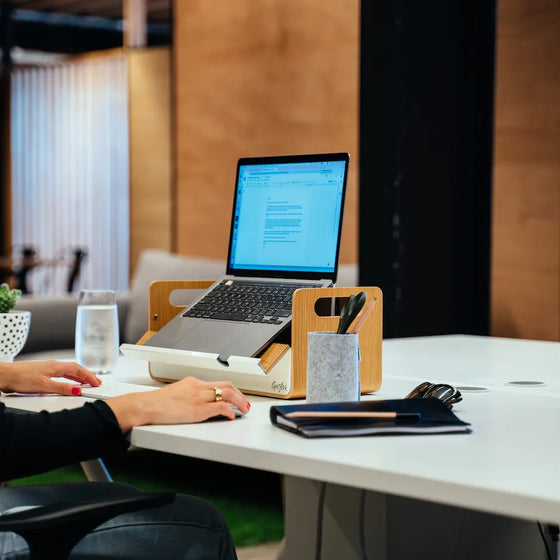
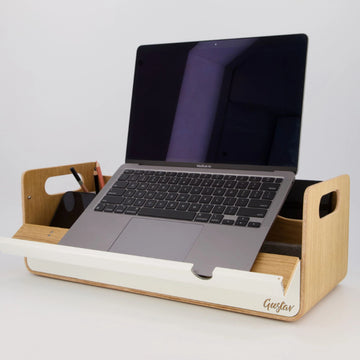
Det personlige lag er, hvor deling af skrivebord virkelig bliver nemt. En kompakt organiser, arbejdstaske eller skrivebordskurv kan rumme en bærbar computer, oplader, mus, notesbog, headset og de små genstande, der ellers spredes ud over et delt skrivebord. Brugeren ankommer, placerer den og begynder at arbejde med sine nødvendigheder inden for rækkevidde.
Denne tilgang understøtter politikker for ryddelige skriveborde uden at bede medarbejderne gå på kompromis med komfort eller forberedelse. Den skaber også en mere ensartet opsætning på kontoret og hjemme. Et laptopstativ er for eksempel ikke blot et tilbehør. Det hjælper brugerne med at genskabe en mere ergonomisk skærmhøjde, uanset hvor de arbejder.
Ulempen er kapacitet. Bærbar opbevaring bør ikke betragtes som en erstatning for arkivering, arkiver eller specialudstyr. Det er designet til arbejdsdagen, ikke til at opbevare alt, hvad en person har samlet gennem flere år.
2. Nabolagsopbevaring til fælles værktøj
Det andet lag hører til i et teamnabolag eller arbejdszone. Her bør fælles genstande være tilgængelige uden at skulle gå over hele etagen: låneopladere, displaykabler, tastatur- og musesæt, rengøringsmaterialer, møderumsudstyr og grundlæggende kontorartikler.
Nærhed er vigtigt. Når en nyttig genstand er for langt væk, begynder folk at opbevare uofficielle dubletter ved skrivebordene. Rodet vender tilbage, lageret forsvinder, og arbejdspladsen mister sin visuelle ro. Et lille, velmærket opbevaringssted tæt på de delte skriveborde er ofte mere effektivt end et stort forsyningsskab.
Hold disse enheder simple. Klare kategorier, synlige genopfyldningsniveauer og en defineret ansvarlig er mere værdifuldt end indviklede skabssystemer. Hvis ingen ved, hvem der genopfylder adaptere eller fjerner beskadiget udstyr, vil selv smukt designet opbevaring fejle i daglig brug.
3. Central opbevaring for dybde og robusthed
Central opbevaring er den operationelle rygrad. Den rummer genstande, der ikke behøver at optage plads ved skrivebordet: reservedele, besøgsforsyninger, arkiverede materialer, IT-lager og sæsonbestemte genstande. Den bør være sikker, logisk arrangeret og nem for de ansvarlige teams at administrere.
For kontorplanlæggere er dette lag også stedet, hvor fremtidige ændringer bliver lettere. Teams vokser, arbejdsformer ændrer sig, og udstyr udvikler sig. Et centralt lager med justerbare hylder og fornuftige lagerpraksisser giver arbejdspladsen plads til at reagere uden at fylde hver skrivebordsenhed med ekstra skabe.
Design til de første fem minutter
Den stærkeste test for en delt arbejdsplads er enkel: kan nogen ankomme, sætte sig til rette og pakke alt væk igen på under fem minutter?
Hvis svaret er nej, så kig efter unødvendige overleveringer. Måske skal en bruger hente en nøgle til et skab, finde et ekstra kabel og lede efter en ledig skuffe, før de kan åbne deres bærbare. Måske er skærme tilgængelige, men de rigtige adaptere opbevares et andet sted. Disse små forhindringer får fleksibelt arbejde til at føles mindre gennemtænkt, end det burde.
En bedre opsætningssekvens er direkte. Medarbejderen tager sin personlige organiser med til et valgt skrivebord, tilslutter de værktøjer, der allerede er inden for rækkevidde, løfter den bærbare om nødvendigt og går i gang. Ved dagens slutning returneres personligt udstyr til organiseren, fælles udstyr går tilbage til sin markerede plads, og skrivebordet er klar til næste bruger.
Her tjener premium bærbare arbejdsredskaber deres plads. De reducerer antallet af separate genstande, brugerne skal håndtere, samtidig med at deres opsætning får en klar visuel orden. En veludført organiser signalerer også, at mobilitet er en bevidst del af arbejdspladsens design, ikke en ulempe, som medarbejderne forventes at løse alene.
Vælg opbevaring efter adfærd, ikke møbelkategori
Når du specificerer fælles kontoropbevaringssystemer, start med observation. Se, hvad folk faktisk bærer, låner og efterlader i løbet af en arbejdsuge. Svarene er ofte mere nyttige end en standard møbelplan.
Et kreativt studie kan have brug for plads til skitsebøger, prøver og kameraudstyr. Et konsulentteam kan prioritere opladere, headsets og sikker opbevaring til dokumenter. En arbejdsplads med hyppige besøgende kan have brug for enkel midlertidig opbevaring tæt på touchdown-skriveborde. Hver arbejdsplads kræver en anden balance mellem mobil, lokal og central kapacitet.
Stil fire praktiske spørgsmål, før du vælger en løsning:
- Hvad skal medarbejderen have med hver dag?
- Hvad skal deles inden for nem rækkevidde af et skrivebord?
- Hvad kræver sikker adgang eller central kontrol?
- Hvad efterlades i øjeblikket på skrivebordene, fordi det ikke har et bedre hjem?
Det sidste spørgsmål er særligt afslørende. Forladte kabler, bunker af notesbøger og forlagte perifere enheder er ikke bevis på uforsigtige brugere. De er bevis på, at opbevaringssystemet ikke matcher den måde, folk arbejder på.
Gør orden synlig og nem at vedligeholde
Opbevaring skal reducere den kognitive belastning, ikke skabe endnu et regelsæt, der skal huskes. Brug afdæmpet mærkning, konsekvent skuffe- eller hyldelogik og et begrænset farvesystem, hvor visuelle signaler er nødvendige. Folk skal kunne lægge en genstand på plads korrekt uden at konsultere en manual.
Undgå overopdeling. Meget specifikke rum kan se ordentlige ud på dag ét, men blive begrænsende, når udstyret ændrer sig. En vis grad af fleksibilitet er nyttig, især til teknologiopbevaring. Justerbare skillevægge, generøs plads til kabler og plads til nye enhedsformater vil forlænge systemets levetid.
Materialevalg betyder også noget. Fælles opbevaring berøres konstant, flyttes ofte og ses af alle, der bruger arbejdspladsen. Holdbare overflader og gennemtænkt konstruktion understøtter en mere professionel oplevelse over tid. Når det gælder bærbare værktøjer, kan bæredygtigt dyrket træ og genbrugsmaterialer kombinere en varm, raffineret følelse med praktisk daglig ydeevne.
Opbevaring er en del af arbejdspladskulturen
En politik for ryddelige skriveborde fungerer kun, når den understøttes af design. At bede folk om at fjerne deres ejendele uden at give dem en elegant, praktisk måde at gøre det på, flytter blot byrden over på den enkelte.
Den bedre tilgang er at gøre den ønskede adfærd til den letteste adfærd. Giv personlige værktøjer, der hurtigt kan pakkes væk. Placer fælles forsyninger, hvor de virkelig er nødvendige. Giv hver vigtig genstand et genkendeligt hjem. Kommuniker derefter logikken klart, når folk starter på arbejdspladsen, eller når et nyt fælles kontorområde åbner.
For facility managers og designere er dette en beskeden detalje med en stor effekt. Ordentlig opbevaring forbedrer kontorets visuelle kvalitet, men vigtigere beskytter det arbejdets rytme. Folk kan falde hurtigere til ro, dele ressourcer med mindre friktion og efterlade et skrivebord klar til en anden.
Gustav nærmer sig dette øjeblik gennem bærbare, designledede værktøjer, der giver en person mulighed for at bære en komplet arbejdsplads med klarhed og omhu. Målet er ikke at fylde kontoret med mere opbevaring. Det er at give hver genstand et formål, hver bruger en pålidelig opsætning og hvert delt skrivebord en ren start.