8 Beispiele für hybride Büroeinrichtungen, die funktionieren

Ein hybrides Arbeitsumfeld scheitert selten an der Strategie. Meist scheitert es auf Schreibtischebene.
Die Menschen kommen an, suchen einen Arbeitsplatz, verbringen zehn Minuten damit, einen Stuhl einzustellen, ein Ladegerät zu suchen, die Kabel von jemand anderem zu verschieben und versuchen, sich in einem Raum einzurichten, der eigentlich flexibel sein soll. Die besten Beispiele für hybride Büroeinrichtungen lösen diese Reibungen schnell. Sie ermöglichen einfache Bewegungen, halten den Schreibtisch frei und helfen den Mitarbeitenden, eine konsistente Arbeitsumgebung zu schaffen – egal, ob sie zwei Tage pro Woche im Büro sind oder täglich zwischen verschiedenen Standorten wechseln.
Für Arbeitsplatzstrategen, Designer und Facility-Teams ändert das die Aufgabenstellung. Ein gutes hybrides Setup ist nicht einfach eine kleinere Version eines traditionellen Arbeitsplatzes. Es muss Mobilität, gemeinsame Nutzung, ergonomischen Komfort und visuelle Ordnung gleichzeitig unterstützen.
Was starke Beispiele für hybride Büroeinrichtungen gemeinsam haben
Die effektivsten Setups teilen einige Eigenschaften. Sie sind schnell zu beziehen, schnell zurückzusetzen und ohne Schulung leicht verständlich. Außerdem vermeiden sie eine Übermöblierung. In einer hybriden Umgebung kann zu viel fest installierte Ausstattung einen Schreibtisch überladen und seltsam unflexibel wirken lassen.
Es gilt auch, eine praktische Balance zwischen Standardisierung und persönlichem Komfort zu finden. Wenn jeder Schreibtisch identisch ist, aber keine Möglichkeit bietet, eine vertraute Arbeitsposition einzurichten, leidet die Akzeptanz. Bringt jeder Nutzer hingegen eine unterschiedliche Mischung an Zubehör und Geräten mit, verliert das Büro an Klarheit. Die besten Setups schaffen eine saubere Basisschicht und erlauben dann leichte persönliche Werkzeuge, den Arbeitsplatz zu vervollständigen.
1. Der saubere, geteilte Arbeitsplatz
Dies ist das bekannteste hybride Modell und oft das schwerste gut umzusetzen. Eine Reihe gemeinsamer Schreibtische unterstützt Mitarbeitende, die bei Bedarf einen Platz buchen, wobei jeder Arbeitsplatz nur das Wesentliche bietet: Stromanschluss, Bildschirmhalterung, einen verstellbaren Stuhl und eine freie Arbeitsfläche.
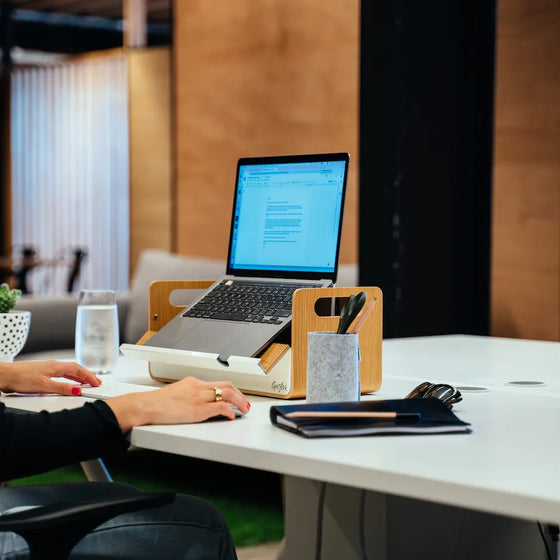
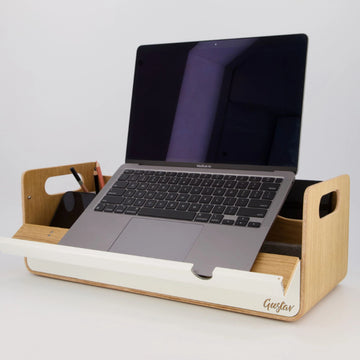
Was dieses Setup erfolgreich macht, ist nicht nur die Möblierung. Es hängt davon ab, wie schnell ein Nutzer den Platz personalisieren und anschließend wieder freimachen kann. Tragbare Organizer, Laptopständer und kompakte Technikaufbewahrung sind hier wichtig, weil sie es ermöglichen, mit den wichtigsten Werkzeugen in einem Zug anzukommen und den Platz zu verlassen, ohne Rückstände auf dem Schreibtisch zu hinterlassen.
Dieses Modell funktioniert besonders gut für Organisationen mit Clean-Desk-Richtlinien, rotierender Anwesenheit und hohem Bedarf an visueller Konsistenz. Der Nachteil ist, dass es unpersönlich wirken kann, wenn keine Möglichkeit für temporäre Eigentümerschaft während des Tages besteht. Kleine, tragbare Arbeitsplatzsysteme lösen vieles davon, ohne die Ordnung zu beeinträchtigen.
2. Die Touchdown-Zone für kurze Aufenthalte
Nicht jeder Bürobesuch erfordert einen kompletten Arbeitsplatz. Manche Mitarbeitende kommen für ein Meeting, eine Stunde konzentrierte Verwaltung oder einen kurzen Zwischenstopp zwischen Terminen. In solchen Fällen kann ein Touchdown-Setup effektiver sein als die Zuweisung eines Standard-Schreibtischs.
Eine gute Touchdown-Zone nutzt kleinere Flächen, einfachen Zugang zu Strom und Sitzgelegenheiten, die für kurze Sitzungen geeignet sind. Der Fehler ist anzunehmen, dass diese Bereiche keine ergonomische Planung brauchen. Selbst kurze Laptop-Arbeit profitiert von besserer Bildschirmhöhe und organisierteren Essentials. Kompakte, tragbare Ständer und Organizer helfen, einen temporären Platz in einen nutzbaren Arbeitsplatz zu verwandeln.
Für Büroplaner kann dieses Setup die Kapazität erhöhen, ohne die Fläche zu vergrößern. Die Einschränkung ist offensichtlich: Es ist nicht ideal für tiefes Arbeiten über den ganzen Tag. Es funktioniert am besten als eine Ebene innerhalb eines breiteren hybriden Ökosystems.
3. Das Teamviertel mit gemeinsamen Ressourcen
Manche hybride Teams brauchen eine Heimatbasis, auch wenn die Mitglieder nicht jeden Tag anwesend sind. Ein Teamviertel bietet diesen Anker. Anstatt jedem eine feste Schreibtisch zuzuweisen, gruppiert das Büro gemeinsame Arbeitsplätze um gemeinsamen Stauraum, Kollaborationsflächen und Teamwerkzeuge.
Dieses Setup fördert Zugehörigkeit, ohne zu festen Sitzplätzen zurückzukehren. Mitarbeitende wissen, wo ihr Team wahrscheinlich ist, können aber dennoch je nach Tagesaufgaben einen Schreibtisch wählen. Es reduziert auch Doppelungen. Statt dass jeder Arbeitsplatz das gleiche Zubehör mit sich trägt, können gemeinsame Ressourcen zentral liegen, während Einzelne nur das mitbringen, was sie zum komfortablen Arbeiten brauchen.
Dies ist eines der stärkeren Beispiele für hybride Büroeinrichtungen für projektbasierte Teams, Designstudios und Wissensarbeiter, die zwischen Zusammenarbeit und konzentrierter Arbeit wechseln. Die Design-Herausforderung ist, visuelle Ruhe zu bewahren. Ohne disziplinierten Stauraum und Schreibtischorganisation können Viertel zu Ablageflächen werden.
4. Das Modell mit Schließfach und mobilem Kit
Wo Desk-Sharing ausgereift ist, ist persönlicher Stauraum oft wichtiger als feste Sitzplätze. In diesem Modell ist der primäre Arbeitsplatz des Mitarbeitenden kein fester Schreibtisch, sondern ein persönliches Kit, das mit einem Schließfach oder einem sicheren Aufbewahrungsort kombiniert wird.
Der Vorteil ist klar. Mitarbeitende tragen ein organisiertes Set täglicher Essentials – Laptop, Ladegerät, Notizbuch, Eingabegeräte, persönliche Accessoires – und können sich überall in Sekunden einrichten. Das Schließfach verwahrt seltener genutzte Gegenstände, während das mobile Kit Konsistenz zwischen Büro, Zuhause und Drittorten bewahrt.
Dieses Modell ist besonders effektiv in größeren europäischen Büros, in denen die Anwesenheitsmuster je nach Tag stark variieren. Es reduziert Schreibtischchaos, unterstützt sauberes Zurücksetzen und gibt den Nutzern ein stärkeres Gefühl von Kontrolle. Der Nachteil ist, dass es mehr vom individuellen Tragesystem verlangt. Sind die Werkzeuge schlecht gestaltet, fühlt sich Mobilität schnell anstrengend an.
5. Das spiegelbildliche Setup von Zuhause zum Büro
Ein Grund, warum hybrides Arbeiten sich zerrissen anfühlt, ist, dass das Setup zu Hause und im Büro oft nichts gemeinsam haben. Das Büro bietet vielleicht Dockingstation, Bildschirme und gute Stühle, während zu Hause improvisierte Möbel und verstreutes Equipment genutzt werden. Ein spiegelbildliches Setup verringert diese Lücke.
Das bedeutet nicht, jeden Gegenstand an beiden Orten zu duplizieren. Es bedeutet, Konsistenz darin zu schaffen, wie Arbeit unterstützt wird: ähnliche Bildschirmhöhe, ähnliche Schreibtischorganisation, ähnliches Kabelmanagement und ähnlicher Zugang zu Essentials. Wenn die physische Logik vertraut ist, finden Nutzer schneller ihren Platz und arbeiten komfortabler.
Für Arbeitgeber verbessert dieser Ansatz die Mitarbeitererfahrung, weil er das ständige Umstellen zwischen Standorten reduziert. Für Designer und Beschaffungsteams erfordert er sorgfältige Entscheidungen. Die besten Produkte sind hier nicht die komplexesten. Es sind diejenigen, die gut transportierbar, ordentlich zu verstauen und zuverlässig auf verschiedenen Oberflächen und Umgebungen funktionieren.
6. Die Fokus-Kabine mit tragbaren Schreibtisch-Essentials
Hybride Büros priorisieren oft Kollaborationsflächen und wundern sich dann, warum konzentriertes Arbeiten verschwindet. Fokus-Kabinen oder Ruheräume sind eine Antwort, funktionieren aber am besten, wenn sie als richtige Arbeitsumgebungen behandelt werden und nicht nur als akustische Boxen mit einem Stuhl.
Ein fokussiertes Setup in einer Kabine sollte es einem Mitarbeitenden ermöglichen, hereinzukommen, den tragbaren Organizer oder die Arbeitstasche zu öffnen, den Laptop auf eine bessere Höhe zu bringen und sofort zu starten. Da diese Räume meist kompakt sind, muss jeder Gegenstand seinen Platz verdienen. Minimales Zubehör mit klarem Zweck ist viel nützlicher als dauerhafte Schreibtisch-Unordnung.
Dieses Modell eignet sich für Aufgaben, die Privatsphäre, Konzentration oder Videokonferenzen erfordern. Es ist weniger geeignet als ganztägiger Standard, besonders wenn die Anzahl der Räume begrenzt ist. Dennoch gibt es als Teil eines hybriden Grundrisses den Mitarbeitenden die Möglichkeit, die Umgebung an die Aufgabe anzupassen, ohne auf Setup-Qualität zu verzichten.
7. Der kundenorientierte Hot Desk
In Beratungsumgebungen, Kreativfirmen und professionellen Dienstleistungsteams müssen manche Schreibtische mehr leisten als nur Arbeit zu unterstützen. Sie müssen ordentlich aussehen, wenn Kunden, Partner oder Kandidaten den Raum betreten.
Hier sind Ästhetik und Funktionalität keine getrennten Anliegen. Ein Schreibtisch, der optisch sauber bleibt, mit versteckten Kabeln, zurückhaltendem Zubehör und abgestimmten Materialien, sendet eine klare Botschaft über die Standards der Organisation. Gleichzeitig muss er alltägliche Laptop-Arbeit, Notizen und schnelle Nutzerwechsel unterstützen.
Hier können hochwertige tragbare Accessoires besonders wertvoll sein. Sie helfen, einen hohen visuellen Standard zu halten und ermöglichen es den Nutzern, auf persönliche und ergonomische Weise zu arbeiten. Für Marken wie Gustav ist dies genau der Punkt, an dem Produktdesign auf Arbeitsplatzstrategie trifft.
8. Der hybride Projekttisch
Nicht alle hybride Arbeit findet an einer Schreibtischreihe statt. In vielen Organisationen unterstützen Projekttische temporäre Teamarbeit, Workshops und informelle Co-Kreation. Die Herausforderung ist, zu verhindern, dass diese Tische vor und nach Gruppensitzungen zu unpraktischen Einzelarbeitsplätzen werden.
Ein gut durchdachtes Projekttisch-Setup nutzt mobile Accessoires, um diese Lücke zu überbrücken. Teammitglieder können für die Zusammenarbeit ankommen und anschließend unabhängig weiterarbeiten, ohne sofort den Platz wechseln zu müssen. Tragbare Laptopständer, geschlossene Technikaufbewahrung und leicht zurückzusetzende Schreibtischwerkzeuge helfen, dieselbe Fläche über den Tag hinweg für verschiedene Arbeitsmodi zu nutzen.
Dieses Setup ist nützlich in aktivitätsbasierten Arbeitsumgebungen, in denen die Nutzung stündlich wechselt. Der Nachteil ist, dass gemeinsame Tische schnell visuelles Durcheinander ansammeln können. Der Erfolg des Modells hängt von disziplinierten Rücksetzgewohnheiten und Accessoires ab, die das Freimachen des Platzes fast automatisch machen.
Wie man das richtige Setup auswählt
Das richtige Modell hängt weniger vom Trend ab als vom Arbeitsmuster. Wenn Menschen nur kurze Zeit im Büro verbringen, sind Touchdown- und Mobile-Kit-Setups oft besser als voll ausgestattete feste Schreibtische. Wenn Teamzusammenhalt wichtig ist, können Viertel Struktur bieten, ohne Flexibilität zu nehmen. Wenn visuelle Klarheit zentral für die Marke oder die Mitarbeitererfahrung ist, verdienen saubere, geteilte Arbeitsplätze und kundenorientierte Setups mehr Aufmerksamkeit.
Es hilft auch, in Schichten zu denken. Die meisten erfolgreichen hybriden Büros setzen nicht nur auf ein Setup. Sie kombinieren gemeinsame Schreibtische, ruhige Fokusbereiche, Kurzzeitplätze und mobiles persönliches Equipment. Das gibt den Mitarbeitenden Wahlmöglichkeiten und hält die Umgebung gleichzeitig stimmig.
Der gemeinsame Nenner ist einfach: Flexibilität funktioniert am besten, wenn sie bewusst gestaltet ist. Nicht improvisiert, nicht überladen und nicht davon abhängig, dass Nutzer jeden Morgen den Arbeitsplatz selbst herrichten.
Das stärkste hybride Büro ist das, in dem Menschen ankommen, ein paar gut ausgewählte Werkzeuge auf den Schreibtisch legen und sich fast sofort einsatzbereit fühlen.