Was ist eine Clean-Desk-Richtlinie im hybriden Arbeiten?

Ein gemeinsamer Schreibtisch um 9 Uhr morgens sollte bereit für die Arbeit sein und nicht wie eine unvollständige Übergabe wirken. Das ist der praktische Wert hinter der Frage, was eine Clean-Desk-Policy ist. Es handelt sich um einen Arbeitsplatzstandard, der von den Mitarbeitenden verlangt, ihren Schreibtisch nach der Nutzung von Dokumenten, Geräten und persönlichen Gegenständen zu befreien. In einem hybriden Büro hilft dies jedem Mitarbeitenden, an einem sicheren, nutzbaren und ruhigen Arbeitsplatz anzukommen.
Eine Clean-Desk-Policy fordert keine leeren, persönlichkeitsfreien Büros. Richtig umgesetzt ist sie eine klare Vereinbarung darüber, was an einem Arbeitsplatz verbleibt, was der Nutzer mitnimmt und wie gemeinsame Bereiche für die nächste Person vorbereitet werden.
Was ist eine Clean-Desk-Policy?
Eine Clean-Desk-Policy legt Erwartungen fest, um Arbeitsplätze frei von unbeaufsichtigten sensiblen Informationen, losem Equipment und vermeidbarem Durcheinander zu halten. Sie gilt meist am Ende des Arbeitstages, bevor ein Schreibtisch längere Zeit nicht genutzt wird, oder nach jeder Nutzung in einem Desk-Sharing-Umfeld.
Die Richtlinie kann Papierakten, Notizen, Ausdrucke, Ausweise, USB-Sticks, Laptops, Ladegeräte und persönliche Gegenstände umfassen. Üblich ist auch das Sperren von Bildschirmen und das korrekte Entsorgen vertraulicher Abfälle. Der genaue Umfang hängt von der Organisation, ihren Sicherheitsanforderungen und der Nutzung des Büros ab.
Bei fest zugewiesenen Schreibtischen liegt der Schwerpunkt auf dem Schutz von Informationen und der Aufrechterhaltung eines professionellen Umfelds. In Hot-Desking- und aktivitätsbasierten Arbeitsumgebungen erweitert sich der Fokus: Jeder Nutzer muss den Schreibtisch für den nächsten Nutzer bereit hinterlassen. Das bedeutet eine schnelle, konsistente Rücksetzung statt einer langwierigen Aufräumaktion am Tagesende.
Warum Clean-Desk-Policies in flexiblen Arbeitsumgebungen wichtig sind
Eine freie Oberfläche verändert mehr als nur das Erscheinungsbild eines Büros. Sie beseitigt Reibungspunkte zu Beginn der nächsten Arbeitssitzung. Wenn ein Kollege sich hinsetzen, seinen Laptop anschließen und sofort loslegen kann, ohne Kabel, Papiere oder Kaffeetassen anderer zu verschieben, wird Desk-Sharing vertrauenswürdiger und nutzbarer.
Sicherheit ist ein weiterer Grund. Eine ausgedruckte Tagesordnung, ein Notizbuch mit Kundeninformationen oder ein ungesperrtes Gerät können Informationen für Unbefugte zugänglich machen. Eine Clean-Desk-Policy macht den sicheren Umgang im Alltag sichtbar, statt ihn als abstraktes Compliance-Thema zu behandeln.
Sie unterstützt auch ein bewussteres Arbeitserlebnis. Unordnung lässt ein gemeinsames Büro temporär und ungepflegt wirken. Ein zurückgesetzter Schreibtisch mit seiner grundlegenden Infrastruktur und freier Oberfläche wirkt bewusst gestaltet. Das ist für Mitarbeitende und Besucher gleichermaßen wichtig, besonders wenn das physische Büro Zusammenarbeit, konzentriertes Arbeiten und den Wechsel zwischen Arbeitsbereichen fördern soll.
Es gibt auch einen operativen Vorteil. Facility-Teams können einen freien Schreibtisch viel leichter reinigen, warten und umgestalten als einen mit liegengebliebenen Gegenständen. Die Richtlinie darf jedoch niemals als Vorwand dienen, Gegenstände ohne Ankündigung zu entfernen. Mitarbeitende benötigen geeignete Schließfächer, Stauraum und ein faires Verfahren für zurückgelassene Dinge.
Was eine praktikable Richtlinie enthalten sollte
Die besten Richtlinien sind spezifisch genug, um Verhalten zu steuern, und kurz genug, damit sie sich Menschen merken. Vermeiden Sie vage Anweisungen wie „Halte deinen Schreibtisch ordentlich“. Diese führen zu unterschiedlichen Interpretationen und erschweren die Durchsetzung.
Eine praktische Clean-Desk-Policy behandelt üblicherweise diese fünf Bereiche:
- Vertrauliche Informationen: Papiere, Notizen und tragbare Speichermedien sollten sicher verwahrt, geschreddert oder mitgenommen werden, wenn sie unbeaufsichtigt sind.
- Digitale Sicherheit: Bildschirme sollten immer gesperrt werden, wenn Nutzer den Arbeitsplatz verlassen, Geräte werden je nach Firmenregelung verstaut oder mitgenommen.
- Rücksetzung bei geteilten Schreibtischen: Am Ende einer Buchung oder Arbeitssitzung entfernen Nutzer persönliche Geräte, Müll und lose Gegenstände vom Arbeitsplatz.
- Persönlicher Stauraum: Die Organisation stellt realistische Ablagemöglichkeiten für Taschen, Dokumente und Arbeitsmittel bereit, etwa Schließfächer oder zugewiesenen Stauraum.
- Ausnahmen und Zuständigkeiten: Teams wissen, welche Geräte am Schreibtisch verbleiben dürfen, wer gemeinsames Zubehör pflegt und was mit herrenlosen Gegenständen geschieht.
Platz für echte Arbeit schaffen
Eine Richtlinie scheitert, wenn sie davon ausgeht, dass Menschen alles in den Händen tragen können oder keinen sicheren Platz dafür haben. Wenn Mitarbeitende Laptop, Ladegerät, Maus, Notizbuch, Headset und Schreibmaterial an mehreren Arbeitsorten benötigen, muss Mobilität in die Arbeitsplatzgestaltung einfließen.
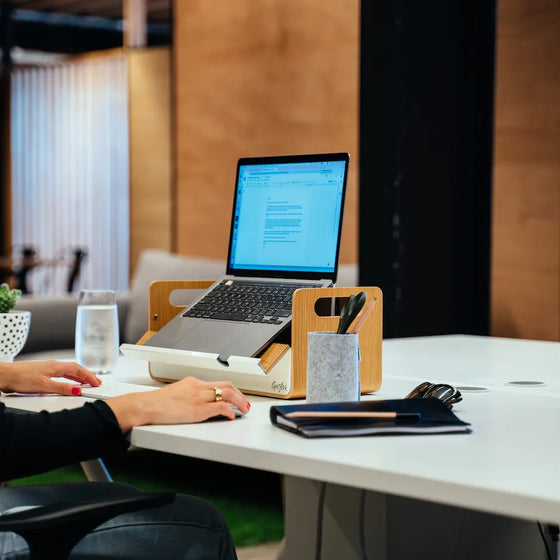
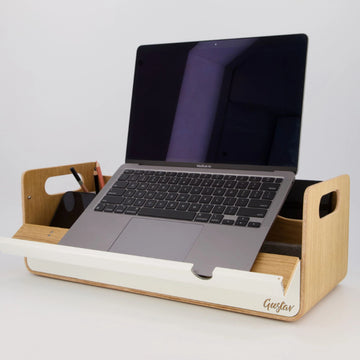
Tragbare Organizer und durchdachte Arbeitstaschen geben wichtigen Werkzeugen einen klaren Platz zwischen den Schreibtischen. Ein kompakter Laptopständer oder eine Schreibtischunterlage helfen zudem, eine vertraute, ergonomische Arbeitsumgebung zu schaffen, ohne einen festen Arbeitsplatz zu beanspruchen. Gustavs mobile Arbeitsplatzausstattung basiert auf diesem Prinzip: Persönliches mitnehmen, gezielt einrichten und den Schreibtisch für die nächste Person frei hinterlassen.
Es geht nicht darum, mehr Gegenstände hinzuzufügen, sondern verstreute Dinge durch ein stimmiges System zu ersetzen, das Auf- und Abbau natürlich macht.
Wie man eine Clean-Desk-Policy einführt, ohne Widerstand zu erzeugen
Menschen lehnen einen freien Schreibtisch selten ab. Sie lehnen eine Richtlinie ab, wenn sie als aufgezwungen, unpraktisch oder ungleich angewendet empfunden wird. Der stärkste Startpunkt ist das Arbeitsplatzproblem, das sie löst: den Schutz sensibler Materialien, die echte Verfügbarkeit gebuchter Schreibtische und ein Büro, das für alle funktioniert.
Beginnen Sie damit, die Nutzung der Räume zu beobachten. Werden Schreibtische an bestimmten Tagen zugewiesen? Lassen Kolleg:innen Geräte über Nacht liegen, weil Schließfächer zu klein sind? Gibt es wiederkehrende Stapel von Ausdrucke in der Nähe gemeinsamer Drucker? Diese Details sollten die Regeln prägen. Eine Clean-Desk-Richtlinie für ein überwiegend papierloses Studio sieht anders aus als für ein Team, das mit physischen Akten arbeitet.
Testen Sie den Prozess mit einer repräsentativen Nutzergruppe. Bitten Sie sie, eine Woche lang zwischen Schreibtischen zu wechseln und zu benennen, wo das Aufräumen umständlich ist. Die Lösung kann klarere Beschilderung, mehr Ladestationen, bessere Schließfachvergabe oder ein gemeinsamer Platz für Zubehör sein. Kleine Designverbesserungen bewirken oft mehr als wiederholte Erinnerungen.
Kommunizieren Sie die Richtlinie in klarer Sprache und zeigen Sie, wie „gut“ aussieht. Eine einfache Visualisierung an Buchungspunkten oder Schließfächern kann die Rücksetzung erklären: persönliche Gegenstände entfernen, Papiere verstauen, Müll mitnehmen, Stuhl zurückstellen und Bildschirm sperren. Neue Mitarbeitende sollten diesen Standard bereits bei der Einarbeitung kennenlernen, nicht erst durch eine Korrekturmail.
Führungskräfte sollten die Richtlinie sichtbar vorleben. Wenn leitende Angestellte Dateien und Kabel auf einem gemeinsamen Arbeitsplatz liegen lassen, wird die Richtlinie optional. Konsequenz ist wichtiger als Strenge. Wo ein Team berechtigten Bedarf hat, Spezialausrüstung am Platz zu belassen, sollte die Ausnahme dokumentiert und allen Nutzern klar kommuniziert werden.
Der Kompromiss zwischen Ordnung und Nutzbarkeit
Eine Clean-Desk-Policy darf Menschen nicht zu einer unbequemen oder ineffizienten Arbeitsweise zwingen. Ergonomische Hilfsmittel, Zugänglichkeitsgeräte und Spezialwerkzeuge müssen eventuell verfügbar bleiben oder in der Nähe gelagert werden. Ebenso ist ein papierloses Büro nicht immer realistisch, besonders bei Projektarbeit, Design-Reviews oder regulierten Umgebungen.
Die Lösung ist nicht, die Richtlinie so weit abzuschwächen, dass sie bedeutungslos wird. Es geht darum, zwischen notwendigen Arbeitsmitteln und unbeaufsichtigtem Durcheinander zu unterscheiden und Stauraum bereitzustellen, der der Realität der Rolle entspricht. Ein Schreibtisch kann während eines Workshops aktiv mit Materialien genutzt werden; er sollte dennoch nach der Sitzung zurückgesetzt werden.
Es gibt auch eine kulturelle Balance. Persönliche Gegenstände können einen Arbeitsplatz wärmer machen, aber permanente Dekorationen passen nicht zu jedem geteilten Schreibtisch. Bieten Sie persönliche Aufbewahrungsmöglichkeiten und soziale Räume an, statt einem Hot Desk die Last individueller Identität aufzubürden.
Erfolg der Richtlinie messen
Bewerten Sie den Erfolg nicht nur nach dem Erscheinungsbild bei einer Begehung. Suchen Sie nach Anzeichen, dass Menschen einen nutzbaren Schreibtisch finden, ihn schnell zurücksetzen und sich dort wohlfühlen. Feedback von Mitarbeitenden, Facility-Teams und IT-Support zeigt, ob die Richtlinie hilft oder nur Unannehmlichkeiten verlagert.
Nützliche Indikatoren sind weniger liegengebliebene Gegenstände, weniger Beschwerden über nicht verfügbare Schreibtische, bessere Nutzung von Schließfächern und weniger Zeit für das Aufräumen zwischen den Nutzern. Wenn dieselben Probleme bestehen bleiben, überdenken Sie die physische Ausstattung, bevor Sie die Durchsetzung verschärfen. Ein unordentlicher Schreibtisch ist oft ein Symptom für fehlenden Stauraum, unklare Zuständigkeiten oder schwer zu transportierende Arbeitsmittel.
Eine Clean-Desk-Policy funktioniert am besten, wenn sie als Teil der Arbeitsplatzgestaltung verstanden wird, nicht als Plakat an der Wand. Geben Sie den Menschen einen Platz für das, was sie brauchen, eine einfache Routine für den Wechsel zwischen Standorten und einen Schreibtisch, zu dem man gerne kommt. Das Ergebnis ist kein leereres Büro, sondern ein Büro, das bereit ist für die nächste Aufgabe.