A Practical Guide to Workspace Material Selection
A shared desk can look perfectly considered at 09:00 and feel worn, cluttered and uncomfortable by mid-afternoon. The difference is often material choice. This guide to workspace material selection looks beyond appearance to help workplace teams and individual professionals choose surfaces and accessories that perform through daily movement, frequent use and changing work settings.
Material is not a finishing detail. It affects how a workspace feels to use, how easily it travels, how it ages and whether it supports a clear-desk environment without becoming visually cold. For hybrid offices, home workspaces and desk-sharing programmes, the best choices balance tactile quality with practical resilience.
Start with the way the workspace moves
Before comparing finishes, define the working pattern. A fixed executive desk, a shared neighbourhood table and a laptop setup used between home, office and meeting room place very different demands on materials.
A fixed workspace can accommodate heavier, more substantial pieces. Solid timber and weightier metal elements can create a grounded, permanent feel. A desk-sharing environment needs another kind of performance: accessories must be light enough to carry, strong enough for repeat handling and simple to wipe down between users. For mobile workers, bulk matters as much as durability. An organiser that is beautiful but awkward to transport is unlikely to be used consistently.
Also consider the contact points. Hands rest on desk surfaces. Cables rub against organisers. Laptop stands are opened, closed and packed away. Bags meet locker floors, train tables and office carpeting. The right material should be specified for its actual job, not only for its initial visual impact.
A guide to workspace material selection by performance
Most successful workspaces use a considered mix rather than one material everywhere. The goal is to give each object the properties it needs while maintaining a coherent visual language.
Wood: warmth, structure and lasting character
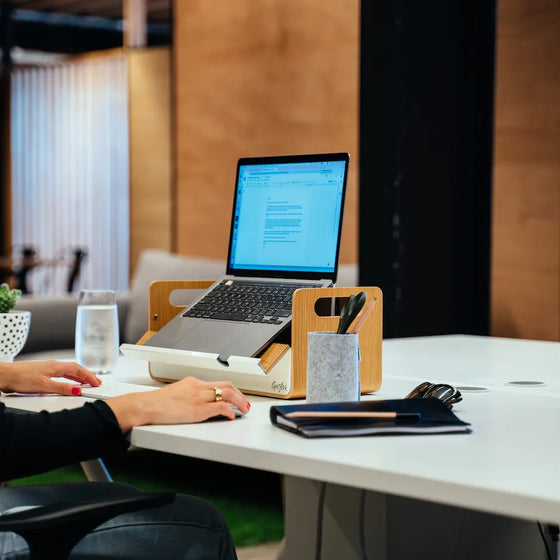
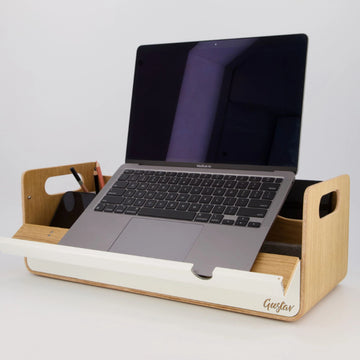
Wood brings immediate warmth to spaces that might otherwise feel temporary. It works especially well for desktop organisers, laptop stands and elements intended to make a shared desk feel more personal. Its natural grain adds visual depth without demanding attention, which suits calm, design-led interiors.
For high-use workspace products, sustainably grown wood offers a strong balance of appearance and longevity when it is properly finished. It should feel substantial, resist everyday marks and retain its character as it ages. There is a trade-off: wood is generally less forgiving of prolonged moisture and may show scratches more readily than hard plastic or powder-coated metal. That is not necessarily a weakness. In premium settings, a gentle patina can make an object feel used and valued rather than disposable.
Look closely at edges and finish quality. Rounded, carefully finished edges are more comfortable to handle and less likely to catch on bags or clothing. A refined surface treatment also makes daily cleaning more straightforward without masking the material’s natural feel.
Recycled PET felt: soft organisation with visual calm
Recycled PET felt is particularly effective for desk organisers, cable storage and interior compartments. It softens the visual and acoustic character of a workspace while protecting small tools from rattling or scratching. It can bring colour to a desk without the hard shine of plastic, making it useful in offices where personalisation needs to remain considered.
Its strength is not structural rigidity. Felt works best where softness, containment and lightweight organisation are needed. A well-designed felt organiser can hold stationery, chargers and everyday accessories in clear zones while remaining easy to move between desks. It is less suitable for surfaces that need to support concentrated weight or withstand constant wet cleaning.
Colour selection deserves attention here. Deep neutral shades create a restrained, professional presence and tend to conceal minor marks. Brighter colours can help teams identify personal equipment or distinguish zones within a larger workspace. The right choice depends on whether the priority is visual consistency or quick recognition in a shared environment.
Metal: precision where strength matters
Metal is valuable when slim strength, stable support and precise movement are essential. It is a natural choice for hinges, frames and laptop-supporting structures because it can provide rigidity without excessive bulk. Powder-coated finishes can add a refined, low-glare surface that works well alongside timber and felt.
The risk is overuse. Too much exposed metal can make a desk feel clinical, especially in home offices or hospitality-inspired workplace settings. It can also feel cold to the touch and make portable products heavier than necessary. Use it where its strength genuinely improves function, then balance it with warmer materials at points of regular contact.
Pay attention to the coating, not just the base material. A quality finish should resist chips and show minimal fingerprinting. In a desk-sharing office, visual wear spreads quickly when dozens of people use the same equipment.
Textiles and soft linings: protection in transit
Work bags, pouches and mobile desk systems need materials that protect equipment without adding unnecessary weight. Durable textiles and padded linings help separate laptops, chargers, notebooks and bottles, preventing the small collisions that create clutter and damage over time.
Here, the test is practical: can the product be packed quickly, carried comfortably and cleaned without difficulty? A delicate fabric may look refined in a meeting room but become impractical when it meets daily commuting and locker storage. Choose tightly constructed materials and purposeful linings that hold their shape, especially around frequently accessed pockets.
Specify for touch, maintenance and ageing
Material samples often look excellent under showroom lighting. A workplace specification should go further. Ask what happens after repeated cleaning, a misplaced coffee cup, a packed commute and hundreds of laptop setup cycles.
Touch matters because people make fast judgements about quality through their hands. A surface that feels rough, sharp or overly glossy can undermine an otherwise well-planned desk. Matte finishes are often more forgiving in high-use environments because they reduce glare and hide fingerprints. Soft materials can make shared desks feel less anonymous, while smooth hard surfaces remain useful where quick wipe-downs are a priority.
Maintenance should be realistic rather than aspirational. If a material needs specialist care, it may not suit a busy office with decentralised ownership. Simple cleaning routines encourage consistent use and help protect the original finish. This is particularly relevant for shared accessories, where each person should be able to reset their workspace without extra effort.
Ageing is equally important. Some materials develop a desirable patina, while others simply look tired. Choose finishes that will still look intentional after normal use. A modest scratch on wood may add character; a chipped coating on a high-visibility edge can quickly look neglected. Consider where wear will occur before finalising the specification.
Build a coherent material palette
A coherent workspace does not require matching everything exactly. It needs materials that relate to one another in weight, colour and purpose. Timber paired with recycled felt can create a warm, orderly setting. A restrained metal frame can add precision. A durable textile bag can carry the same colour accent beyond the desk.
Keep the palette focused. Two or three primary materials are usually enough for a workstation. More than that can make a compact desk feel busy, particularly when users bring their own devices, notebooks and personal items.
For office planners, consistency should not mean sameness. Give employees tools that create a recognisable setup wherever they work, while allowing small choices such as organiser colour or felt insert. This helps flexible workspaces feel designed for people rather than merely managed for occupancy.
Choose materials that support portability
Portability is often treated as a separate product feature. In practice, it begins with material selection. Heavy materials can make a product feel premium, but too much weight discourages movement. Ultra-light materials can improve carrying comfort, but may feel flimsy if they lack structure or thoughtful detailing.
The strongest approach is selective substance: use stable materials where the product must support a laptop or protect valuable equipment, and lighter materials where it is carried or handled repeatedly. A portable workstation should feel reassuringly solid once opened, then easy to take away when the desk needs to be reset.
Gustav applies this principle through workspace tools that combine sustainably grown wood and recycled materials with purposeful, mobile design. The aim is not simply a tidier desk. It is a dependable setup that can move with the working day.
A material choice becomes successful when users barely have to think about it. The organiser is pleasant to touch, the stand feels stable, the bag carries what it should, and the shared desk is ready for its next user. That quiet reliability is what gives a flexible workspace lasting quality.