Zijn laptopstandaards de moeite waard voor hybride werken?

Een laptop is ontworpen om mee te reizen. Je lichaam is niet gemaakt om zich acht uur lang aan te passen aan de schermhoogte van een laptop aan een keukentafel, gedeeld bureau of bij een klant. Dus, zijn laptopstandaards de moeite waard? Voor de meeste mensen die regelmatig met een laptop werken, is het antwoord ja - mits de standaard past bij de manier waarop ze daadwerkelijk werken.
Een goede laptopstandaard doet meer dan alleen het scherm verhogen. Het helpt een herhaalbare werkplek te creëren: een plek die geordend aanvoelt, een betere houding ondersteunt en kan worden opgeruimd zonder dat flexibel werken een dagelijkse concessie wordt. Voor thuiskantoren, gedeelde werkplekken en werken onderweg heeft die consistentie echte waarde.
Zijn laptopstandaards de moeite waard voor dagelijks werk?
Het argument voor een laptopstandaard begint bij de schermpositie. Wanneer een laptop plat op een bureau staat, bevindt het scherm zich meestal onder ooghoogte. Dat stimuleert de bekende voorovergebogen houding van het hoofd en opgetrokken schouders, vooral tijdens lange schrijfsessies, videogesprekken of geconcentreerd projectwerk.
Het verhogen van de laptop brengt het scherm dichter bij een comfortabele kijkhoogte. Het lost niet elk ergonomisch probleem op, maar het is een betekenisvolle verbetering van het deel van de werkplek waar mensen de hele dag naar kijken. Een betere kijklijn kan een tijdelijk bureau minder tijdelijk laten aanvoelen.
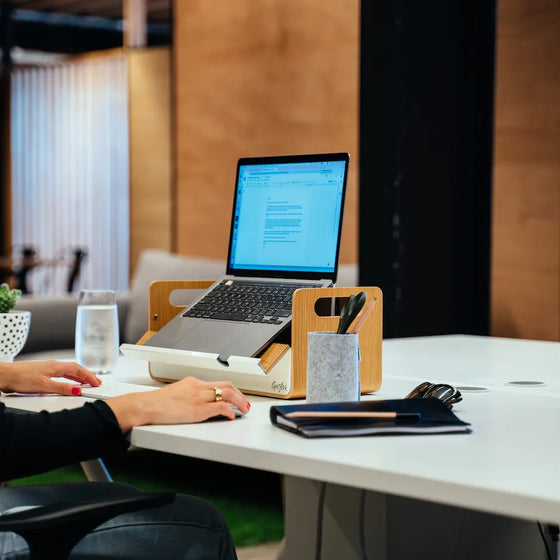
Het voordeel is vooral duidelijk voor hybride werkers. Iemand die wisselt tussen thuis, een flexplek en een vergaderruimte kan niet vertrouwen op een perfect ingerichte werkplek overal. Een draagbare standaard creëert een stabiel startpunt, waar de dag ook begint. Open het, positioneer het scherm, sluit de essentiële spullen aan en de werkplek is klaar.
Voor organisaties is dit belangrijker dan alleen individueel comfort. Bureau delen werkt het beste wanneer medewerkers een bureau snel kunnen personaliseren zonder kabels, losse accessoires of visuele rommel achter te laten. Een standaard die netjes samen met een laptop en werktuigen kan worden opgeborgen, ondersteunt een schoner bureaubeleid en geeft mensen meer controle over hun werkplek.
Wat een laptopstandaard verandert - en wat niet
Een laptopstandaard kan de schermhoogte verbeteren, ruimte onder het apparaat vrijmaken en zorgen voor meer orde op het bureau. Het kan ook de luchtcirculatie rond de laptop verbeteren, wat nuttig kan zijn bij intensief gebruik. Dit zijn praktische voordelen, geen abstracte designdetails.
Een verhoogde laptop verandert echter ook de hoogte van het toetsenbord. Als je lange tijd typt, kan het ingebouwde toetsenbord minder comfortabel worden zodra het scherm hoger staat. In dat geval zijn een apart toetsenbord en muis de natuurlijke aanvulling op een standaard. Zij zorgen ervoor dat scherm, handen en armen in een positie zitten die beter bij de gebruiker past.
Dit is de centrale afweging. Een eenvoudige standaard kan een uitstekende oplossing zijn voor gesprekken, korte sessies, lezen of licht werk. Voor een hele dag werken met een laptop is het beter om het als onderdeel van een setup te zien, niet als de volledige setup.
Die onderscheid is ook nuttig voor werkplekontwerpers. Een gedeeld kantoor hoeft niet elk bureau permanent uit te rusten met een groot scherm. Maar het moet mensen wel makkelijk maken een effectieve werkplek te creëren met draagbare hulpmiddelen, vooral waar bureaus flexibel, opgeruimd en visueel rustig moeten blijven.
Wanneer een standaard het meest nuttig is
Laptopstandaards verdienen hun plek wanneer er op verschillende locaties wordt gewerkt, wanneer de bureaubladruimte beperkt is, of wanneer mensen vaak videogesprekken voeren. Het verhogen van de camera kan zorgen voor een natuurlijkere kijkhoek tijdens gesprekken, terwijl het verhogen van het scherm voorkomt dat gebruikers steeds naar beneden kijken.
Ze zijn ook waardevol in compacte thuissituaties. Een eettafel hoeft geen permanent kantoor te worden om goed werk te ondersteunen. Een draagbare standaard, gecombineerd met een toetsenbord en muis waar nodig, kan in een oogwenk een duidelijke werkzone creëren en aan het einde van de dag worden opgeborgen.
Voor consultants, creatieven en projectteams is het voordeel continuïteit. Dezelfde essentiële setup kan van een thuiskantoor naar een gedeelde werkplek worden meegenomen zonder het gevoel van een doordacht bureau te verliezen.
Wanneer een standaard misschien niet nodig is
Als een laptop slechts kort wordt gebruikt voor e-mail, af en toe browsen of als secundair apparaat naast een correct gepositioneerd scherm, voegt een standaard mogelijk weinig toe. Ook is een grote, vaste standaard niet voor iedereen de juiste keuze. Die kan waardevolle bureauruimte innemen en de draagbaarheid ondermijnen die een laptop juist zo handig maakt.
De beste keuze hangt af van gebruiksduur, werkstijl en locatie. Iemand met een vaste werkplek en extern scherm heeft andere behoeften dan iemand die drie keer per week van werkplek wisselt. Het doel is niet om nog een object aan het bureau toe te voegen, maar om wrijving weg te nemen in de manier waarop er al gewerkt wordt.
Een laptopstandaard kiezen die werkt op meer dan één bureau
Niet alle standaards zijn geschikt voor flexibel werken. Een nuttig ontwerp moet de laptop stevig ondersteunen, maar ook makkelijk mee te nemen zijn, snel uit te klappen en visueel rustig blijven. Het juiste product moet een werkplek bewuster laten aanvoelen zonder een tas zwaarder te maken of een gedeeld bureau ingewikkelder.
Begin met stabiliteit. De standaard moet stevig op het oppervlak staan en de laptop zonder wiebelen vasthouden tijdens het typen of het verstellen van het scherm. Dit klinkt vanzelfsprekend, maar wordt belangrijker in drukke gedeelde omgevingen waar bureaus verschillen en mensen snel tussen vergaderingen opbouwen.
Denk dan aan hoogte en kijkhoek. Sommige standaards bieden één verhoogde positie, andere meerdere instelbare niveaus. Meer verstelopties is niet per se beter. Een goed gekozen hoek die bij de gebruiker past en het ontwerp slank houdt, kan praktischer zijn dan een complex mechanisme met te veel bewegende delen.
Draagbaarheid is net zo belangrijk. Voor hybride werk moet een standaard plat op te vouwen zijn of natuurlijk in een werkpleksysteem passen. Het mag geen aparte, lompe tas vereisen of een wirwar van losse accessoires veroorzaken. De meest effectieve mobiele hulpmiddelen verdienen hun plek door herhaald gebruik: ze zijn makkelijk te pakken, makkelijk in te pakken en prettig in gebruik.
De materiaalkeuze beïnvloedt ook de ervaring. Premium materialen kunnen warmte, duurzaamheid en visuele rust brengen aan een bureau dat anders anoniem aanvoelt. Duurzaam geteeld hout en gerecyclede materialen, doordacht gebruikt, ondersteunen een bewuste benadering van producten die dagelijks worden meegenomen en gebruikt. Goede vakmanschap is hier belangrijk omdat scharnieren, oppervlakken en randen constant contact krijgen.
Een standaard is onderdeel van een betere werkplek, geen op zichzelf staande oplossing
Ergonomie wordt vaak gepresenteerd als een checklist, maar echt werk is gevarieerder. Je kunt de ochtend besteden aan geconcentreerd schrijven, daarna aan een samenwerktafel voor een workshop en vervolgens thuis gesprekken voeren. Eén statische opstelling kan niet altijd elke werkmodus bedienen.
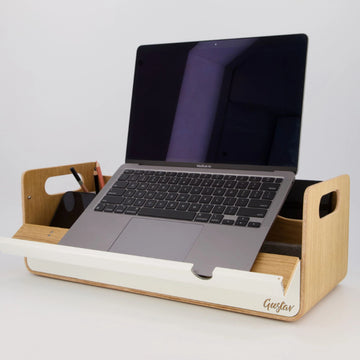
Een laptopstandaard biedt een aanpasbare basis. Voeg een compact toetsenbord en muis toe voor langere sessies, en het bureau wordt comfortabeler zonder permanent te zijn. Combineer het met een bureau-organizer of tech-etui, en essentiële spullen zijn samen in plaats van verspreid over de tafel.
Daarom zijn geïntegreerde werkpleksystemen bijzonder effectief in gedeelde kantoren. Ze geven medewerkers een praktische manier om hun werkbenodigdheden mee te nemen, een persoonlijke werkzone te definiëren en het bureau leeg achter te laten als ze weggaan. Het resultaat is niet alleen netter, maar ook respectvoller naar de volgende gebruiker van de ruimte.
Gustav benadert dit als een complete werkplekvraag: draagbare hulpmiddelen moeten houding, organisatie en een consistente ervaring ondersteunen, waar het werk ook plaatsvindt. De sterkste opstellingen maken geen lawaai. Ze maken het gewoon makkelijker om te beginnen.
De waarde zit in de gewoonte die het ondersteunt
Een laptopstandaard is de moeite waard wanneer het een herhaald gedrag verandert. Als het je helpt te stoppen met werken met je hoofd naar beneden gericht, een gedeeld bureau makkelijker maakt of een extra tafel verandert in een betrouwbare werkplek, voel je de waarde elke dag.
Het gaat minder om het bezitten van nog een accessoire en meer om het stellen van een betere standaard voor mobiel werken. Kies een standaard die stabiel, draagbaar en geschikt is voor de duur van je werksessies. Laat het dan het kleine, betrouwbare object worden dat elk bureau klaar maakt voor serieus werk.