7 Beste Laptopverhogers voor Reizen: Wat te Kiezen

Een laptop op een hotelbureau, gedeelde werkplek of cafétafel staat zelden op de juiste hoogte. De beste laptopverhogers voor onderweg lossen dat probleem op zonder een log, onhandig object toe te voegen aan een toch al volle werktas. Ze maken het mogelijk om binnen enkele minuten een doordachte werkplek te creëren – waar de werkdag ook begint.
Voor mobiele professionals is de juiste keuze niet simpelweg de lichtste standaard of de hoogste. Het is de verhoger die een comfortabele schermpositie ondersteunt, voorspelbaar inpakt, stabiel blijft op oneffen oppervlakken en past bij de manier waarop je daadwerkelijk werkt. Een consultant die tussen klantlocaties reist, heeft andere behoeften dan een ontwerper die een grotere laptop door de stad draagt, of een team dat een gedeelde werkplek inricht.
Wat maakt een laptopverhoger reisbestendig?
Een reisverhoger moet zijn plek in je tas verdienen. Begin met de opgevouwen afmetingen in plaats van alleen het gewicht van het product. Een zeer lichte standaard met uitstekende armen kan lastiger in te pakken zijn dan een iets zwaarder ontwerp dat plat in een laptopsleeve of organizer past. Zoek naar een vorm die de omringende apparatuur beschermt in plaats van blijft haken aan kabels, notitieboekjes of stof.
Stabiliteit is net zo belangrijk. Tafels buiten kantoor zijn vaak ondiep, getextureerd of licht ongelijk. Een verhoger heeft een stevige basis, antislip contactpunten en een platform nodig dat de laptop zonder doorbuigen ondersteunt. Als hij verschuift telkens wanneer je typt of het scherm verstelt, verdwijnt het ergonomische voordeel snel.
Hoogte en kijkhoek zijn de andere essentiële punten. Het scherm dichter bij ooghoogte brengen kan de neiging verminderen om voorover te buigen bij een laag scherm, vooral tijdens lange sessies. Toch is de hoogste stand niet automatisch de beste. Het doel is een ontspannen, rechte houding waarbij het bovenste derde deel van het scherm dichter bij ooghoogte is, zonder dat je nek te ver naar achteren moet kantelen.
Wanneer een laptop aanzienlijk wordt verhoogd, worden een extern toetsenbord en muis veel nuttiger. Voor korte taken is het laptoptoetsenbord bij een lage hoek soms acceptabel. Voor geconcentreerd werk maakt een compact invoerapparaat van de verhoger een complete, comfortabelere werkplek.
De 7 beste laptopverhogers voor onderweg per werkstijl
Er is geen enkel winnend formaat voor elke reis. Dit zijn de zeven meest bruikbare verhogertypes en de afwegingen om te overwegen voordat je er een kiest.
1. De ultra-platte vouwverhoger
Dit is de natuurlijke keuze voor mensen die licht reizen en in korte sessies werken. Hij vouwt bijna plat, voegt weinig visuele rommel toe aan een tas en is snel op een bureau te plaatsen. Veel ontwerpen gebruiken een eenvoudige scharnierconstructie of slanke steunarmen om een bescheiden verhoging te creëren.
De compromis is meestal de verstelbaarheid en typpositie. Een ultra-platte verhoger werkt het beste voor e-mail, telefoongesprekken en korte sessies, vooral wanneer de bureauruimte beperkt is. Hij is minder overtuigend voor een hele dag werken met een grotere, zwaardere laptop.
2. De verstelbare aluminium standaard
Voor regelmatige hybride werkers biedt een verstelbare metalen verhoger een betere balans tussen duurzaamheid, hoogtebereik en stabiliteit. Het materiaal voelt solide aan, terwijl een brede basis helpt om de standaard stabiel te houden op gladde vergadertafels en hotelbureaus.
De beperking is het gewicht. Zelfs een goed ontworpen aluminium standaard kan merkbaar worden in combinatie met een oplader, koptelefoon en een laptop van normaal formaat. Kies dit formaat wanneer ergonomie tijdens langere werksessies belangrijker is dan reizen met het lichtst mogelijke gewicht.
3. De compacte schaarverhoger
Schaarmechanismen bieden een betekenisvolle hoogteverstelling in een compact formaat. Ze zijn vooral nuttig voor mensen die tussen verschillende bureauhoogtes bewegen, van een eettafel thuis tot een gedeeld kantoorbureau of vergaderruimte bij een klant.
Controleer de kwaliteit van het scharnier en de vergrendeling zorgvuldig. Een reisverhoger moet bewust verstelbaar zijn, niet inklappen onder het gewicht van het apparaat of los aanvoelen na herhaald gebruik. Dit formaat wordt vaak het beste gebruikt met een apart toetsenbord en muis, omdat typen direct op een hoog platform beweging kan veroorzaken.
4. De laptopsleeve met geïntegreerde verhoging
Voor incidentele reizigers kan een beschermhoes die ook een schuine werkpositie creëert een elegante, opgeruimde oplossing zijn. Het combineert twee items in één en geeft je een consistente ondergrond voor een laptop wanneer het bureau zelf minder ideaal is.
Het geïntegreerde formaat biedt meestal een lagere verhoging dan een speciale standaard. Dat is geen zwakte als je prioriteit een zachte typhoek, luchtcirculatie en een nettere opstelling is. Het is simpelweg niet de juiste keuze wanneer je het scherm dicht bij ooghoogte nodig hebt voor lange gesprekken of geconcentreerd werk.
5. De compacte ezelverhoger
Een ezelverhoger ondersteunt de laptop meestal van achteren, waardoor een schone, rechtopstaande schermpositie ontstaat met een kleine bureauruimte. Het kan een sterke optie zijn voor presentaties, videogesprekken en geconcentreerd bureauwerk waarbij een extern toetsenbord al deel uitmaakt van de opstelling.
Let op de voorste steunrand. Die moet de laptop stevig vasthouden zonder poorten te blokkeren, in het apparaat te drukken of het moeilijk te maken het scherm volledig te openen. Voor reizen is een ontwerp met een duidelijk opgevouwen profiel te verkiezen boven één met losse onderdelen.
6. De houten draagbare standaard
Een houten verhoger brengt warmte en visuele rust in tijdelijke werkplekken die anders generiek kunnen aanvoelen. Voor professionals die geven om het karakter van hun opstelling kan duurzaam geteeld hout een doordachte, alternatieve keuze zijn naast puur technisch ogende accessoires.
De sleutel is proportie. Hout voelt prettig aan, maar kan bulk toevoegen als de standaard te robuust is gebouwd. Een goed gemaakte draagbare houten standaard moet efficiënt vouwen of nestelen, zijn randen beschermen tijdens transport en voldoende stijfheid bieden voor dagelijks gebruik. Hij is bijzonder geschikt voor thuiswerkrotaties, studio’s en werkplekken waar materiaalkwaliteit deel uitmaakt van de ervaring.
7. De mobiele werkplekorganizer met laptopsteun
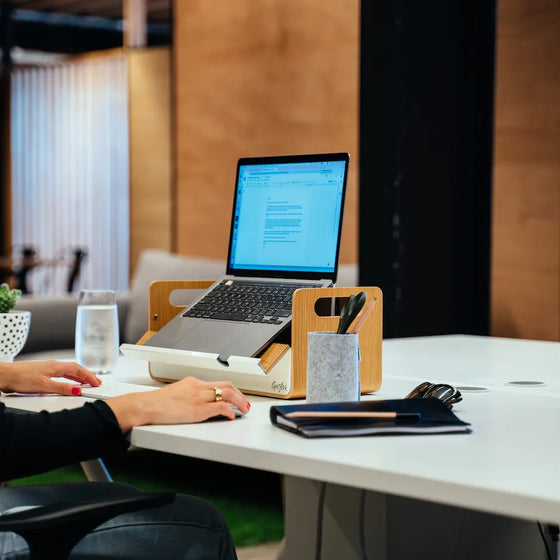
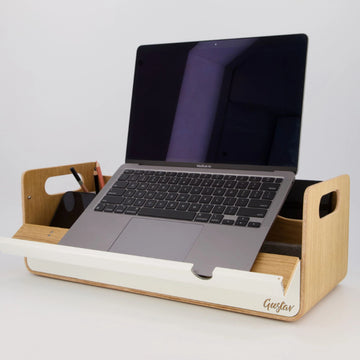
De meest complete optie is niet altijd een losse verhoger. Een draagbare organizer met geïntegreerde laptopsteun kan de tools samenbrengen die vaak verspreid liggen over een gedeeld bureau: laptop, oplader, notitieboek, muis, kabels en persoonlijke benodigdheden. Het resultaat is een snellere opstelling, minder visuele rommel en een duidelijkere scheiding tussen tijdelijke en vaste werkplek.
Deze aanpak past vooral goed bij desk-sharing omgevingen. In plaats van meerdere losse accessoires mee te nemen, komen gebruikers met één georganiseerd werkpleksysteem aan en laten ze het bureau leeg achter als ze verder gaan. Gustav past dit principe toe op mobiele werkplekgereedschappen die een kantoorwaardige opstelling direct laten voelen in plaats van geïmproviseerd.
Kies voor je laptop, niet alleen voor je reis
Controleer voordat je een verhoger kiest de afmetingen en het gewicht van je eigen laptop. Een standaard die stabiel aanvoelt met een compact 13-inch apparaat kan minder overtuigend zijn met een 16-inch workstation-laptop. Houd ook rekening met de locatie van de oplaadpoort, ventilatieopeningen en USB-aansluitingen. Een steunlip of arm op de verkeerde plek kan interfereren met de apparatuur waarop je vertrouwt.
Je reispatroon is net zo relevant. Voor treinreizen en dagen waarop je tussen meerdere bureaus beweegt, is een laag opgevouwen volume vaak prioriteit. Voor zakelijke overnachtingen waarbij je verwacht enkele uren vanuit een hotelkamer te werken, verdienen verstelbaarheid en een stabiele basis meer gewicht. Als je een team uitrust, kan het standaardiseren van één intuïtief formaat de opstelling vereenvoudigen en helpen een consistente desk-sharing ervaring te behouden.
Een nuttige test is om de verhoger in te pakken samen met alles wat je normaal op een werkdag meeneemt. Inclusief oplader, toetsenbord, muis, notitieboek, koptelefoon en kabeltasje. Als de standaard natuurlijk in dat systeem past, opent zonder een reeks lastige stappen en het scherm echt een betere positie geeft, is het waarschijnlijk een goede reisgenoot.
Bouw een betere tijdelijke werkplek
Een laptopverhoger werkt het beste als hij de hele opstelling ondersteunt in plaats van een extra object op het bureau te worden. Plaats het scherm op een comfortabele kijkhoogte, positioneer het toetsenbord zodat je schouders ontspannen blijven en houd de muis dichtbij om reiken te voorkomen. Een beetje kabelorganisatie helpt, vooral in gedeelde ruimtes waar een rustig bureau makkelijker te onderhouden en achter te laten is.
Vermijd het zien van een verhoger als dé oplossing voor elke slechte werkplek. Een zeer lage stoel, een diepe bank of een drukke cafétafel kunnen je houding nog steeds beperken. Kies in die situaties de meest praktische opstelling die beschikbaar is en reserveer langere taken voor een betere ondergrond wanneer mogelijk.
De juiste reisverhoger doet iets stil maar waardevols: hij laat onbekende bureaus bewuster aanvoelen. Kies er een die bij je apparatuur, je tas en je werkritme past, en elke nieuwe locatie kan een plek worden om goed werk te doen.