Duurzame kantooraccessoires kiezen

Een bureau vertelt je veel over hoe er van je verwacht wordt dat je werkt. Als elke opstelling afhankelijk is van wegwerp kabelklemmen, plastics met korte levensduur en niet-passende accessoires, is de boodschap duidelijk: gemak gaat voorop, ook al volgt er afval. Duurzame kantooraccessoires veranderen die vergelijking. Ze brengen materiële eerlijkheid, een langere productlevensduur en een rustiger, beter georganiseerd werkplek die past bij hoe mensen nu daadwerkelijk werken.
Voor hybride teams, werkplekken met gedeelde bureaus en thuiskantoren is dit belangrijker dan vroeger. Accessoires zijn niet langer decoratieve extra’s. Ze bepalen de houding, verminderen rommel, ondersteunen mobiliteit en beïnvloeden hoe snel iemand zich kan concentreren op het werk. De juiste keuzes moeten meer doen dan er verantwoord uitzien op een productpagina. Ze moeten presteren, goed mee kunnen reizen en lang meegaan.
Wat duurzame kantooraccessoires eigenlijk moeten bieden
Duurzaamheid in werkplekproducten wordt vaak gereduceerd tot één claim: gerecycled materiaal. Dat kan relevant zijn, maar het is slechts een deel van het verhaal. Een bureauonderlegger gemaakt van gerecyclede vezels is een sterkere propositie als deze ook slijtvast is, zijn vorm behoudt en er na twee jaar dagelijks gebruik nog steeds verzorgd uitziet. Als het snel rafelt en vervangen moet worden, verzwakt het duurzaamheidsverhaal.
Hetzelfde geldt voor laptopstandaards, organizers, tech-etuis en draagbare bureausystemen. Goede duurzame kantooraccessoires moeten de milieubelasting verminderen door materialen, ja, maar ook door duurzaamheid, waar mogelijk reparatie, efficiënte productie en een ontwerp dat nuttig blijft als werkpatronen veranderen. Een product dat werkt op kantoor, thuis en onderweg heeft meestal een langere levensduur dan een product dat voor één vaste plek is gemaakt.
Daar verdient premium design zijn plek. Betere details, sterkere constructie en zorgvuldig gekozen materialen zijn geen cosmetische upgrades. Ze helpen producten om veelvuldig gebruik, transport en gedeeld gebruik te overleven. Praktisch betekent dit minder vervangingen, minder afval en een betere gebruikerservaring op de lange termijn.
Materialen zijn belangrijk, maar ook de levensduur
Hout uit verantwoord beheerde bronnen blijft een van de duidelijkste signalen van doordacht productontwerp, vooral als het gecombineerd wordt met ingetogen techniek en gebouwd is voor langdurig gebruik. Het brengt warmte in technische omgevingen en veroudert meestal mooier dan veel synthetische afwerkingen van lage kwaliteit. Gerecyclede textiel en vilt kunnen ook goed werken, vooral voor organizers en etuis, mits ze voldoende structuur en slijtvastheid bieden.
Plastic is niet automatisch de verkeerde keuze. In sommige accessoires, vooral onderdelen die flexibiliteit of laag gewicht nodig hebben, kan het het meest praktische materiaal zijn. De betere vraag is of dat plastic gerecycled, duurzaam en doelbewust gebruikt wordt in plaats van standaard. Duurzame specificatie gaat zelden over absolutistische regels. Het gaat erom het juiste materiaal voor de taak te kiezen en ervoor te zorgen dat het product zijn ecologische voetafdruk verdient over jaren in plaats van maanden.
Hier moeten kopers vaak wat gas terugnemen. Een product kan als milieuvriendelijk worden gepresenteerd terwijl het overontworpen is, moeilijk te recyclen of te fragiel voor dagelijks gebruik. Daarentegen kan een goed gemaakte draagbare organizer van gerecycled stof met versterkte stresspunten en een eenvoudige, repareerbare constructie betere waarde en minder afval bieden, ook al klinken de claims minder spectaculair.
Duurzame kantooraccessoires in hybride werk
Hybride werken heeft een zwakte blootgelegd in veel conventionele kantooraccessoires: ze gaan uit van permanentie. Een vaste bureau-organizer, een zware monitorverhoger of een traysysteem dat alleen op één plek werkt, is minder logisch als gebruikers wisselen tussen thuis, kantoor en gedeelde werkplekken.
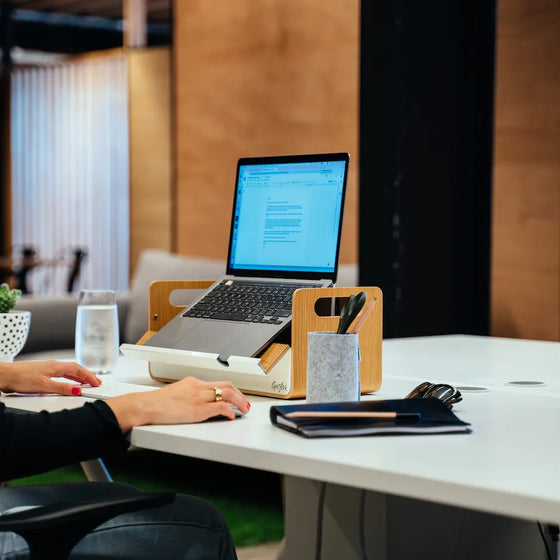
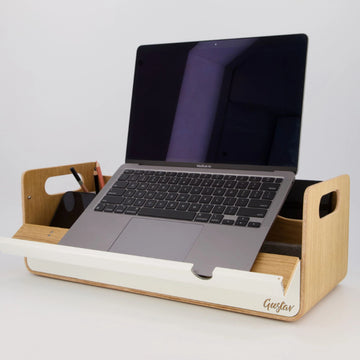
Duurzame kantooraccessoires voor modern werk moeten mobiliteit ondersteunen zonder wegwerp te worden. Dat betekent meestal lichtere formaten, geïntegreerde opbergruimte en een opstelling die direct aanvoelt. Draagbare organizers, inklapbare standaards en compacte etuis kunnen gebruikers helpen essentiële spullen in één verfijnd systeem mee te nemen in plaats van tijdelijke oplossingen bij elkaar te zoeken. Als iemand in seconden kan uitpakken, comfortabel werken en weer inpakken, doet het accessoire meer dan alleen bureau ruimte besparen. Het ondersteunt consistentie in wisselende omgevingen.
Voor werkgevers heeft die consistentie een bredere impact. Desk-sharing werkt beter als mensen snel een vertrouwde, functionele opstelling kunnen creëren. Werknemers voelen zich meer in controle over hun ruimte, terwijl facilitaire teams schonere bureaus en flexibelere plattegronden behouden. In die context ondersteunen goed ontworpen accessoires zowel de werkplekopzet als duurzaamheidsdoelen. Er zijn minder overbodige bureau-items nodig en gebruikers zijn minder afhankelijk van goedkope, vervangbare noodoplossingen.
De afweging tussen lagere kosten en lagere impact
Het heeft geen zin te doen alsof elk duurzaam product de goedkoopste optie is. Vaak is dat niet zo. Betere materialen, verantwoorde inkoop en sterkere vakmanschap verhogen meestal de aanschafprijs. Voor inkoopteams of individuele kopers kan dat spanning veroorzaken, vooral als budgetten krap zijn.
Maar het kopen van accessoires is een gebied waar kortetermijnbesparingen vaak slecht uitpakken. Een goedkope laptopstandaard die wiebelt, snel krast of breekt tijdens transport blijft niet goedkoop als die twee keer vervangen moet worden. Hetzelfde geldt voor synthetische bureauonderleggers die aan de randen krullen, rits-etuis die falen bij dagelijks gebruik of organizers die nooit goed passen bij de spullen die mensen echt meenemen.
Een nuttigere vergelijking is de kostprijs over de volledige levensduur van het product. Hoe lang blijft het functioneel? Ziet het er nog passend uit in een premium kantoor? Kan het met de gebruiker mee veranderen als werkstijlen evolueren? Deze vragen pleiten meestal voor accessoires die ontworpen zijn met duurzaamheid en draagbaarheid in gedachten.
Dit is een reden waarom merken zoals Gustav duurzaamheid positioneren naast vakmanschap en ergonomische prestaties in plaats van het als een aparte deugd te behandelen. In moderne werkplekken zijn die factoren verbonden. Een product dat beter werkt, wordt waarschijnlijk langer gebruikt. Een product dat beter gemaakt is, wordt minder snel vervangen.
Waar kopers op moeten letten voordat ze specificeren
De sterkste producten communiceren hun waarde meestal rustig. Ze hebben geen overdreven claims nodig als de basis klopt. Voor beslissers op de werkplek, architecten en ontwerpers helpt het om voorbij oppervlakkige boodschappen te kijken en te onderzoeken hoe een accessoire zich gedraagt in dagelijks gebruik.
Begin met materiaalhelderheid. Kan het merk uitleggen waar het product van gemaakt is en waarom? Vage termen zoals natuurlijk, groen of bewust zijn minder nuttig dan specifieke informatie over gerecycled materiaal, houtherkomst of productienormen.
Beoordeel vervolgens de functionele levensduur. Accessoires in hybride werkplekken moeten beweging, herhaald in- en uitpakken en verschillende soorten bureaus aankunnen. Als het ontwerp elegant maar fragiel is, past het misschien beter in een showroom dan in een echte werkplek.
Overweeg dan of het product complexiteit vermindert. De meest effectieve accessoires vereenvoudigen de opstelling, bevatten rommel en ondersteunen een betere houding zonder visuele ruis toe te voegen. Dit is belangrijk in gedeelde ruimtes, waar elk item zijn plek moet rechtvaardigen.
Bekijk tot slot de nazorg en garantie. Een garantie van twee jaar zegt bijvoorbeeld iets concreets over de verwachte duurzaamheid. Het is niet de enige kwaliteitsindicator, maar het is zinvoller dan brede beloften over duurzaamheid.
Ontwerpkwaliteit maakt deel uit van het duurzaamheidsverhaal
Goed ontworpen accessoires blijven meestal langer relevant. Dat klinkt vanzelfsprekend, maar heeft echte milieuwaarde. Producten die visueel rustig, materieel eerlijk en functioneel precies zijn, worden minder snel weggegooid als kantoorinterieurs veranderen of gebruikersverwachtingen stijgen.
Dit is vooral relevant in Europa, waar werkplekdesign steeds meer prestatie en sfeer in balans brengt. Kantoren moeten bewust aanvoelen, niet geïmproviseerd. In die context spelen accessoires een subtiele maar zichtbare rol. Een verfijnde laptopstandaard of bureau-organizer kan een werkplek samenbrengen zonder aandacht te vragen. Als deze objecten gemaakt zijn om lang mee te gaan, wordt duurzaamheid onderdeel van de dagelijkse visuele standaard in plaats van een bijzaak.
Er is ook een gedragsmatig effect. Mensen zorgen over het algemeen beter voor producten die doordacht aanvoelen. Ze zijn minder geneigd accessoires verkeerd te gebruiken, kwijt te raken of te vervangen als die een duidelijke functie en een premium afwerking hebben. Dat zie je misschien niet in een levenscyclusanalyse, maar het beïnvloedt hoe lang een product in gebruik blijft.
Een betere standaard voor het moderne bureau
De beste duurzame kantooraccessoires proberen slechte ontwerpen niet te compenseren met goede bedoelingen. Ze combineren materialen met lage impact met praktische prestaties, draagbaarheid en een afwerking die past bij hedendaags werk. Die balans is belangrijk, of je nu specificeert voor een flexibel kantoor, een thuissituatie verfijnt of teams uitrust voor desk-sharing.
Een beter bureau wordt zelden gebouwd door meer spullen. Het komt door minder, betere hulpmiddelen die de essentie organiseren, comfort ondersteunen en lang meegaan. Dat is de standaard om naar te streven – niet alleen omdat het duurzamer is, maar omdat het slimmer werken mogelijk maakt.