Voorbeeld van een succesvolle invoering van desk sharing

Een voorbeeld van een invoering van desk sharing ziet er op een slide vaak netjes uit, maar op maandagochtend rommelig. Het beleid is goedgekeurd, lockers zijn geïnstalleerd, een boekingstool gaat live – en dan komen teams binnen zonder plek om een laptopstandaard neer te zetten, zonder opbergruimte voor een toetsenbord en zonder een consistente manier om het bureau klaar te maken voor de volgende gebruiker. Die kloof tussen strategie en dagelijks gebruik is waar de meeste invoeringen slagen of vastlopen.
Voor leiders op de werkvloer is de uitdaging niet of desk sharing kan werken. Dat kan het. De echte vraag is hoe je het introduceert zonder wrijving, visuele rommel of een daling in de werknemerservaring te veroorzaken. Een sterke invoering draait minder om regels en meer om het gedeelde bureau makkelijk te maken in gebruik, makkelijk op te ruimen en makkelijk opnieuw in te richten.
Een praktisch voorbeeld van een invoering van desk sharing
Stel je een bedrijf voor met 250 medewerkers dat overstapt van toegewezen bureaus naar een hybride vloer met 140 gedeelde werkplekken. Medewerkers komen op verschillende dagen naar kantoor, sommige teams drie dagen per week en anderen alleen voor samenwerkingssessies. Het management wil een betere benutting van de ruimte, maar wil ook dat het kantoor premium, rustig en doordacht aanvoelt.
De invoering begint met een eenvoudig principe: gedeelde bureaus moeten snelle persoonlijke inrichting ondersteunen zonder permanente verspreiding toe te staan. Dat verandert het project direct. Het is niet langer alleen een vastgoedbeslissing. Het wordt een beslissing over de werkplekomgeving waarbij faciliteiten, HR, IT en teamleiders betrokken zijn.
In dit voorbeeld vermijdt het bedrijf een grote lancering in één keer. In plaats daarvan wordt de invoering in vier fasen over twaalf weken uitgerold. Dat tempo geeft teams tijd om hun gedrag aan te passen, stelt managers in staat om knelpunten te zien en maakt het makkelijker om de standaard voor bureaus te verfijnen voordat het op grotere schaal wordt uitgerold.
Fase 1: Definieer de soorten bureaus
Niet elk bureau hoeft hetzelfde doel te dienen. In het pilotgebied creëert het bedrijf drie duidelijke typen werkplekken: focusbureaus voor rustig individueel werk, teambuurtbureaus voor dagelijkse aanwezigheid en touchdown-bureaus voor korte verblijven tussen vergaderingen door. Dit is belangrijk omdat mensen zich anders gedragen afhankelijk van de verwachte duur. Als elke plek er hetzelfde uitziet, behandelen gebruikers ze vaak allemaal als allround bureaus, wat snel tot verwarring leidt.
Elk type bureau krijgt een vastgesteld uitrustingsniveau. Een focusbureau bevat een monitor, stroomvoorziening, taakverlichting en een schoon oppervlak voor een tijdelijke persoonlijke inrichting. Teambureaus bevatten dezelfde basisvoorzieningen maar liggen dichter bij samenwerkingszones. Touchdown-bureaus blijven compacter en zijn ontworpen voor kortere sessies in plaats van een hele dag bezetting.
Die onderscheid helpt medewerkers de juiste plek te kiezen in plaats van het dichtstbijzijnde beschikbare bureau te claimen en het slecht aan te passen.
Fase 2: Standaardiseer wat op het bureau hoort
Hier worden veel desk-sharingprogramma’s inconsistent. Als het ene bureau een monitorarm heeft, het andere losse kabels en een derde geen duidelijke plek voor persoonlijke spullen, nemen gebruikers meer eigen apparatuur mee en laten ze meer achter.
In dit voorbeeld van een invoering van desk sharing volgt elk gedeeld bureau dezelfde resetlogica. Oppervlakken blijven visueel schoon. Kabels worden beheerst. Gedeelde apparatuur is beperkt tot wat elke gebruiker nodig heeft. Persoonlijke werktuigen blijven draagbaar, worden niet in lades opgeborgen of verspreid over het bureau.
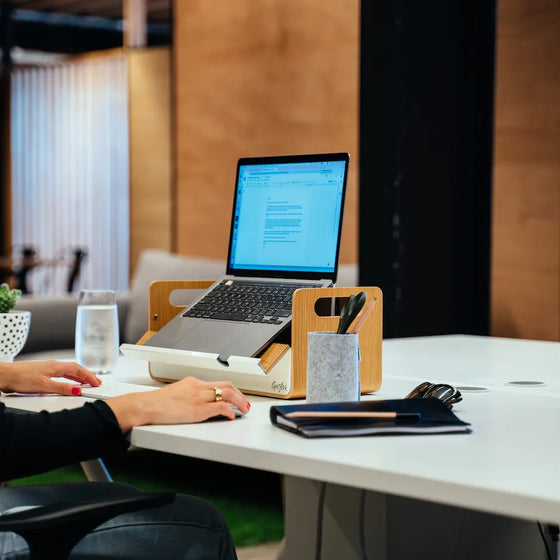
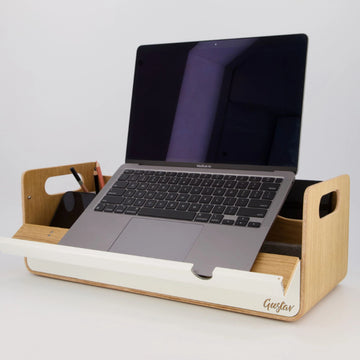
Dat laatste punt is cruciaal. Werknemers hebben nog steeds een gevoel van continuïteit nodig tussen thuis, kantoor en andere locaties. Het antwoord is niet permanente bureau-eigendom onder een andere naam. Het is mensen een compacte, goed georganiseerde manier geven om hun essentials mee te nemen en hun werkplek in seconden opnieuw in te richten. Een draagbare organizer, laptopstandaard, etui-systeem en werktas kunnen meer bijdragen aan adoptie dan nog een pagina met beleidsregels. Wanneer medewerkers kunnen aankomen, hun spullen neerzetten, snel aansluiten en het bureau aan het einde van de dag schoon achterlaten, voelt desk sharing gestructureerd in plaats van beperkend.
Wat dit voorbeeld van een invoering van desk sharing goed doet
Het bedrijf in dit scenario behandelt gedrag en fysieke inrichting als één systeem. Dat klinkt logisch, maar veel veranderingen op de werkvloer splitsen die nog steeds op. Het ene team schrijft de richtlijnen, een ander kiest het meubilair, een derde selecteert software. Medewerkers moeten dan zelf de ervaring aan elkaar knopen.
Een betere aanpak is ontwerpen rondom de volledige gebruikersreis. Wat neemt iemand mee? Hoe weet die waar te zitten? Hoe lang duurt het inrichten? Waar gaan accessoires gedurende de dag? Wat gebeurt er om 17.30 uur als het bureau klaar moet zijn voor de volgende gebruiker?
Door die vragen vroeg te beantwoorden, voorkomt het bedrijf verschillende veelvoorkomende problemen.
Ten eerste vermindert het visuele ruis. Gedeelde kantoren werken het beste als ze doelbewust ogen. Willekeurige laptopstandaards, extra opladers, notitieboekjes en persoonlijke randapparatuur maken de ruimte snel tijdelijk op de verkeerde manier. Een schoon bureau-beleid werkt alleen als medewerkers een beter alternatief hebben dan alles in hun armen te balanceren.
Ten tweede beschermt het de ergonomie. In hybride omgevingen bewegen medewerkers vaak tussen thuis en kantoor met ongelijke werkplekken op elke locatie. Als het gedeelde bureau alleen het absolute minimum biedt, compromitteren mensen hun houding en comfort om mobiel te blijven. Het standaardiseren van een draagbare ergonomische set helpt consistentie tussen locaties te behouden.
Ten derde verlaagt het de resettijd. Een werkplek die tien minuten kost om op te bouwen en af te breken nodigt uit tot shortcuts. Een die minder dan twee minuten kost, is veel makkelijker vol te houden.
Fase 3: Pilot met één afdeling, niet het hele kantoor
In dit voorbeeld pilot het bedrijf met een product- en operationsteam van 40 personen. Die groep gebruikt het kantoor regelmatig genoeg om snel tekortkomingen bloot te leggen, maar is klein genoeg voor nauwkeurige observatie. De pilot duurt vier weken.
In die periode volgt facilitaire dienst de bezettingspatronen, terwijl teamleiders feedback verzamelen over praktische problemen. Zijn er genoeg monitoren? Begrijpen mensen de verschillende bureautypes? Worden persoonlijke spullen achtergelaten? Is de opslagruimte handig of te ver van de werkplekken? Dit zijn operationele vragen, geen abstracte cultuurvragen, en ze zijn makkelijker op te lossen.
De pilot onthult twee nuttige zaken. Ten eerste worden touchdown-bureaus op piekdagen voor hele dagen bezet. Ten tweede ruimen medewerkers met draagbare accessoires hun bureaus goed op, terwijl degenen zonder die spullen vaak tijdelijke stapels creëren. Beide bevindingen leiden tot snelle aanpassingen. Er worden meer bureaus voor hele dagen toegevoegd in de drukste zone en het bedrijf versterkt de standaard voor persoonlijke inrichting met betere onboarding en uitrustingsrichtlijnen.
Fase 4: Lancering met zichtbare regels en laagdrempelige gewoonten
Wanneer de invoering wordt uitgebreid naar het hele kantoor, houdt het bedrijf het gedragskader strak. Bureaus worden geboekt op type, niet alleen op locatie. Verwachtingen voor het opruimen aan het einde van de dag worden duidelijk in de ruimte geprint. Opslag is dichtbij genoeg om het opruimen natuurlijk te laten voelen in plaats van onhandig.
Managers worden ook geïnstrueerd om het juiste gedrag te tonen. Dit is belangrijker dan de meeste organisaties verwachten. Als senior medewerkers informeel favoriete bureaus reserveren of apparatuur achterlaten, verliest de invoering snel geloofwaardigheid.
De communicatie zelf blijft praktisch. Het legt uit wat mee te nemen, waar het op te bergen, hoe het juiste bureau te kiezen en hoe de plek klaar te maken voor de volgende gebruiker. Er is geen overdreven manifest. Mensen hebben meer behoefte aan duidelijkheid dan aan theater.
Waar invoeringen van desk sharing meestal misgaan
Een nuttig voorbeeld van een invoering van desk sharing laat ook de afwegingen zien. Gedeelde bureaus kunnen de ruimte-efficiëntie verbeteren en hybride werken goed ondersteunen, maar ze zijn minder vergevingsgezind dan toegewezen bureaus. Zwakke details worden snel zichtbaar.
De meest voorkomende fout is het onderschatten van persoonlijke apparatuur. Kenniswerkers komen niet alleen met een laptop aan. Velen zijn afhankelijk van standaards, toetsenborden, muizen, notitieboekjes, opladers, koptelefoons en adapters. Als het kantoor die realiteit negeert, verzetten medewerkers zich tegen het model of improviseren ze eromheen.
Een andere fout is dat desk sharing als verlies wordt ervaren in plaats van als verbetering. Als medewerkers van een toegewezen bureau met opslag, ergonomische ondersteuning en vertrouwde tools overstappen naar een generiek gedeeld oppervlak, voelt de ervaring minderwaardig. Om dat te compenseren moet de gedeelde inrichting beter ontworpen zijn, niet alleen efficiënter.
Er is ook de vraag van teamidentiteit. Sommige organisaties verwijderen toegewezen bureaus maar behouden teambuurten. Anderen gaan volledig open. Het hangt af van werkpatronen. Teams die nauw samenwerken en op vergelijkbare dagen aanwezig zijn, profiteren vaak van buurtzones. Meer mobiele of projectgerichte groepen hebben die misschien niet nodig. Het juiste antwoord is zelden ideologisch. Het komt voort uit aanwezigheidsdata en taakvereisten.
De rol van draagbare werkplekgereedschappen
Voor designgerichte werkplekken zijn draagbare accessoires geen finishing touch. Ze maken deel uit van het operationele model. Een kantoor met desk sharing werkt beter als elke medewerker een compacte werkplekgids kan meenemen die organisatie, ergonomie en een schone reset ondersteunt.
Hier verdienen premium accessoires hun plek. Een goed gemaakte organizer of laptopstandaard verkort de inrichttijd, beschermt de kwaliteit van de bureauomgeving en helpt medewerkers een vertrouwde werkhouding te recreëren waar ze ook zitten. Het houdt het kantoor ook visueel gecontroleerd, wat belangrijk is in klantgerichte omgevingen en zorgvuldig ontworpen interieurs.
Voor architecten, werkplekspecialisten en facilitaire teams is dit iets om vroeg te overwegen. Het bureau is slechts één deel van het systeem. De mobiele kit van de gebruiker is het andere. Samen bepalen ze of desk sharing doelbewust of geïmproviseerd aanvoelt.
Een doordachte invoering vraagt mensen niet om met minder te werken. Het geeft ze een betere manier om te werken met wat ze nodig hebben, waar ze ook zijn. Dat is de versie die medewerkers veel eerder zullen omarmen – en lang na de lancering blijven gebruiken.