Houten of aluminium laptopstandaard?

De verkeerde laptopstandaard verraadt zichzelf meestal rond 15:30 uur. Je schouders kruipen omhoog, het scherm staat net laag genoeg om je nek te belasten, en het bureau begint meer tijdelijk dan doordacht aan te voelen. Als je kiest voor een houten of aluminium laptopstandaard voor hybride werken, is het materiaal geen stylingdetail. Het bepaalt hoe de standaard presteert, meereist, veroudert en past in een flexibele werkplek.
Voor professionals die wisselen tussen thuis, kantoor en gedeelde werkplekken, is die keuze belangrijker dan een paar jaar geleden. Een laptopstandaard is niet langer een statisch accessoire dat in een hoek van een vaste opstelling staat. Het is onderdeel van een mobiel systeem. Het moet de houding ondersteunen, visuele ruis verminderen en betrouwbaar aanvoelen, of het nu op een keukentafel, een projectbureau of in een werk tas ligt.
Houten of aluminium laptopstandaard: wat verandert er echt?
Op het eerste gezicht lijkt het verschil duidelijk. Hout voelt warm en architectonisch aan. Aluminium oogt precies en technisch. Maar zodra je elk materiaal in echte werkomstandigheden gebruikt, wordt het onderscheid praktischer.
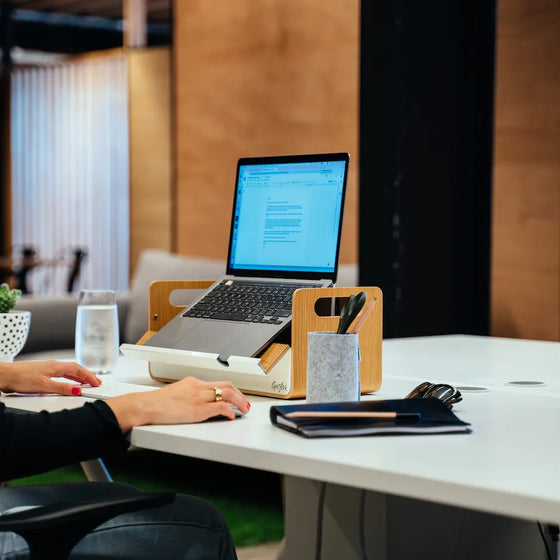
Hout verzacht vaak een werkplek. Het brengt een rustigere visuele aanwezigheid, wat nuttig is in thuiskantoren en designgerichte omgevingen waar elk object zichtbaar blijft. Het kan ook meer meubelachtig aanvoelen, waardoor een tijdelijke bureauopstelling doordacht in plaats van geïmproviseerd lijkt. In gedeelde werkplekken is dat belangrijk. De objecten die mensen op een bureau plaatsen, bepalen hoe professioneel en gevestigd de ruimte aanvoelt.
Aluminium wordt daarentegen vaak gekozen vanwege het lichte gewicht, het slanke profiel en de technische afwerking. Het past bij gebruikers die willen dat de standaard opgaat in de opstelling in plaats van een tastbare of decoratieve laag toe te voegen. In strakkere, meer technische kantooromgevingen kan die ingetogenheid heel goed werken.
Geen van beide is automatisch beter. Het juiste antwoord hangt af van hoe de standaard wordt gebruikt, verplaatst en opgeborgen.
Ergonomie eerst, materiaal daarna
De belangrijkste taak van elke laptopstandaard is het scherm op een comfortabelere hoogte te brengen en een gezondere werkhouding te ondersteunen. Als een standaard er geweldig uitziet maar weinig doet om de uitlijning te verbeteren, mist het zijn doel.
Dat gezegd hebbende, beïnvloedt het materiaal de ergonomie indirect. Een stabiele standaard moedigt beter gebruik aan omdat het betrouwbaar aanvoelt. Als het buigt onder typpressie, wegglijdt op een bureau of wiebelt bij het aanpassen van de positie, compenseren mensen dat zonder het te merken. Ze leunen naar voren, spannen zich aan of laten de standaard helemaal links liggen.
Een goed gemaakte houten standaard kan solide en stevig aanvoelen, vooral op grotere bureaus waar hij lange tijd op dezelfde plek blijft staan. Een goed ontworpen aluminium standaard kan hetzelfde resultaat bereiken met minder volume, wat waardevol is als je je werkplek regelmatig opnieuw inricht. De sleutel is niet hout versus aluminium op zichzelf, maar hoe elk materiaal is verwerkt in de algehele vorm.
Er is ook de vraag van externe randapparatuur. De meeste laptopstandaards werken het beste in combinatie met een apart toetsenbord en muis. Dat geldt vooral in kantoor- en thuissituaties die langer dan korte periodes worden gebruikt. Voor mobiele werkers is de ideale standaard degene die deze gewoonte ondersteunt zonder transport of opstelling te bemoeilijken.
Draagbaarheid in echt hybride werk
Hier krijgt aluminium vaak de voorkeur. Het wordt geassocieerd met lichtheid, en veel aluminium standaards kunnen worden ingeklapt tot compacte, reisklare vormen. Voor forenzen en bureau-deling is dat een echt voordeel.
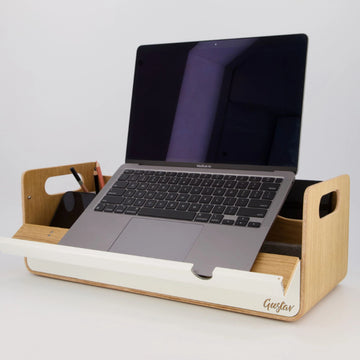
Maar draagbaarheid gaat niet alleen over gewicht. Het gaat ook over inpakbaarheid, randbestendigheid, opzet snelheid en hoe de standaard samenleeft met alles wat je meedraagt. Een standaard die technisch licht is maar onhandig gevormd, kan alsnog een last worden. Evenzo kan een houten standaard die deel uitmaakt van een draagbaar werkpleksysteem beter reizen dan een generieke metalen standaard die in een tas rammelt.
In de praktijk geven gebruikers met zeer mobiele routines vaak de voorkeur aan standaards die geïntegreerd aanvoelen in een breder organisatiesysteem. Als je een laptop, oplader, notitieboek, toetsenbord, muis en kabels tussen locaties meeneemt, moet de standaard dat ritme ondersteunen in plaats van een extra los object zijn om te beheren.
Voor facilitair managers en beslissers op de werkplek is dit op grote schaal belangrijk. Producten die makkelijk te dragen, op te bergen en opnieuw in te zetten zijn, worden doorgaans consequent gebruikt. Producten die onhandig of kwetsbaar aanvoelen, blijven vaak achter op bureaus, wat zowel het beleid voor een opgeruimd bureau als de werknemerservaring van flexibel werken ondermijnt.
Warmte, aanraking en dagelijks comfort
Een van de veelgehoorde argumenten voor aluminium is warmteafvoer. Metaal kan helpen warmte van het apparaat af te voeren, en voor gebruikers die veeleisende software draaien of lange dagen videobellen, kan dat nuttig zijn. Het is een praktisch voordeel, hoewel vaak overdreven in het dagelijkse kantoorgebruik waar laptopventilatie en de geometrie van de standaard minstens zo belangrijk zijn.
Hout gedraagt zich anders. Het biedt niet dezelfde thermische geleiding, maar wel een warmere tastbeleving. Dat klinkt misschien minder belangrijk totdat je een standaard elke dag gebruikt. Materialen beïnvloeden hoe een werkplek aanvoelt, niet alleen hoe die functioneert. Hout kan een opstelling minder klinisch en meer huiselijk maken, wat een reden is waarom het aantrekkelijk blijft in premium thuiskantoren en werkplekken met een hospitality-invloed.
Er is hier geen universele winnaar. Als koelprestaties centraal staan in je workflow, kan aluminium een voordeel hebben. Als het doel is een rustigere, menselijkere werkplek te creëren die toch professioneel presteert, heeft hout een duidelijk voordeel.
Duurzaamheid en veroudering
Duurzaamheid wordt vaak verkeerd begrepen als weerstand tegen zichtbare beschadigingen. In werkelijkheid zijn duurzame producten degene die mensen blijven gebruiken omdat ze mooi verouderen.
Aluminium is sterk, dimensionaal stabiel en over het algemeen goed geschikt voor frequent gebruik. Het kan echter krassen, slijtage aan de randen en deuken vertonen na verloop van tijd, vooral bij mobiel gebruik. Afhankelijk van de afwerking kunnen die sporen acceptabel aanvoelen of het product snel vermoeid laten lijken.
Hout veroudert op een genuanceerdere manier. Kwalitatief hout kan karakter ontwikkelen in plaats van simpelweg verslijten, maar dat hangt af van vakmanschap, oppervlaktebehandeling en hoe het product is geconstrueerd. Slecht afgewerkt hout kan afbladderen, vlekken of kromtrekken. Goed gemaakt hout, vooral als het verantwoord is verkregen en met zorg is vervaardigd, kan jarenlang aantrekkelijk blijven en een tijdlozere uitstraling behouden dan veel gecoate metalen.
Hier speelt premium design een rol. Alleen het materiaal garandeert geen lange levensduur. De verbindingen, afwerking, dragende structuur en bescherming op contactpunten bepalen allemaal of een standaard na herhaald gebruik nog steeds verfijnd aanvoelt.
Esthetische aansluiting is niet oppervlakkig
Voor architecten, interieurontwerpers en kantoorplanners maakt de visuele taal van werkplekaccessoires deel uit van de grotere omgeving. Een laptopstandaard staat tijdens gebruik op ooghoogte. Het draagt bij aan de sfeer van het bureau en daarmee van de ruimte.
Hout sluit natuurlijk aan bij interieurs die warmte, tastbaarheid en een huiselijke kwaliteit prioriteren. Het werkt vooral goed in thuiskantoren, directieruimtes en eigentijdse werkplekken die de harde lijnen van traditioneel zakelijk design willen verzachten. Het combineert ook goed met andere natuurlijke materialen en verzacht technologie-intensieve opstellingen.
Aluminium past bij strakkere, scherpere omgevingen waar minimalisme staat voor precisie in plaats van warmte. Het voelt zich vooral thuis in monochrome schema’s of ruimtes die zijn opgebouwd rond glas, staal en hoogtechnische details.
Voor gedeelde werkplekken is consistentie het overwegen waard. Als medewerkers hun eigen apparatuur meenemen naar een gedeeld kantoor, beïnvloeden de accessoires hoe samenhangend de werkplek oogt. Designgerichte producten helpen een gevoel van orde te bewaren, zelfs als bureaus dagelijks door verschillende mensen worden gebruikt.
Duurzaamheid moet specifiek zijn
Veel kopers kijken nu naar materiaalkeuze door een duurzaamheidsbril, en terecht. Maar brede aannames zijn riskant.
Hout kan een uitstekende optie zijn als het afkomstig is uit duurzaam beheerde bronnen en gemaakt is om lang mee te gaan. Het heeft een natuurlijke aantrekkingskracht voor merken en kopers die waarde hechten aan hernieuwbare materialen en minder visueel afval. Aluminium kan ook een sterke duurzaamheidskeuze zijn, vooral als gerecycled materiaal deel uitmaakt van de specificatie en het product een lange levensduur heeft.
Wat telt is niet alleen het basismateriaal, maar het hele productverhaal – inkoop, productie, repareerbaarheid, levensduur en of het item waarschijnlijk in gebruik blijft. Een premium standaard die jaren presteert, is meestal een betere keuze dan een goedkoper alternatief dat steeds vervangen wordt.
Voor organisaties die werkplekaccessoires specificeren, is dit extra relevant. Duurzaamheidsdoelen worden niet bereikt door alleen materiaalkeuzes. Ze worden bereikt door minder, betere producten te kopen die langdurig gebruikt worden.
Dus, moet je hout of aluminium kiezen?
Kies hout als je een standaard wilt die warmte, aanwezigheid en een meer meubelachtige kwaliteit aan het bureau toevoegt. Het is vooral sterk in thuiskantoren, premium hybride opstellingen en interieurgerichte werkplekken waar materialiteit telt. Het kan ook een rustigere bureau-esthetiek ondersteunen, wat waardevol is als de werkplek georganiseerd in plaats van geïmproviseerd moet aanvoelen.
Kies aluminium als draagbaarheid, slankheid en een meer technische visuele taal het belangrijkst zijn. Het past vaak bij zeer mobiele gebruikers, lichtere draagopstellingen en kantooromgevingen die een meer technische uitstraling prefereren.
Als je voor een groter team selecteert, is de betere vraag misschien hoe de standaard past in de hele werkroutine. Beweegt hij makkelijk mee? Ondersteunt hij snelle opstelling? Ziet hij er passend uit in zowel thuis- als kantooromgevingen? Helpt hij mensen comfortabeler te werken zonder rommel toe te voegen? Merken zoals Gustav hebben hun aanpak rond die bredere realiteit gebouwd – niet alleen individuele objecten, maar draagbare systemen voor modern werk.
De beste laptopstandaard houdt een apparaat niet alleen hoger. Hij helpt het bureau geordend te laten voelen, waar dat bureau vandaag ook staat.