10 bedste bærbare kontororganisatorer

En bærbar computer på den ene arm, oplader i frakkelommen, notesbog et sted i tasken – sådan starter rod, før dagen overhovedet er begyndt. De bedste bærbare kontororganisatorer løser problemet ved kilden. De gør mere end bare at bære det nødvendige. De skaber en gentagelig, professionel opsætning, der fungerer på hjemmekontorer, delte skriveborde og i kundevendte rum.
For hybride teams og fleksible arbejdspladser handler den rette organiser ikke kun om opbevaring, men om kontrol. Den skal hjælpe dig med at ankomme, pakke ud på få sekunder og skabe et skrivebord, der føles gennemtænkt frem for midlertidigt. Den standard er vigtig, uanset om du specificerer arbejdsredskaber til et større team eller blot prøver at holde din egen arbejdsdag rolig og effektiv.
Hvad gør en bærbar kontororganisator værd at bruge
En god organiser skal mindske friktion, ikke tilføje et ekstra lag af det. Hvis det tager for lang tid at pakke, føles klodset under armen, eller bliver til en opsamler for kabler og papir, gør den ikke sit job ordentligt.
De stærkeste designs deler ofte nogle få kvaliteter. De adskiller nødvendigheder klart, beskytter enheder og tilbehør og bevæger sig let mellem lokationer. De understøtter også den måde, folk rent faktisk arbejder på nu – opsætning ved et delt skrivebord om morgenen, flytning til et mødelokale efter frokost og så afslutning af dagen hjemme.
Materialekvalitet betyder mere, end man først tror. En bærbar organiser håndteres konstant, placeres på hårde overflader, bæres i offentlig transport og pakkes i tasker. Premium-materialer forbedrer ikke kun udseendet og følelsen. De bevarer også formen bedre, slides pænere og forstærker følelsen af, at din arbejdsplads er gennemtænkt, uanset hvor du er.
Bedste bærbare kontororganisatorer efter brugssituation
Der findes ikke ét format, der passer til alle medarbejdere eller kontorer. Det bedste valg afhænger af, hvad du bærer, hvor ofte du flytter dig, og om din prioritet er kompakt opbevaring, øjeblikkelig skrivebordsopsætning eller en mere komplet mobil arbejdsstation.
1. Den strukturerede bæreorganisator
Dette er ofte den mest afbalancerede løsning til hybridarbejde. En struktureret organiser holder daglige nødvendigheder på faste pladser – bærbar computer, notesbog, penne, oplader, mus, kabler – og gør dem let tilgængelige uden at skulle rode.
Den fungerer særligt godt i miljøer med skrivebordsdeling, fordi den understøtter konsistens. Du genopbygger ikke din arbejdsplads fra bunden hver dag. Du placerer et komplet system på skrivebordet og går i gang med arbejdet. For professionelle, der bevæger sig mellem fokusområder, samarbejdszoner og hjemmet, giver dette format den reneste overgang.
Ulempen er kapaciteten. En velstruktureret organiser er designet til nødvendigheder, ikke til overskud. Hvis du regelmæssigt bærer store headset, papirdokumenter eller personlige ting sammen med arbejdsredskaber, kan du få brug for en større følgetaske.
2. Den bærbare skrivebordsorganisator med indbygget opsætningsfunktion
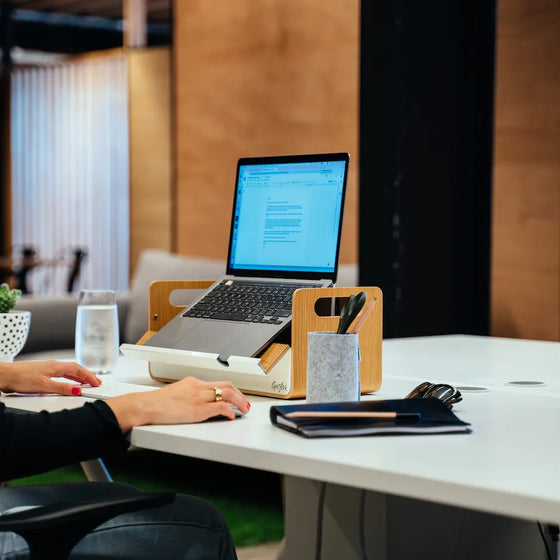
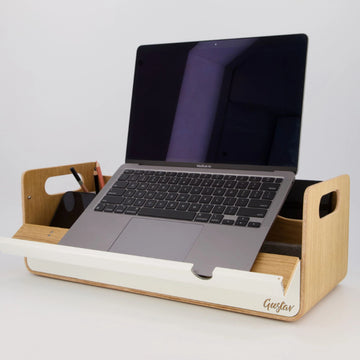
Nogle af de bedste bærbare kontororganisatorer gør mere end bare at opbevare dine ting. De former aktivt arbejdspladsen, når de åbnes. Det kan være rum, der foldes ud, en bakke-lignende opbygning, der giver hvert element sin plads, eller et design, der på få sekunder går fra bæreopløsning til skrivebordsorganisator.
Denne tilgang er særligt effektiv til politikker om ryddelige skriveborde og hot-desking. Den reducerer visuelt rod og forkorter opsætningstiden, hvilket er værdifuldt i stor skala på kontorer, hvor folk ikke vender tilbage til det samme skrivebord hver dag.
For arbejdspladsplanlæggere og facilitetsansvarlige har denne stil en ekstra fordel. Den fremmer konsekvent skrivebordsadfærd uden behov for strenge regler. Godt design opnår ofte det, skilte ikke kan.
3. Organisatoren med integreret laptopstander
Hvis mobilitet og ergonomi skal vægtes lige, er dette en af de smarteste kategorier at overveje. En organiser, der indeholder en laptopstander, hjælper brugerne med at bære mindre, samtidig med at den skaber en sundere arbejdsstilling. Gustav Original er en premium-løsning.
Det er vigtigt i hybride rutiner, hvor medarbejdere måske arbejder ved et køkkenbord den ene dag og i et touchdown-område den næste. En hævet skærmposition kan gøre en mærkbar forskel for komforten i løbet af ugen, især når den kombineres med et eksternt tastatur og mus.
Ulempen er, at integrerede designs stiller større krav til ét produkt. De skal være stabile, bærbare og holdbare på én gang. Hvis standerfunktionen føles sekundær eller besværlig at bruge, bliver organisatoren hurtigt en god idé frem for et pålideligt dagligt værktøj.
4. Den kompakte tech-pung til lette opsætninger
Ikke alle brugere har brug for en fuld organiser. For nogle er en slank tech-pung som Gustav Echo tilstrækkelig. Hvis dit største problem er kabelrod, forlagte adaptere og en taske fuld af løst tilbehør, kan en kompakt pung skabe øjeblikkelig orden.
Denne løsning passer til professionelle, der allerede har en foretrukken taske og kun har brug for bedre kontrol over mindre værktøjer. Den er også nyttig som en del af en bredere opsætning, kombineret med en laptop-sleeve eller skrivebordsmåtte i stedet for at skulle klare det hele alene.
Begrænsningen er åbenlys. En pung løser opbevaring af tilbehør, ikke arbejdspladsens struktur. Den hjælper dig med at bære bedre, men hjælper ikke automatisk med at arbejde bedre, når du ankommer.
5. Dokumentfokuseret organiser til papirintensive roller
Selvom mange arbejdsdage i stigende grad er digitale, kræver nogle roller stadig trykte materialer, skitser, kontrakter eller markerede planer. I disse tilfælde er en dokumentfokuseret organiser stadig meget praktisk.
De bedste eksempler holder papirer beskyttede og flade, samtidig med at der stadig er plads til en bærbar computer og små tilbehør. Dette er særligt relevant for konsulenter, designere og projektledere, der bevæger sig mellem kontor, byggeplads og mødelokaler. Gustav Loop er et fremragende valg.
Her handler det om balance. For meget fokus på dokumentopbevaring kan skabe et porteføljelignende format, der føles tungt til daglig brug ved skrivebordet. Det fungerer bedst, når papir virkelig er centralt for rollen.
6. Det alt-i-én mobile arbejdsstationssystem
For brugere, der ønsker en komplet kontoropsætning i ét objekt, er et mobilt arbejdsstationssystem ofte det premium svar. Denne kategori kombinerer opbevaring, organisering og skrivebordsfunktionalitet i et enkelt designorienteret produkt.
Det passer til folk, der lægger stor vægt på gentagelighed og udseende – den type brugere, der ønsker, at hver opsætning, på hvert sted, føles lige velovervejet. Det giver også mening for organisationer, der investerer i medarbejderoplevelsen inden for fleksible kontormodeller. Hvis en person kan bære sine værktøjer, organisere sit skrivebord og opretholde ergonomiske nødvendigheder i ét strømlinet system, er adoptionen ofte stærkere.
Her skiller gennemtænkt industriel design sig ud. Et veludført system skal føles raffineret i brug, ikke overdesignet. Det skal forenkle arbejdsdagen, samtidig med at det passer ind i et moderne kontormiljø.
Sådan vælger du den rette løsning til din arbejdsplads
Den letteste fejl er at købe efter kapacitet i stedet for adfærd. Mere opbevaring lyder nyttigt, men hvis organisatoren bliver tung, klodset eller overfyldt, bliver den hurtigt efterladt.
Start med dine daglige nødvendigheder. Hvis du bærer en bærbar computer, oplader, mus, notesbog og nogle få personlige ting, er en struktureret organiser som regel nok. Hvis du også har brug for ergonomisk støtte, så kig på muligheder, der integrerer en stander eller fungerer sammen med bærbare skrivebordsredskaber. Hvis din rutine involverer hyppige kundemøder eller delte kontormiljøer, prioriter da hurtig opsætning og visuel klarhed frem for stor kapacitet.
For organisationer bør beslutningen også afspejle arbejdspladsstrategien. I miljøer med skrivebordsdeling er bærbarhed alene ikke nok. Organisatoren skal understøtte en ren, konsekvent skrivebordsoplevelse og hjælpe medarbejdere med at skifte smidigt mellem rum. Det betyder, at man skal vurdere, hvordan produktet fungerer, når det er placeret på skrivebordet, ikke kun hvordan det ser ud, når det bæres gennem kontoret.
Designdetaljer, der gør forskellen
De små detaljer afgør ofte, om en organiser bliver uundværlig. Stabil konstruktion, intuitive rumstørrelser, lette at rengøre overflader og en silhuet, der ligger pænt på skrivebordet, betyder alt. Det samme gør åbningsmekanismen. Hvis brugerne ikke straks kan se og få adgang til det, de har brug for, opbygges små frustrationer hurtigt.
Æstetisk tilbageholdenhed er også vigtig. I både premium arbejdspladser og hjemmekontorer bør tilbehør understøtte visuel ro frem for at konkurrere om opmærksomhed. Rene linjer, holdbare finish og ærlige materialer ældes ofte bedre end trendbaserede designs.
Bæredygtighed bør også overvejes gennem holdbarhed og materialevalg. Produkter lavet af ansvarligt udvalgte materialer og designet til langvarig brug er simpelthen bedre tilpasset moderne arbejdspladsforventninger end engangstilbehør, der skal udskiftes efter kort tid.
Hvorfor det bedste valg ofte er det, du bruger hver dag
De mest effektive organisere er sjældent dem med flest funktioner. Det er dem, der bliver en del af rutinen uden besvær. Du bærer dem instinktivt, pakker hurtigt ud og arbejder med mindre visuelt og mentalt rod.
Derfor er premium bærbar organisering blevet mere relevant i fleksibelt arbejde. Det understøtter ikke kun bevægelse, men også kontinuitet. En veludformet løsning hjælper arbejdspladsen med at føles stabil, selv når lokationen skifter.
For professionelle, der skaber bedre arbejdsmiljøer – fra individuelle brugere til beslutningstagere på arbejdspladsen – er det det reelle målestok. De bedste bærbare kontororganisatorer er dem, der forvandler mobilitet til en mere rolig måde at arbejde på, ét skrivebord ad gangen.