Sådan forbedrer du ergonomien ved bærbar computer på arbejdet

En bærbar computer er fantastisk bærbar, men ergonomisk kompromitteret. Skærmen sidder for lavt, tastaturet er fastgjort, og den kompakte form, der gør den ideel til hybridarbejde, skaber ofte en dårlig arbejdsstilling inden for få minutter. Hvis du spekulerer på, hvordan du forbedrer ergonomien ved bærbare computere, er svaret ikke ét perfekt tilbehør. Det er en smartere opsætning, der adskiller betragtningshøjde, skriveposition og skrivebordsorganisation.
Det er endnu vigtigere i delte skriveborde, hjemmekontorer og fleksible arbejdspladser, hvor opsætningen ændrer sig fra dag til dag. En god ergonomisk indretning bør ikke føles kompliceret eller permanent. Den skal være hurtig at bygge, nem at gentage og rolig at arbejde i.
Hvorfor bærbare computere skaber ergonomiske problemer
En stationær skærm og et tastatur kan placeres uafhængigt. Det kan en bærbar computer ikke. Hæv skærmen til øjenhøjde, og tastaturet bliver ubrugeligt. Bevar tastaturet i en behagelig skrivehøjde, og nakken bøjer sig ned mod skærmen. De fleste kompenserer så uden at bemærke det – rundede skuldre, fremadbøjet hovedstilling, bøjede håndled og begrænset armstøtte.
Gennem dagen hober de små kompromiser sig op. Nakkespændinger, skuldertræthed og ubehag i håndleddene er almindeligt, men problemet er ikke kun fysisk belastning. Dårlig ergonomi ved bærbare computere påvirker også, hvordan arbejdspladsen føles. Skrivebordet bliver rodet, kroppen rastløs, og koncentrationen begynder at brydes op.
Derfor handler ergonomiske forbedringer sjældent om én dramatisk ændring. Det handler som regel om at fjerne friktion i måden, du sidder, ser, skriver og bevæger dig gennem dagen på.
Sådan forbedrer du ergonomien ved bærbare computere med en bedre opsætning
Den mest effektive ændring er at stoppe med at behandle den bærbare som en komplet arbejdsstation. Brug den som computer, men byg arbejdspositionen omkring kroppen.
Hæv skærmen først
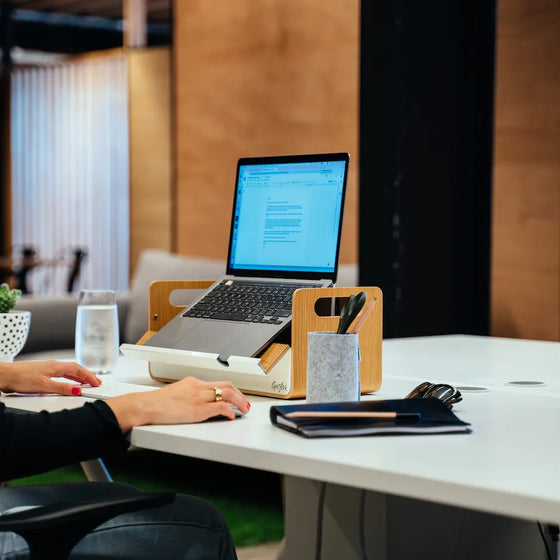
Din skærm bør sidde højt nok til, at toppen af displayet er cirka i øjenhøjde eller lige under. Det mindsker trangen til at sænke hagen og krumme sig ind mod skærmen. For de fleste er en bærbar på skrivebordet alt for lav.
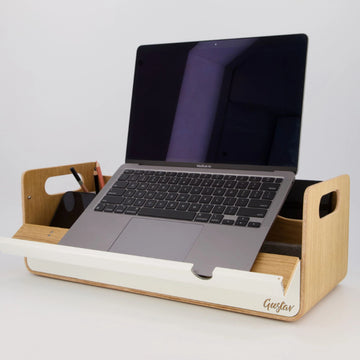
Et dedikeret laptopstativ er som regel den reneste løsning, fordi det løfter uden at tilføje visuel støj eller dominere skrivebordet. Stabilitet er vigtig her. Et stativ, der vakler, glider eller føles midlertidigt, bliver ofte også brugt midlertidigt. I miljøer med delte skriveborde betyder bærbarhed også noget. Hvis opsætningen tager for lang tid at samle, arbejder folk bare udenom.
Der er nuancer. Hvis du ofte skifter mellem korte opgaver og længere fokuserede sessioner, behøver du måske ikke have den bærbare hævet hele dagen. Men når skærmtiden rækker ud over hurtige tjek og administration, bliver argumentet for at løfte den stærkt.
Adskil tastatur og mus
Så snart den bærbare skærm hæves, bliver et eksternt tastatur og en mus nødvendige. Det gør det muligt for dine albuer at blive tæt på kroppen, dine underarme at hvile mere naturligt, og dine håndled at forblive i en neutral position.
Komprimerede tastaturer fungerer godt i mindre arbejdsområder, fordi de mindsker rækkevidden. En separat mus er lige så vigtig. Touchpads er nyttige på farten, men ved længerevarende brug opfordrer de ofte til asymmetrisk kropsholdning og gentagne håndledsbevægelser.
Her bør bærbarhed og ergonomi arbejde sammen i stedet for at konkurrere. En opsætning behøver ikke at se teknisk eller overdimensioneret ud for at fungere godt. Gennemtænkte, kompakte værktøjer passer ofte bedre til fleksibelt arbejde end større udstyr designet til permanente skriveborde.
Spørgsmålet om skrivebordshøjde, som de fleste ignorerer
Mange problemer med bærbare starter længere nede. Hvis skrivebordet eller bordet er for højt, løftes skuldrene, og spændinger opbygges. Er det for lavt, kollapser rygsøjlen fremad. Ideelt set bør dine albuer hvile i cirka 90 graders vinkel med skuldrene afslappede.
I virkeligheden, især i hjemmemiljøer eller delte touchdown-områder, er skrivebordet ofte fast. Det betyder, at stolen bliver dit vigtigste justeringspunkt. Hæv eller sænk den, så dine arme kan arbejde komfortabelt først, og tjek derefter, hvad der sker ved fodniveau. Hvis dine fødder ikke længere hviler fladt på gulvet, brug en fodstøtte eller et stabilt alternativ. Ustøttede fødder kan hurtigt trække holdningen ud af balance.
Ergonomi præsenteres ofte som en tjekliste, men det er bedre at forstå det som en kæde. Ændrer du ét element, skal de andre følge med.
Sådan forbedrer du ergonomien ved bærbare computere, når du bevæger dig mellem steder
Hybridarbejde introducerer en praktisk udfordring: konsistens. En ergonomisk opsætning ét sted er nyttig, men ikke nok, hvis resten af ugen tilbringes krummet over køkkenborde, hot desks eller mødebokse.
Den smartere tilgang er at skabe et gentageligt sæt. Det betyder som regel et bærbart stativ, et kompakt tastatur, en mus og en måde at bære og organisere dem på, så opsætningen tager sekunder frem for kræfter. Når hver komponent har sin plads, falder barrieren for at bruge det. Resultatet er ikke kun bedre holdning, men også en mere bevidst start på arbejdsdagen.
Dette er en af de stille fordele ved veludformede arbejdsredskaber. De reducerer beslutningstagning. I stedet for at improvisere hver morgen skaber du en velkendt arbejdsposition, uanset hvor du åbner den bærbare.
For arbejdspladsteams skalerer dette princip godt. Hvis medarbejdere er afhængige af fleksible skriveborde, understøtter en konsekvent ergonomisk ramme både komfort og brug. Den bedste opsætning er den, folk rent faktisk bruger.
Holdning betyder noget, men bevægelse betyder mere
Der findes ingen perfekt statisk holdning, man kan holde i otte timer. Selv en velindrettet arbejdsstation bliver ubehagelig, hvis kroppen forbliver fastlåst for længe. Så selvom det giver mening at forbedre skærmhøjde og inputposition, hjælper det også at gentænke varigheden.
Små ændringer i løbet af dagen er ofte mere effektive end at forsøge at sidde fejlfrit. Skift position. Stå op under et opkald. Flyt til en anden zone for læsning eller diskussion. Lad opsætningen støtte bevægelse i stedet for at tvinge stilstand.
Det er særligt relevant i aktivitetsbaserede arbejdspladser. Forskellige opgaver passer til forskellige omgivelser, og ergonomien ved bærbare computere bør afspejle det. Fokusarbejde kan retfærdiggøre den fulde opsætning. Korte samarbejdssessioner behøver måske ikke. Målet er ikke at gøre hver overflade til en permanent arbejdsstation, men at matche arbejdsstillingen med opgavens længde og type.
Almindelige fejl, der ødelægger god ergonomi ved bærbare computere
Et overraskende antal ergonomiske tilbehør fejler, fordi de løser ét problem, mens de skaber et andet. Et stativ uden eksternt tastatur er det mest åbenlyse eksempel. Skærmen forbedres, armene ikke. Et smukt skrivebord uden plads til ordentlig musebevægelse skaber et lignende problem.
En anden almindelig fejl er at ignorere visuel komfort. Hvis skærmen er i den rigtige højde, men vinklet mod blænding, læner og vrider brugerne sig for at kompensere. Lysstyrke, skærmafstand og belysning spiller alle en rolle. Du skal kunne læse displayet klart uden at skubbe hovedet frem.
Så er der rod. Kabler, notesbøger, opladere og personlige ting kan gradvist tvinge tastatur og mus ind i akavede positioner. God ergonomi afhænger af brugbar plads, ikke kun de rigtige værktøjer. Et skrivebord, der føles ryddeligt, er nemmere at arbejde godt ved.
En mere designorienteret måde at tænke ergonomi på
Ergonomi behandles nogle gange som et rent medicinsk eller teknisk emne. I praksis er det også et designspørgsmål. Hvor let kan en person skabe en behagelig arbejdsstation? Hvor bærbart er systemet? Hvor hurtigt kan skrivebordet ryddes op? Opfordrer opsætningen til konsekvent brug eller modarbejder den det?
Derfor ser de bedste løsninger ofte rolige og enkle ud. De respekterer den moderne arbejds virkelighed: skiftende lokationer, delte overflader, begrænset plads og behovet for værktøjer, der fungerer uden at skabe rod. For mange professionelle, især i designbevidste arbejdspladser, betyder det noget. Folk bruger mere sandsynligt produkter, der passer til miljøet såvel som kroppen.
Gustav håndterer dette godt. De stærkeste ergonomiske værktøjer til fleksibelt arbejde er ikke dem, der kræver et dedikeret rum eller permanent installation. Det er dem, der hjælper folk med at skabe en bedre arbejdsplads overalt, med mindre friktion og mere konsistens.
Hvordan god ergonomi ved bærbare computere bør føles
Du bør ikke behøve at tænke på din krop hvert par minutter. Et velindrettet skrivebord føles afbalanceret. Dit blik møder skærmen naturligt. Dine skuldre forbliver nede. Dine hænder hviler, hvor de skal. Det væsentlige er inden for rækkevidde, og resten er ude af vejen.
Hvis du vurderer din nuværende opsætning, så start med det grundlæggende: hæv den bærbare, adskil tastatur og mus, juster stolen, ryd arbejdsområdet og gør indretningen nem at gentage. Disse ændringer er simple, men deres effekt er kumulativ.
En bærbar computer indebærer måske altid kompromiser. Målet er ikke perfektion. Det er en arbejdsplads, der understøtter bedre holdning, mere flydende fokus og en mere behagelig dag, uanset hvor arbejdet foregår.