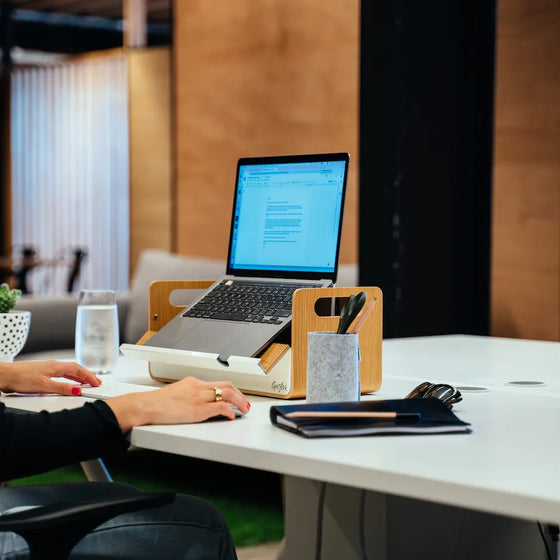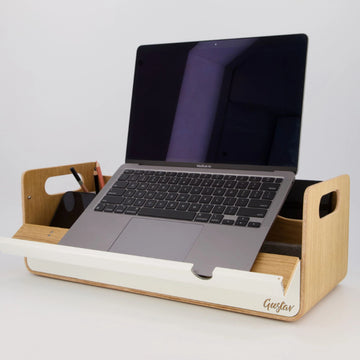
Hvad er et skrivebordsdelingskit?

Går du ind på et velfungerende hybridkontor kl. 9:05, kan du som regel hurtigt se, om skrivebordsdelingsmodellen fungerer. Skrivebordene ser ryddelige ud, folk sætter sig hurtigt til rette, og ingen leder efter en laptopstander, oplader eller et sted at lægge deres notesbog. Her bliver spørgsmålet om, hvad et skrivebordsdelingssæt er, praktisk frem for teoretisk.
Et skrivebordsdelingssæt er et bærbart sæt af essentielle arbejdsredskaber, der gør det muligt for en person at medbringe, placere og bruge deres personlige arbejdsopsætning ved ethvert delt skrivebord. Det samler typisk organisering, ergonomisk støtte og daglige teknologiske nødvendigheder i ét kompakt system. I stedet for at betragte hvert skrivebord som en permanent tildelt arbejdsstation, giver sættet brugeren mulighed for at bevare konsistens.
For nogle organisationer betyder det en simpel organiser med plads til kabler, kontorartikler og en notesbog. For andre betyder det en mere komplet mobil opsætning, der inkluderer en laptopstander, mus, tastatur, skrivebordsmåtte, teknologipung og struktureret opbevaring. Den fælles idé er enkel: én person, ét bærbart arbejdssæt, brugbart på mange skriveborde.
Hvad er et skrivebordsdelingssæt designet til at løse?
Skrivebordsdeling lyder effektivt på papiret, men brugeroplevelsen afhænger ofte af de mindste detaljer. Hvis medarbejdere ankommer til et delt skrivebord og skal bruge ti minutter på at samle tilbehør, rede kabler ud og justere deres kropsholdning, begynder systemet at føles improviseret. Et skrivebordsdelingssæt mindsker den friktion.
Dets første opgave er at genoprette orden. Delte miljøer kan hurtigt blive rodede, når brugere efterlader opladere, papirer, krus og forskelligt udstyr. Et dedikeret sæt understøtter politikker for ryddelige skriveborde, fordi det essentielle følger brugeren i stedet for at blive spredt rundt på kontoret.
Dets anden opgave er konsistens. I fleksible arbejdspladser bevæger folk sig mellem zoner, etager og lokationer. Uden et bærbart system føles hvert skrivebord lidt forskelligt og ofte mindre behageligt end det forrige. Et godt sæt skaber en gentagelig opsætning, hvilket ikke kun er vigtigt for fokus, men også for, hvor professionelt arbejdsområdet føles.
Den tredje opgave er ergonomi. Dette overses ofte i diskussioner om skrivebordsdeling. Hvis arbejdspladsen kun tilbyder et grundlæggende bord og stol, har folk stadig brug for en fornuftig skærmhøjde, en organiseret overflade og øjeblikkelig adgang til de værktøjer, de bruger hver dag. Et skrivebordsdelingssæt hjælper med at bygge bro mellem standardiseret kontormøblement og individuelle arbejdsbehov.
Kerneelementerne i et skrivebordsdelingssæt
Det præcise indhold afhænger af rollen, arbejdspladsen og hvor mobil brugeren skal være. Alligevel kombinerer de fleste skrivebordsdelingssæt tre kategorier: bæring, opsætning og støtte.
Bæring handler om bærbarhed og opbevaring. Det kan være en kompakt organiser, en struktureret pung eller en bærbar skrivebordskurv, der holder det essentielle samlet. Målet er ikke blot at opbevare ting, men at gøre opsætningen hurtig og ryddelig. Hvis sættet er besværligt at bære eller svært at pakke ud, vil det ikke blive brugt konsekvent.
Opsætning refererer til de produkter, der forvandler et generisk skrivebord til en brugbar arbejdsstation. En laptopstander er et af de mest værdifulde elementer, fordi den forbedrer synshøjden og signalerer, at skrivebordet er klar til fokuseret arbejde. En skrivebordsmåtte kan hjælpe med at definere brugerens arbejdsområde, beskytte overfladen og få midlertidige skriveborde til at føles mere gennemførte. Afhængigt af arbejdsstilen kan denne kategori også inkludere et tastatur, mus, opladerkabel eller notesbog.
Støtte dækker de mindre ting, der holder dagen til at glide. Penne, adaptere, hovedtelefoner, strømtilbehør og basale kontorartikler er vigtige, fordi de fjerner behovet for at låne eller lede. På kontorer med skrivebordsdeling er bekvemmelighed ikke en luksus. Det er det, der holder dagens flow intakt.
Hvorfor er skrivebordsdelingssæt vigtige i hybride arbejdspladser?
Hybridarbejde har ændret kontorets funktion. For mange teams er kontoret ikke længere det ene sted, hvor alt bliver stående. Det er et delt miljø, der skal understøtte bevægelse, samarbejde og individuel fokus uden permanent ejerskab af plads.
Den ændring gør personlige arbejdspladssystemer mere relevante. Medarbejdere har stadig brug for genkendelighed, men kontoret kan ikke længere tilbyde det alene gennem tildelte skriveborde. Et skrivebordsdelingssæt bliver det manglende lag mellem central arbejdspladsdesign og individuel daglig brug.
Dette er især relevant for arbejdspladsstrateger, facilitets teams og kontorplanlæggere, der prøver at få fleksible rum til at fungere i praksis. Skrivebordsdeling handler ikke kun om belægningsprocenter. Det handler også om, hvorvidt opsætningen føles rolig, effektiv og gennemtænkt for de mennesker, der bruger den.
Når medarbejdere kan ankomme, placere deres essentielle ting, hæve deres skærm og begynde at arbejde inden for få øjeblikke, føles kontoret velovervejet. Når de ikke kan, begynder modellen at føles midlertidig, selvom designet er poleret.
Hvad gør et godt skrivebordsdelingssæt?
Ikke enhver samling af tilbehør kvalificerer som et godt system. Forskellen ligger i, hvor godt delene fungerer sammen.
Et stærkt skrivebordsdelingssæt er kompakt nok til at bære komfortabelt, men komplet nok til at fjerne daglig friktion. Den balance er vigtig. Hvis sættet er for minimalt, ender brugerne stadig med at lede efter manglende værktøjer. Hvis det er for voluminøst, bliver det endnu en ting, folk efterlader.
Materialekvalitet betyder også mere, end man først tror. På en delt arbejdsplads håndteres produkterne dagligt, transporteres ofte og placeres på forskellige overflader. Holdbare materialer, gennemtænkt konstruktion og lette at rengøre overflader understøtter langvarig brug og en bedre visuel standard på kontoret.
Designet bør være afdæmpet, men målrettet. I premium arbejdsmiljøer er skrivebordstilbehør en del af den rumlige oplevelse. En rodet eller alt for teknisk opsætning kan undergrave et ellers raffineret arbejdsområde. Et veldesignet sæt understøtter kontorets arkitektur i stedet for at kæmpe imod den.
Endelig bør et godt sæt tillade opsætning på sekunder. Det er den egentlige test. Hvis en bruger skal pakke flere løse dele ud, finde manglende komponenter eller samle stykker hver morgen, mister konceptet sin værdi.
Hvem har mest gavn af et skrivebordsdelingssæt?
Det korte svar er næsten alle, der arbejder uden et permanent tildelt skrivebord. Men de stærkeste brugssituationer er ofte vidensarbejdere, konsulenter, projektteams, kreative fagfolk og medarbejdere, der bevæger sig mellem hjem, kontor og kundelokationer.
For medarbejderne er fordelen øjeblikkelig. De får en følelse af parathed og kontrol i miljøer, der ellers kan føles generiske. Deres skrivebord bliver lettere at organisere, mere behageligt at bruge og hurtigere at rydde op ved dagens afslutning.
For arbejdsgivere er værdien bredere. Skrivebordsdelingssæt kan understøtte renere arbejdsområder, mere pålidelig udskiftning af skriveborde og en mere ensartet medarbejderoplevelse. De hjælper også med at styrke idéen om, at fleksibilitet er designet, ikke improviseret.
For arkitekter og indretningsarkitekter løser disse sæt en almindelig spænding. Moderne kontorer forventes at se minimalistiske ud og fungere effektivt. Bærbare arbejdspladssystemer understøtter det mål ved at reducere visuel rod, samtidig med at brugerne får det, de har brug for.
Hvad er et skrivebordsdelingssæt ikke?
Det er ikke en erstatning for god arbejdspladsplanlægning. Hvis skrivebordene er dårligt placeret, opbevaringen utilstrækkelig eller strømtilgangen inkonsekvent, kan intet sæt rette op på hele oplevelsen.
Det er heller ikke én universel pakke til alle medarbejdere. Et finanshold, et designstudie og en offentlig arbejdsplads kan alle have brug for lidt forskellige konfigurationer. Princippet er det samme, men indholdet bør afspejle faktiske opgaver og adfærd.
Og det er ikke kun et forbruger-tilbehør. I de bedste implementeringer indgår skrivebordsdelingssæt som en del af en bredere arbejdspladsstrategi, der inkluderer standarder for ryddelige skriveborde, brug af skabe, ergonomisk vejledning og rumplanlægning.
Sådan vælger du det rigtige skrivebordsdelingssæt
Start med brugerens daglige virkelighed. Hvor ofte bevæger de sig mellem skriveborde? Pendler de med deres opsætning? Er de mest laptop-baserede, eller er de afhængige af perifert udstyr? Det rigtige sæt skal passe til arbejdsdagens rytme, ikke en abstrakt politik.
Overvej derefter opsætningshastigheden. Hvis et produktsystem hjælper nogen med hurtigt og pænt at gøre krav på en arbejdsplads, gør det sit job. Hvis det tilføjer kompleksitet, vil det til sidst blive ignoreret.
Det er også værd at se på kontormiljøet selv. I designorienterede arbejdspladser betyder den visuelle kvalitet af bærbart udstyr noget. Produkter, der kombinerer bærbarhed, ergonomisk funktion og gennemarbejdede materialer, integreres ofte mere naturligt i premium interiører.
For organisationer, der investerer i langsigtet hybridarbejde, giver det mening at vælge løsninger, der er bygget til gentagen brug frem for engangs-løsninger. Her har mærker som Gustav været med til at forme en mere gennemtænkt kategori – en der behandler mobile arbejdsredskaber som en del af arbejdspladsen, ikke som en eftertanke.
Et skrivebordsdelingssæt er i sin kerne en simpel idé. Det giver folk midlerne til at skabe en ren, funktionel arbejdsplads, uanset hvor de sidder. På fleksible kontorer ændrer det lille skift hele oplevelsen. Skrivebordet kan være delt, men opsætningen kan stadig føles personlig, velordnet og klar til seriøst arbejde.