Cooking together, growing together: Why the office kitchen is becoming the heart of the workplace

From the coffee machine to the cooking island
Thursday, 12 noon: Instead of heading off one by one to the canteen or ordering delivery, half the team is standing in the office kitchen. Someone is chopping vegetables, someone else is stirring the sauce, and the new colleague from sales is setting the long table. An hour later, everyone knows more about each other than after three weeks of Teams calls.
Cooking together as a team at the office is more than a nice event. It is a sign of a fundamental shift: the office is turning from a place you have to work into a place you want to come to. And that changes how we plan, furnish and use space.
Why team cooking is booming right now
Since hybrid work became the norm, many companies have been wrestling with the same question: How do we bring people back to the office without forcing them? Focused work often goes just as well from home. What's missing there is connection.
This is exactly where cooking together comes in. It gives people a concrete reason to come in and combines three things companies are looking for today:
- Informal exchange: While chopping and tasting, conversations happen that would never come up in a meeting – across departments and without hierarchy.
- Onboarding and belonging: New colleagues connect faster when they do something together instead of just sitting side by side.
- Health and appreciation: Freshly cooked food instead of a snack at the desk is a visible signal that the employer cares about the team's wellbeing.
The office becomes a community hub: a place where culture is created and nurtured – not just a place where tasks get done.
What this means for the interior layout
If you take team cooking seriously, the kitchen can no longer be planned as a side room with a coffee machine and a dishwasher. It moves to the centre of the floor plan – both spatially and conceptually.
The kitchen as centrepiece, not leftover space. Instead of sitting in a corner next to the restrooms, it ideally sits centrally, easy to reach and with daylight. It becomes an anchor point where paths cross.
Cooking islands instead of kitchen counters. A free-standing island lets several people work at the same time while facing each other. That's the difference between “back to back” and “together”.
Large tables for eating together. One long table for 10 to 16 people encourages more conversation than lots of small bistro tables. Outside lunchtime, it doubles as a workshop surface, stand-up meeting zone or venue for a team kick-off.
Plan for technology and acoustics. Enough cooktops, a powerful extractor, sufficient fridge space for ingredients and good room acoustics decide whether the concept works day to day – or fizzles out after the second try.
Clear zoning. The kitchen is allowed to be loud, lively and full of aromas. That's why it needs a deliberate separation from areas for focused work, for example through room dividers, plants or acoustic elements.
Shared zones and community: redistributing space
More room for the kitchen and for connection means, in most offices, that space has to be freed up elsewhere. The obvious source is assigned desks that sit empty on many days.
Desk sharing creates exactly this room to manoeuvre. When not everyone has their own desk, square metres can be repurposed – towards shared zones like a team kitchen, lounge, project areas and quiet zones. The office becomes less a landscape of desks and more a neighbourhood with different places for different activities.
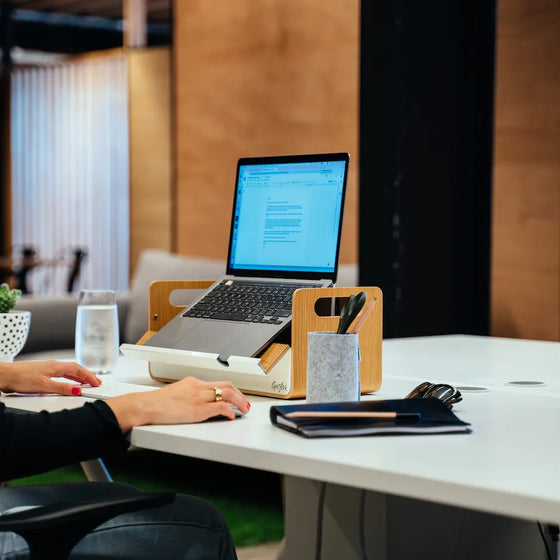
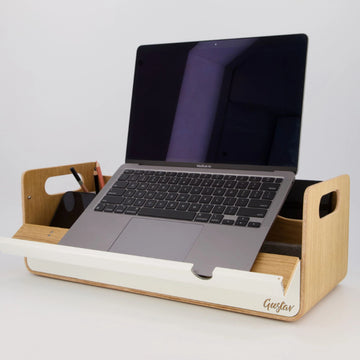
For this model to work day to day, it needs a simple answer to a very practical question: Where do my things go? Laptop, charger, notebook, headphones and water bottle all need to travel from the cooking island to the desk and back.
This is where Gustav's desk-sharing caddies come in. They are the mobile base for the day: taken out of the locker in the morning, carried to the workspace, set aside at lunchtime when everyone cooks together – and stowed away again in the evening. Desks stay clear for the next person, and nobody has to leave their things in the kitchen or “mark their territory” at a desk.
The result: tidy, flexible spaces that leave room for real community.
How to get started with team cooking
You don't need a full refit to get started. A few simple steps are enough to test whether the format suits your team:
- Start small: A fixed slot, for example once a week or on a set office day, creates commitment.
- Rotating cooking teams: Each week a different group from different departments cooks. That way, teams mix naturally.
- Simplify shopping and planning: Nobody wants to search for recipes and go shopping before they can start cooking. Meal kits with pre-portioned ingredients and recipes remove that hurdle.
- Gather feedback: After a few weeks, ask what's working – and what the space still needs.
Tip: Meal kit subscriptions
The easiest way to start is with a meal kit subscription. With a healthy meal kit, fresh ingredients and matching recipes are delivered straight to the office on a regular basis – the team can get going right away, and organisation stays lean.
Conclusion: The office as a place people love to gather
Team cooking isn't a gimmick; it reflects a new role for the office. It shows what people come into the office for today: connection, exchange and the feeling of being part of a team.
For workplace planning, that means fewer assigned desks, more shared zones – and a kitchen at the heart of the floor plan. Desk sharing with well-designed solutions for personal work items creates the space this requires.
Want to turn your office into a community hub? Get in touch – we'll show you how Gustav caddies make desk sharing easy every day.