Lo que una estación de trabajo para equipos rotativos debe ofrecer hoy

Lunes por la mañana, 08:45. El primer equipo se está instalando para una mañana enfocada en el trabajo de proyecto; por la tarde, un grupo diferente con requisitos completamente distintos utilizará el espacio. Aquí es exactamente donde se hace evidente si una estación de trabajo realmente funciona para equipos cambiantes o si solo se ve bien en el plano.
Las oficinas flexibles ya no son una excepción. El uso compartido de escritorios, el trabajo híbrido y la colaboración basada en proyectos han cambiado las demandas que se hacen a los lugares de trabajo. Hoy en día, un espacio de trabajo debe hacer más que proporcionar un escritorio, una silla y una pantalla. Debe estar listo para su uso inmediato, ofrecer orientación, mantener el orden y permitir que diferentes personas sean productivas en poco tiempo. Para los gestores de instalaciones, estrategas de espacios de trabajo, planificadores y gerentes, el desafío no es solo la eficiencia del espacio, sino la calidad de la vida laboral diaria.
Lo que una estación de trabajo para equipos cambiantes debe ofrecer hoy
Una estación de trabajo compartida rara vez falla por la idea. Falla por la fricción. Cuando los empleados tienen que buscar cables, reajustar la pantalla, colocar bolsas en el suelo e improvisar cada configuración, se pierde tiempo. El efecto en la percepción es aún más notable: el espacio de trabajo parece indiferente en lugar de profesional.
Una estación de trabajo bien planificada para equipos cambiantes reduce precisamente esta fricción. Crea un marco claro en el que diferentes personas pueden orientarse de inmediato. Eso comienza con el equipamiento físico, pero va más allá. Las superficies, el almacenamiento, la ergonomía, el acceso a la tecnología y el orden visible en la estación de trabajo deben funcionar en conjunto.
Dicho esto: no todos los entornos laborales necesitan la máxima estandarización. En equipos creativos, un mayor grado de flexibilidad puede tener sentido, mientras que en grandes entornos corporativos a menudo se prefieren configuraciones más uniformes. El punto crucial es que la variabilidad se gestione. La libertad sin estructura casi siempre genera inquietud.
Por qué la estandarización no tiene que sentirse impersonal
Muchas organizaciones temen que los escritorios compartidos estandarizados se sientan estériles. Esta preocupación es comprensible, pero generalmente es resultado de una mala implementación. Una estación de trabajo claramente definida no tiene que ser anónima. Al contrario: cuanto mejor sea la estructura básica, más fácil será hacer que un lugar se sienta personal y agradable en poco tiempo.
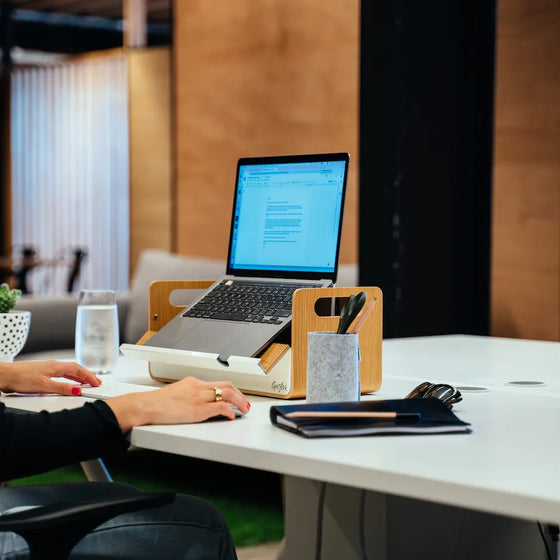
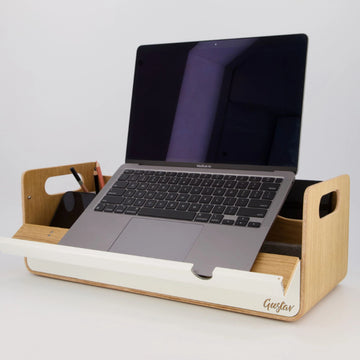
Esto funciona a través de detalles bien pensados. Un soporte para portátil mejora inmediatamente el nivel de los ojos. Una unidad organizadora móvil mantiene las herramientas de trabajo agrupadas. Una alfombrilla de escritorio de alta calidad marca visualmente el área de trabajo y aporta calma a la superficie. Estos elementos dan identidad al lugar sin individualizarlo permanentemente.
Esta es una diferencia decisiva, especialmente en equipos cambiantes. El impacto personal se crea no solo con objetos privados, sino con una configuración que se siente deliberada, ordenada y de alta calidad. Alguien que llega a un lugar preparado cuidadosamente por la mañana trabaja de manera diferente a quien se sienta en una mesa que parece un compromiso.
Los cuatro niveles de una configuración funcional
Para que una estación de trabajo funcione en entornos dinámicos, debe concebirse en cuatro niveles: orientación, ergonomía, movilidad y apariencia.
La orientación significa que cada persona entiende de inmediato cómo funciona el lugar. ¿Dónde están conectados los dispositivos? ¿Dónde se guardan los objetos de trabajo? ¿Qué pertenece al escritorio y qué no? Cuantas menos preguntas queden, más rápido puede comenzar el trabajo real.
La ergonomía a menudo se subestima en los conceptos de escritorios compartidos. Los escritorios ajustables en altura y las buenas sillas son importantes, pero no suficientes. Si los usuarios de portátiles están constantemente mirando hacia abajo o los periféricos están dispuestos de forma incómoda, la estación de trabajo no alcanza su potencial. La ergonomía debe establecerse rápidamente, no solo lograrse después de diez minutos de reajuste.
La movilidad está en el núcleo del trabajo flexible. Las personas que se mueven entre la oficina en casa, salas de reuniones, zonas de concentración y áreas de equipo necesitan herramientas de trabajo que apoyen ese cambio. Los objetos sueltos crean caos. Los sistemas compactos y transportables crean continuidad.
La apariencia a menudo se descarta como un tema secundario en el contexto laboral. Sin embargo, influye directamente en el comportamiento. Un espacio de trabajo tranquilo y de calidad fomenta el cuidado. Un lugar visualmente desordenado invita a dejar las cosas en cualquier parte. Por lo tanto, el diseño no es solo superficie; es parte de cómo se usa un lugar.
Estaciones de trabajo para equipos cambiantes: dónde fallan muchos conceptos
En la práctica, a menudo se ven dos extremos. O la estación de trabajo se piensa como demasiado técnica — centrada en la reserva, la utilización y la infraestructura — o demasiado atmosférica, con mucha atención al interior y poca al flujo de trabajo en el escritorio. Ambos pierden el objetivo.
Una estación de trabajo para equipos cambiantes debe, sobre todo, convencer durante las transiciones. El momento entre llegar y comenzar a trabajar es el punto crítico. Si surge incertidumbre allí, la aceptación de todo el concepto se ve afectada. Los empleados preferirán entonces reservar el mismo lugar, refugiarse en salas de reuniones o traer la mitad de su equipo privado a la oficina.
Otro problema es el exceso de mobiliario. Estantes adicionales, pequeños contenedores, elevadores improvisados para monitores y accesorios dispersos pueden estar bien intencionados, pero rápidamente hacen que los escritorios compartidos sean difíciles de entender. Menos elementos, pero los adecuados, suelen crear la mejor solución.
Cómo el buen equipamiento marca la diferencia
La calidad de una estación de trabajo flexible rara vez se revela en gestos grandiosos. Se muestra en qué tan precisamente se resuelven pequeñas funciones. Un organizador portátil reemplaza objetos sueltos. Un soporte para portátil mejora la postura y la línea de visión. Una bolsa o estuche estructurado evita que cargadores, ratón y cuaderno se redistribuyan cada día.
Para las empresas esto significa más que comodidad. Un equipamiento consistente apoya las políticas de escritorio limpio, reduce el desorden visual y acorta los tiempos de preparación en la estación de trabajo. Al mismo tiempo, el lugar se vuelve más resistente a los usuarios cambiantes. Las cosas tienen su lugar. Los procesos se vuelven más claros. El área parece controlada sin ser rígida.
En el segmento premium entra en juego otro factor: la materialidad. Los materiales producidos de forma sostenible, las superficies duraderas y los acabados cuidadosos no son solo elecciones estéticas. En entornos de uso intensivo, se reflejan directamente en la durabilidad y la percepción. Una estación de trabajo que sigue luciendo bien mantenida después de un uso intensivo protege la inversión y fortalece la calidad de toda la oficina.
Qué solución tiene sentido para quién
No todos los equipos trabajan igual. Los equipos de proyecto con altas necesidades de colaboración a menudo requieren configuraciones diferentes a los departamentos especializados con un alto componente de concentración. La frecuencia con la que se cambian los escritorios también modifica los requisitos.
Si los empleados rotan entre diferentes escritorios a diario, vale la pena un sistema especialmente móvil. El equipamiento básico personal debe ser compacto, fácil de transportar y estar listo para usar en segundos. En entornos donde los equipos se mueven entre zonas semanalmente, el componente estacionario puede ser mayor. Entonces, el equipamiento básico claro y los estándares consistentes de escritorio ganan importancia.
Para arquitectos y diseñadores de interiores también es relevante cuán visible debe ser la lógica de la estación de trabajo en la sala. Algunos conceptos buscan la máxima discreción. Otros hacen de la organización un elemento de diseño deliberadamente. Ambos pueden funcionar, siempre que el usuario experimente inmediatamente el beneficio.
Lo que los empleados realmente adoptarán
La aceptación no surge solo por reglas. Surge cuando la estación de trabajo facilita la vida. Las personas adoptan nuevas rutinas más rápido si claramente ahorran tiempo y hacen que el inicio del día sea más tranquilo.
Por eso, las mejores soluciones suelen ser las que requieren poca explicación. Alguien que deja su portátil, toma accesorios de una unidad ordenada y está listo para trabajar en momentos entiende el valor añadido sin necesidad de un taller. Es en este punto donde el diseño y el rendimiento se unen.
Marcas como Gustav aciertan aquí porque no tratan el trabajo móvil como una solución provisional, sino como una forma completa de trabajar. Esto es crucial para las oficinas modernas. El trabajo flexible no necesita medidas provisionales. Necesita herramientas que integren movilidad, ergonomía y orden a un alto nivel.
La planificación no comienza con el mobiliario, sino con el comportamiento
Quien quiera desarrollar o mejorar una estación de trabajo para equipos cambiantes debe primero observar el comportamiento real de uso. ¿Qué traen los empleados cada día? ¿Qué objetos se quedan en el escritorio? ¿Dónde surgen cuellos de botella, tiempos de búsqueda o pequeñas frustraciones? Solo a partir de estas observaciones queda claro qué equipamiento realmente ayuda.
Esto a menudo conduce a decisiones más claras. En lugar de sobrecargar el lugar con funciones, la configuración se vuelve más precisa. En lugar de flexibilidad genérica, surge un entorno que responde a flujos de trabajo reales. El resultado no solo es más ordenado. También se siente más seguro.
Una buena estación de trabajo hoy debe ser más que solo disponible. Debe hacer que la transición entre personas, tareas y lugares sea lo más tranquila posible. Si eso se logra, el uso compartido de escritorios deja de ser un compromiso y se convierte en un estándar mejor para el trabajo en equipo moderno.
Al final, las estaciones de trabajo más fuertes no son las más llamativas. Son aquellas donde los equipos cambiantes llegan, se orientan de inmediato y pueden comenzar sin rodeos.