¿Qué hace que un soporte para portátil sea ergonómico en el trabajo?

Un portátil colocado plano sobre un escritorio obliga a tu cuerpo a hacer concesiones. Miras hacia abajo para ver la pantalla y tu cuello se inclina hacia adelante. Subes la silla para mejorar la vista y tus antebrazos pueden dejar de estar cómodamente apoyados en el teclado. Por eso, la pregunta de qué hace que un soporte para portátil sea ergonómico no se trata simplemente de elevar un dispositivo. Se trata de crear una mejor relación entre la pantalla, el escritorio y la persona que los usa.
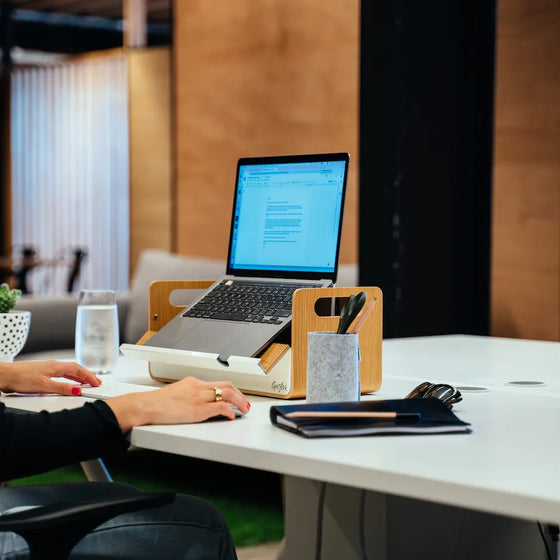
Para oficinas en casa, escritorios compartidos y trabajo móvil, un buen soporte debería facilitar esa relación cada vez que se usa. Debe apoyar una configuración tranquila y repetible sin añadir desorden ni dificultar el uso del escritorio.
¿Qué hace que un soporte para portátil sea ergonómico?
Un soporte ergonómico para portátil eleva la pantalla a una altura y ángulo que reducen la inclinación innecesaria del cuello y la tensión en la parte superior del cuerpo. Permanece estable mientras trabajas, se adapta al tamaño y peso del portátil, y encaja naturalmente en la estación de trabajo más amplia.
Este punto más amplio es importante. Un soporte no es ergonómico de forma aislada. Un modelo que coloca la pantalla a una altura útil pero obliga a una posición incómoda del teclado es solo parte de la solución. El mejor resultado suele lograrse cuando un portátil elevado se combina con un teclado y ratón externos, permitiendo que la pantalla y las manos estén donde deben estar.
Para tareas cortas, trabajar directamente en el teclado del portátil puede ser perfectamente práctico. Para sesiones largas, trabajo intensivo de escritura o videollamadas frecuentes, separar la altura de la pantalla de la del teclado marca una diferencia significativa.
La altura de la pantalla es el punto de partida
La función principal de un soporte para portátil es acercar la parte superior de la pantalla al nivel de los ojos. Esto te ayuda a ver la pantalla con una posición más neutral de la cabeza en lugar de bajar repetidamente la barbilla hacia el escritorio.
No existe una altura única correcta para todas las personas o escritorios. Las proporciones del cuerpo, la altura de la silla, la altura del escritorio, el tamaño de la pantalla y las lentes con prescripción afectan la posición ideal. Como guía útil, tu mirada debe encontrarse con la parte superior de la pantalla sin necesidad de levantar o bajar la cabeza significativamente. Debes poder mirar el centro de la pantalla con el cuello relajado, no rígidamente erguido.
Un soporte más alto no es automáticamente mejor. Si la pantalla está demasiado alta, puedes inclinar la cabeza hacia atrás o levantar los ojos incómodamente. Si está demasiado baja, vuelve la conocida inclinación hacia adelante. La altura correcta es la que soporta una posición de visualización neutral y sostenible para el trabajo que realmente estás haciendo.
La distancia de visualización y el ángulo de la pantalla también importan
La altura solo funciona junto con una distancia sensata. Coloca la pantalla lo suficientemente lejos para que puedas leerla sin inclinarte hacia adelante, generalmente a la distancia de un brazo, y luego ajusta según el tamaño del texto y la comodidad visual. Una pantalla más grande puede estar un poco más alejada, mientras que un portátil compacto podría necesitar estar más cerca.
La pantalla también debe estar inclinada para limitar el deslumbramiento y los reflejos. Un soporte que ofrece un ajuste de inclinación modesto puede ayudar a los usuarios a adaptarse a la luz cambiante del día, la iluminación superior y diferentes posiciones del escritorio. En un entorno de escritorio compartido, esta flexibilidad es especialmente valiosa: una configuración rara vez se adapta a todos.
La estabilidad genera confianza, no solo comodidad
Un soporte para portátil puede tener las dimensiones correctas en papel y aún así fallar ergonómicamente si se tambalea. El movimiento de la pantalla hace que leer y hacer videollamadas sea distractor, y un soporte que se mueve mientras se escribe anima a los usuarios a tensar los hombros o a sujetar el dispositivo con una mano para estabilizarlo.
Busca una base estable, puntos de contacto seguros y una construcción diseñada para sostener el portátil sin flexionarse. El soporte debe permanecer firme mientras conectas cables, ajustas la tapa o cambias de tarea. También debe mantener el dispositivo seguro en su posición, en lugar de depender de un ángulo pronunciado o un borde estrecho.
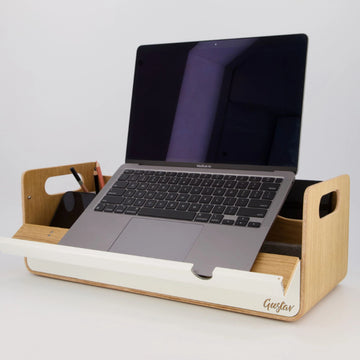
Aquí es donde la elección del material y la artesanía se vuelven prácticas y no solo decorativas. Un soporte bien hecho se siente sólido bajo carga. Sus superficies protegen el portátil, sus bordes son cómodos de manejar y su forma sostiene el dispositivo sin ruido visual. Las herramientas premium para el espacio de trabajo deben ganarse su lugar en el escritorio a través de este tipo de rendimiento silencioso.
La cuestión del teclado no puede ignorarse
Elevar un portátil mejora la posición de la pantalla, pero también eleva el teclado incorporado. Esto puede colocar tus codos, muñecas y hombros en una posición menos cómoda si continúas escribiendo en él durante horas.
Un teclado y ratón externos solucionan esto permitiendo que tus manos permanezcan cerca de la altura del codo, con los hombros relajados y las muñecas lo más neutrales posible. El teclado debe estar lo suficientemente cerca para no tener que estirarte hacia adelante, mientras que el ratón debe estar al alcance fácil y al mismo nivel.
Esto no significa que todos los soportes para portátil deban usarse con periféricos separados todo el día. Un diseñador revisando un dibujo, un consultor consultando notas entre reuniones o un compañero manejando un mensaje corto puede preferir la simplicidad del portátil solo. La clave es adaptar la configuración a la duración e intensidad de la tarea. La ergonomía es adaptación práctica, no un reglamento rígido.
La ajustabilidad es útil, pero la simplicidad tiene valor
Los soportes ajustables pueden acomodar a múltiples usuarios, dispositivos y entornos de trabajo. Son especialmente útiles en oficinas compartidas, donde el mismo escritorio puede ser usado por varias personas durante la semana. La capacidad de cambiar altura o ángulo ayuda a cada usuario a establecer una posición de pantalla más adecuada en lugar de aceptar un compromiso fijo.
Sin embargo, más ajustes no siempre son mejores. Los mecanismos complejos pueden añadir peso, tardar más en configurarse e introducir más puntos de movimiento. Para un sistema de trabajo portátil, un ángulo fijo bien pensado puede ser la mejor opción si se adapta a alturas comunes de escritorio y puede desplegarse en segundos.
La elección correcta depende del contexto. Un escritorio permanente en casa puede beneficiarse de una amplia ajustabilidad. Un trabajador híbrido que se mueve entre oficina, casa y clientes puede valorar un soporte compacto con una posición confiable y repetible. Los equipos de trabajo que especifican equipamiento para escritorios compartidos deberían considerar ambos: suficiente flexibilidad para usuarios variados, pero no tanta complejidad que el soporte quede sin usar en un cajón.
Un buen soporte ergonómico apoya todo el escritorio
Los mejores soportes para portátil hacen más que elevar una pantalla. Ayudan a organizar el área de trabajo alrededor de ella. Un escritorio despejado da al teclado, ratón, cuaderno, cable de carga y teléfono móvil un lugar lógico, reduciendo las pequeñas interrupciones causadas por buscar, mover y desenredar.
La huella que ocupa es importante aquí. El soporte no debe consumir más espacio en el escritorio del beneficio que proporciona, especialmente en estaciones de trabajo compactas y compartidas. Debe dejar espacio para las herramientas necesarias a su lado y permitir que los cables se enruten de forma ordenada. Si un usuario tiene que colocar el ratón demasiado lejos porque el soporte domina el escritorio, la configuración ha creado un nuevo problema ergonómico.
Un sistema cohesivo de espacio de trabajo portátil puede facilitar esto. Cuando un soporte, organizador y alfombrilla de escritorio están diseñados para viajar y funcionar juntos, los usuarios pueden llegar a un escritorio compartido y establecer zonas de trabajo familiares rápidamente. Esa consistencia apoya la comodidad, pero también una experiencia de empleado más considerada.
La portabilidad afecta si el diseño ergonómico se usa
Un soporte que se queda en casa porque es pesado, voluminoso o incómodo de empacar no puede mejorar un día en la oficina. Para el trabajo híbrido, la portabilidad es parte del rendimiento ergonómico. El producto debe ser fácil de transportar, rápido de desplegar o posicionar, y lo suficientemente duradero para el movimiento regular entre ubicaciones.
Hay un compromiso. Los diseños ultraligeros pueden sacrificar estabilidad, mientras que los soportes muy robustos pueden volverse incómodos de transportar. Las opciones más fuertes equilibran ambos: suficiente estructura para sentirse seguro en un escritorio, con una forma que encaje naturalmente en una bolsa de trabajo o organizador móvil de escritorio.
Considera también los detalles prácticos. ¿El soporte protege el portátil durante su uso? ¿Se puede manejar cómodamente? ¿Evita engancharse con cables u otros objetos en una bolsa? Decisiones pequeñas como estas determinan si una herramienta ergonómica bien pensada se convierte en parte de la rutina diaria.
Cómo evaluar un soporte para portátil antes de especificarlo
Al elegir un soporte para ti o para un lugar de trabajo más amplio, evalúalo de la manera en que realmente se usará. Colócalo en la altura del escritorio relevante, abre un portátil típico y siéntate en la silla proporcionada. Comprueba si la pantalla alcanza una posición cómoda de visualización, si la base se mantiene estable y si hay espacio suficiente para un teclado y ratón externos.
Luego considera el viaje móvil. Empácalo, llévalo y configúralo de nuevo. En lugares de trabajo flexibles, un producto ergonómico debe funcionar más allá del escritorio de exhibición. Necesita adaptarse al ritmo del escritorio compartido mientras mantiene la calidad del material y la claridad visual esperadas en un espacio de trabajo profesional.
El soporte para portátil más efectivo es el que elimina silenciosamente las concesiones. Da a la pantalla un mejor lugar, mantiene el escritorio ordenado y hace que una configuración cómoda se sienta natural dondequiera que se trabaje.