Accesorios para el espacio de trabajo que se ganan su lugar

Un escritorio dice mucho sobre cómo se realiza el trabajo. En una oficina fija, el desorden puede ocultarse en los cajones. En un entorno híbrido o de compartición de escritorios, cada objeto debe justificar su espacio. Por eso los accesorios de trabajo importan más que antes. Los mejores no decoran un escritorio. Hacen que sea más rápido de montar, más fácil concentrarse y más sencillo guardar todo de nuevo.
Para los profesionales que se mueven entre casa, oficina y espacios de proyectos compartidos, el enfoque estándar ya no funciona. Un enredo de cables, un portátil colocado demasiado bajo y herramientas sueltas dispersas en un escritorio compartido generan fricción desde el primer minuto del día. Los buenos accesorios eliminan esa fricción. Los excelentes lo hacen con eficiencia silenciosa, inteligencia ergonómica y materiales que siguen luciendo bien en un espacio de trabajo bien diseñado.
Lo que los accesorios de trabajo deberían hacer realmente
No faltan productos para escritorio vendidos como herramientas de productividad. Muchos añaden ruido visual sin resolver un problema real. La prueba útil es simple: ¿el accesorio mejora la calidad del trabajo o solo ocupa espacio?
Los accesorios de trabajo más efectivos suelen cumplir en cuatro aspectos. Apoyan la postura, reducen el desorden, mejoran la movilidad y crean calma visual. Si un producto cumple bien solo uno de estos, aún puede tener valor. Pero en entornos laborales modernos, especialmente donde se comparten escritorios, el diseño multifuncional suele rendir mejor.
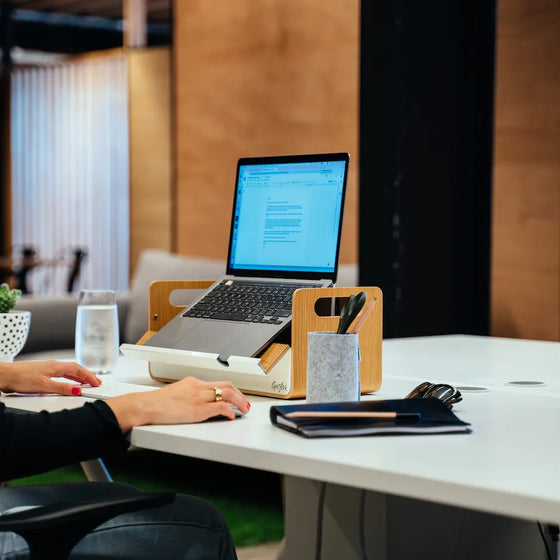
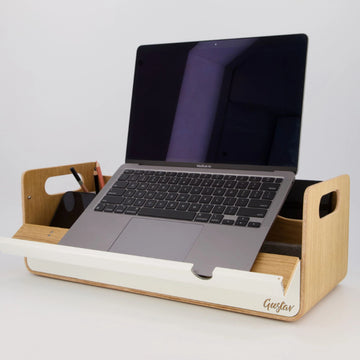
Un soporte para portátil es un buen ejemplo. Su función no es solo elevar la pantalla. Puede crear un ángulo de visión más saludable, liberar espacio en el escritorio debajo del dispositivo y establecer una disposición de trabajo más deliberada. El mismo principio se aplica a organizadores de escritorio, alfombrillas, estuches tecnológicos y sistemas de transporte. Un accesorio bien pensado debería ayudar al usuario a trabajar mejor ahora y a hacer una transición fluida al siguiente lugar después.
El cambio de la decoración del escritorio al rendimiento del escritorio
Las expectativas en el lugar de trabajo han cambiado. Los empleados ya no montan su espacio una vez y dejan todo en su lugar durante años. Se mueven entre entornos, se adaptan a diferentes escritorios y llevan consigo herramientas esenciales. Para empleadores y planificadores de espacios, eso cambia el enfoque.
Los accesorios ya no son un toque final añadido después de especificar el mobiliario. Son parte de la capa de rendimiento del lugar de trabajo. Ayudan a que la compartición de escritorios sea usable, las políticas de escritorio limpio realistas y las rutinas híbridas menos fragmentadas.
Aquí es donde los compromisos empiezan a importar. Un organizador grande puede contener todo ordenadamente, pero si no se puede mover fácilmente con el usuario, se convierte en parte del problema. Un soporte plegable y ligero puede viajar bien, pero si se siente inestable en el uso diario, terminará en un cajón. La respuesta correcta depende de cómo y dónde la gente realmente trabaja.
Elegir accesorios de trabajo para el trabajo híbrido
El trabajo híbrido se discute a menudo en términos generales, pero la experiencia diaria es muy específica. Las personas necesitan llegar, montar rápido, trabajar cómodamente y salir sin perder cargadores, cuadernos o dispositivos pequeños. Los accesorios deben elegirse pensando en esa secuencia.
La portabilidad es lo primero. Si un artículo está pensado para viajar entre lugares, debe plegarse plano o guardarse ordenadamente, evitar volumen innecesario y resistir el movimiento frecuente. Los materiales importan aquí. La madera premium, los textiles reciclados y los herrajes duraderos suelen envejecer mejor que los plásticos delgados, especialmente cuando los productos se usan a diario y no ocasionalmente.
La facilidad de montaje es igual de importante. Los mejores accesorios reducen los pasos entre la llegada y el trabajo productivo. Un organizador portátil que se abre para convertirse en una estación de trabajo funcional es más útil que varios objetos sueltos que hay que desempacar uno a uno. Una alfombrilla de escritorio que define una zona de trabajo puede hacer que un escritorio desconocido se sienta inmediatamente más intencional.
Luego está la consistencia. Un beneficio poco valorado de los accesorios bien diseñados es que crean la misma lógica de trabajo en diferentes espacios. Cuando el usuario lleva los mismos elementos esenciales, organizados de la misma manera, hay menos carga cognitiva. Esa consistencia apoya la concentración, incluso cuando el entorno cambia.
Los esenciales que suelen justificar la inversión
No todos los escritorios necesitan más productos. La mayoría necesita menos, pero mejores. En términos prácticos, un pequeño grupo de accesorios suele tener el mayor impacto.
Un soporte para portátil sigue siendo una de las adiciones más valiosas porque la altura incorrecta de la pantalla sigue siendo uno de los problemas ergonómicos más comunes en el trabajo flexible. Es más efectivo cuando se combina con un teclado y ratón externos, pero incluso solo puede mejorar la postura y liberar espacio en el escritorio.
Un organizador portátil de escritorio es igualmente relevante en oficinas con escritorios compartidos. Ofrece a los usuarios un lugar definido para cables, papelería, auriculares y herramientas personales, mientras facilita un montaje rápido y un guardado claro. Para organizaciones que intentan mantener espacios compartidos ordenados sin que la oficina se sienta impersonal, esta categoría es especialmente eficaz.
Las alfombrillas de escritorio suelen subestimarse. Una buena alfombrilla protege las superficies, mejora la comodidad táctil y crea un marco visual para el trabajo. En oficinas de planta abierta y en configuraciones domésticas por igual, esa sensación de orden tiene valor práctico. Ayuda a contener dispositivos y objetos pequeños, y puede hacer que una estación de trabajo temporal se sienta más establecida.
Los estuches tecnológicos y bolsas de trabajo importan por la misma razón. El trabajo flexible se descompone rápidamente cuando las personas no pueden transportar lo esencial de forma eficiente. Una bolsa diseñada para trabajo móvil no solo debe transportar objetos. Debe organizarlos para que la transición entre lugares se sienta controlada y no caótica.
La calidad del diseño no es un detalle cosmético
En espacios de trabajo premium, el diseño a menudo se trata como una cuestión de imagen. En realidad, está estrechamente ligado a la usabilidad. Los productos que lucen calmados y resueltos suelen funcionar así también. Las proporciones son más claras. El almacenamiento es más intuitivo. Los materiales se sienten pensados y no improvisados.
Eso no significa que cada accesorio deba ser visualmente minimalista. Significa que el diseño debe tener un propósito. Un buen diseño elimina distracciones. Ayuda a que un producto comunique cómo debe usarse. También tiene una vida útil más larga, lo que importa tanto para la sostenibilidad como para el valor de la compra.
Esto es especialmente relevante para arquitectos, diseñadores de interiores y responsables de decisiones en espacios de trabajo que especifican productos a gran escala. Los accesorios se convierten en parte del lenguaje general de la oficina. Los añadidos de mala calidad pueden socavar un espacio bien planificado. Las piezas de alta calidad, en cambio, apoyan un estándar consistente en áreas de trabajo temporales, escritorios compartidos, zonas de reunión y esquemas de apoyo para oficinas en casa.
La sostenibilidad debe reflejarse en el producto, no solo en la promesa
Las afirmaciones de sostenibilidad son fáciles de hacer y más difíciles de evaluar. En los accesorios de trabajo, las señales más claras suelen ser la elección de materiales, la durabilidad y la longevidad de uso.
Los productos hechos con madera de origen responsable o materiales reciclados tienen un atractivo obvio, pero eso es solo parte del panorama. Si un accesorio se rompe, se ve desgastado rápidamente o queda obsoleto en poco tiempo, el argumento ambiental se debilita. La artesanía duradera no está separada de la sostenibilidad. Es central para ella.
También está la cuestión de la cultura del reemplazo. Muchos accesorios de bajo costo se compran como soluciones temporales. Resuelven un problema por unos meses, luego fallan o dejan de usarse. Un producto mejor suele costar más al principio, pero funciona mucho más tiempo y apoya un estándar de trabajo más estable. Para empresas que equipan varios equipos, esa diferencia se vuelve significativa con el tiempo.
Un estándar más inteligente para escritorios compartidos y personales
Los accesorios de trabajo más efectivos hacen algo sutil. Permiten que un escritorio se sienta personal sin volverse permanente. Ese equilibrio importa en oficinas modernas donde se espera flexibilidad pero la comodidad sigue moldeando la experiencia del empleado.
Para usuarios individuales, el objetivo es una configuración que pueda viajar, adaptarse y aún sentirse completa. Para empleadores, el objetivo es proporcionar herramientas que apoyen un uso limpio, eficiente y profesional del espacio compartido. Estos objetivos no están en conflicto. Cuando los accesorios están bien diseñados, sirven a ambos.
Por eso esta categoría merece más atención de la que suele recibir. Los accesorios están cerca de la realidad diaria del trabajo. Influyen en la postura, la velocidad, la organización y el tono visual de un espacio. Pueden reducir la fricción de formas que el mobiliario solo no puede.
Gustav lo aborda con claridad: tu oficina debe estar lista dondequiera que se realice el trabajo. Ese es el estándar por el que vale la pena diseñar.
La mejor elección rara vez es el accesorio con más funciones. Es el que hace que el trabajo se sienta más ligero, tranquilo e intencional cada día.