9 Home Office Storage Solutions That Work

The problem usually starts with one cable, one notebook, one charger left on the desk. A week later, the whole room feels busier than the work itself. The best home office storage solutions do more than hide clutter. They create a workspace that feels clear, efficient and ready the moment you sit down.
For professionals working across home, office and shared environments, storage is no longer a background detail. It shapes focus, comfort and how quickly a desk can shift from daily admin to deep work. A good system should support the way people actually work now - with devices, documents, accessories and personal tools moving between locations.
Why home office storage solutions matter more in hybrid work
A home office used to be a fixed setup. Now it often functions as one point in a wider working pattern. You might spend two days at home, two in a shared office and one on the move. That changes what storage needs to do.
Static furniture still has a role, but it is rarely enough on its own. Deep drawers and bulky cabinets can store plenty, yet they do little for the items you reach for every day. The more useful approach is layered storage: a mix of furniture, desktop organisation and portable systems that keep essentials visible, contained and easy to carry.
This matters for visual calm as much as practicality. Clutter is not only untidy. It creates friction. Every loose adapter, misplaced pen or stack of papers adds a small delay. Over time, those delays change how a workspace feels. A well-organised home office supports faster setup, fewer distractions and a more professional environment, even in a spare room or corner of a living space.
Start with behaviour, not furniture
The most effective home office storage solutions begin with a simple question: what needs to stay, what needs to move, and what needs to disappear?
That sounds obvious, but many people buy storage before defining the workflow. As a result, they end up with attractive shelving that fills with random objects or drawers that become long-term holding areas for things they never use.
A better method is to group items by frequency and function. Daily tools such as a laptop stand, charger, notebook, headset and writing instruments should live within immediate reach. Weekly-use items can sit slightly further away, perhaps in a drawer unit or shelf box. Rarely used materials belong in closed storage, where they stay accessible without adding visual noise.
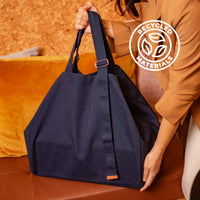
This is also where mobility enters the picture. If your work regularly shifts location, the daily category should be portable by design. A dedicated organiser or work bag can effectively become a moving top drawer - one place for the tools that define your setup.
Desktop storage should reduce decisions
The desk surface is premium real estate. It should support active work, not become storage overflow.
That does not mean a completely empty desk is always realistic. It means every item left out should earn its place. Small organisers, trays and pouches work best when they reduce decision-making. Instead of asking where to put your earbuds, cable, stylus or USB drive each time, the system answers for you.
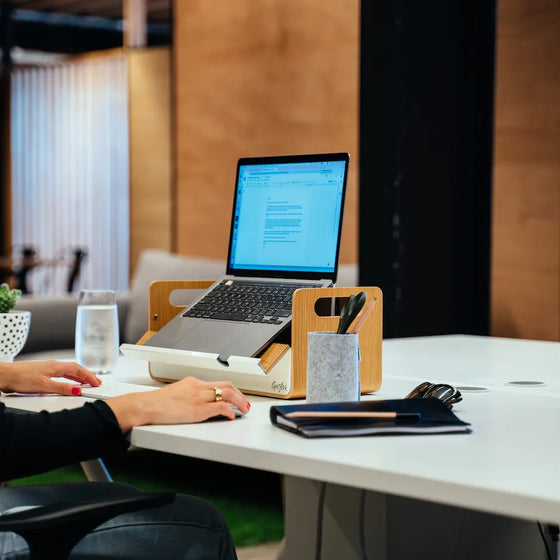
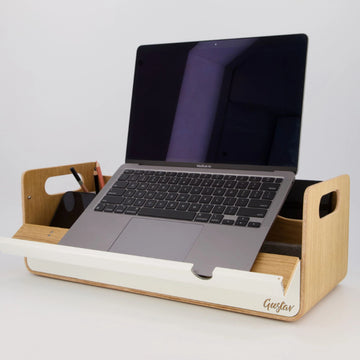
Compact desktop storage is particularly effective in smaller home offices where one table may serve multiple roles. A slim organiser keeps essentials contained without dominating the surface. If the design is considered, it also helps the workspace feel intentional rather than improvised.
There is a trade-off here. Open storage is fast and convenient, but it can quickly look messy if overfilled. Closed storage looks cleaner, though it adds one more step when reaching for essentials. In most home offices, a combination works best: open storage for daily tools, closed storage for everything else.
Go vertical when floor space is limited
Many home offices are carved from existing rooms rather than designed from scratch. That makes vertical storage especially valuable.
Wall-mounted shelves, narrow cabinets and stacked storage boxes can increase capacity without crowding the room. This is useful in flats, spare bedrooms and multi-use family spaces where the footprint needs to stay light. Vertical storage also helps keep work materials above the desk rather than on it, preserving a cleaner line of sight.
Still, not everything should go upwards. Items used several times a day should not require standing up or stretching to reach them. Vertical storage is best for reference books, archive files, surplus stationery or backup tech. The goal is not simply to store more. It is to keep the working zone efficient.
A design note matters here too. Open shelving can look refined when used sparingly, but busy shelves add visual pressure to a room. If the objective is calm, closed boxes or cabinets often perform better than exposed stacks.
Portable storage is now a core category
For hybrid professionals, the line between home office storage and personal carry system has almost disappeared.
A portable organiser, tech pouch or structured work bag allows users to set up quickly at home, pack away just as quickly, and recreate the same workflow elsewhere. That consistency matters. It cuts setup time, supports clean desk routines and reduces the chance of leaving important accessories in the wrong place.
This is where design quality becomes practical, not decorative. A well-made portable storage system should protect equipment, separate small tools clearly and feel durable enough for daily movement. Poorly designed pouches often become cable tangles with zips. Better systems create order at a glance.
For companies supporting home and hybrid work, this category is increasingly relevant. Sending employees home with laptops is only part of the solution. The stronger approach is to equip them with a compact, repeatable workspace system that supports organisation, ergonomics and mobility together.
Choose storage that supports ergonomics
Storage decisions shape posture more than people expect.
If notebooks are stacked on the floor, if chargers sit across the room, or if everyday tools are buried in a low drawer, the workspace creates constant reaching and bending. Small movements repeated all day become part of the working experience.
Good storage keeps essential items within a natural range and leaves enough space for ergonomic equipment to function properly. A laptop stand, for example, improves screen height but also changes what happens around it. Cables need managing. External keyboards need a home when not in use. Documents need to sit nearby without blocking the desk.
This is why isolated products rarely solve the whole problem. The better view is system thinking. Your stand, organiser, pouch, tray and drawer setup should work together, each with a defined role.
Materials and finish matter in the home
In a corporate office, storage is often judged on capacity and cost. At home, it also has to live well in the room.
Cheap plastic tubs may solve a short-term problem, but they rarely support a space that needs to feel calm and professional every day. Materials, texture and finish influence whether the office blends into the home or constantly looks temporary.
Wood, felt, recycled composites and powder-coated metal often bring a cleaner, more architectural quality than low-grade plastic. Sustainability matters too, especially for design-conscious buyers looking beyond disposable office accessories. Durable materials usually cost more upfront, but they tend to perform better over time and maintain the visual standard of the space.
For this reason, premium storage is not only about appearance. It is about longevity, repairability and how consistently a product performs through daily use.
Storage for paper still matters
The paperless office remains a useful ambition, but in practice many professionals still handle contracts, sketches, project notes and printed briefs.
Paper storage should be selective. If every sheet stays on the desk, clutter returns immediately. A slim file box, document tray or labelled drawer can hold active papers without allowing them to spread. Archive materials should move out of sight once they are no longer part of current work.
If space is tight, avoid large filing furniture by default. A small, well-structured paper system is often enough for home use. The aim is not to replicate a corporate records room. It is to keep essential documents ordered and easy to retrieve.
What good storage looks like in practice
The best home office storage solutions tend to share the same qualities. They support quick setup, they keep the desk clear, and they make movement between work modes easier rather than harder.
In practical terms, that might mean a closed cabinet for infrequent items, a refined desktop organiser for everyday tools, and one portable system for the essentials that travel with you. For design-led workspaces, brands such as Gustav have shown how storage can support not just organisation but the broader logic of hybrid work - portability, instant setup and a cleaner daily routine.
The right setup will vary by space, role and working pattern. A designer handling samples needs something different from a consultant working mainly on screen. A spare bedroom allows for more permanent furniture than a dining table setup. What stays consistent is the principle: store by behaviour, not by habit.
When storage is working properly, you notice it less. The desk feels lighter. The room feels calmer. Starting work takes seconds, not ten minutes of rearranging. That is the standard worth aiming for - not more containers, but a workspace that supports better work from the moment the day begins.