10 tips til organisering af arbejdspladsen, der holder

Et skrivebord fortæller om, hvordan arbejdet foregår. Det kan ses i sammenfiltringen af opladerkabler, notesbogen der aldrig forlader overfladen, den bærbare computer, der balancerer for lavt, og den daglige bevægelse mellem hjem, kontor og fællesområder. De bedste tips til organisering af arbejdspladsen starter ikke med opbevaring for opbevarings skyld. De starter med, hvordan folk rent faktisk arbejder nu – mobilt, hybridt og ofte uden et fast skrivebord.
God organisering handler ikke om at få en arbejdsplads til at se tom ud. Det handler om at gøre det nemt at komme i gang. Når de værktøjer, du har brug for, er synlige, bærbare og placeret med omtanke, går opsætningen hurtigere, fokus kommer tidligere, og skrivebordet føles roligere uden at miste funktionalitet.
Hvorfor tips til organisering af arbejdspladsen er vigtigere i fleksibelt arbejde
I et fast kontor kan rod blive til baggrundsstøj. I en hybrid opsætning eller desk-sharing miljø bliver det til friktion. Hver ekstra ting skal flyttes, findes, tilsluttes eller ryddes væk. Derfor er tips til organisering af arbejdspladsen mest relevante, når arbejdspladsen ikke er permanent.
For ledere på arbejdspladsen påvirker det mere end udseendet. En velorganiseret opsætning understøtter politikker om ryddelige skriveborde, hjælper folk med hurtigt at falde til, og får fælles miljøer til at føles brugbare frem for midlertidige. For den enkelte bruger mindsker det de små afbrydelser, der bryder koncentrationen – hvor er opladeren, hvor skal høretelefonerne ligge, hvilken lomme i tasken holder musen.
Der er også et ergonomisk aspekt her. Organisering og komfort hænger tæt sammen. Når nødvendigheder er spredt, går folk på kompromis. De arbejder med skærme for lavt, håndled uden støtte eller tilbehør placeret uden for rækkevidde. En ryddelig arbejdsplads er ikke automatisk effektiv, men en effektiv arbejdsplads er som regel velorganiseret.
Tips til organisering af arbejdspladsen, der forbedrer din arbejdsform
1. Organisér efter opgave, ikke efter genstand
Mange skriveborde er arrangeret efter kategori: penne ét sted, kabler et andet, dokumenter i en skuffe. Det kan se pænt ud, men er ikke altid praktisk. En bedre tilgang er at organisere efter arbejdsformer.
Tænk i små grupper: hvad er nødvendigt til fokuseret computerarbejde, hvad er nødvendigt til opkald, hvad er nødvendigt til notetagning, og hvad er nødvendigt, når du bevæger dig mellem steder. Det mindsker søgning, fordi hver opgave har et klart sæt værktøjer. I en hybrid kontekst gør det også pakning og udpakning langt hurtigere.
For eksempel, hvis dit opkaldsudstyr altid inkluderer øretelefoner, oplader og notesbog, bør disse ting høre sammen. Hvis din mobile arbejdsstation altid inkluderer en laptopstander, mus og strømkabel, skal det betragtes som ét sæt frem for tre separate tilbehør.
2. Hold skrivebordsoverfladen til aktive værktøjer
En ryddelig overflade er nyttig, men en steril en er ikke altid realistisk. Den mere hjælpsomme regel er denne: kun aktive værktøjer skal blive på skrivebordet. Hvis en ting ikke bruges dagligt eller ikke understøtter den aktuelle opgave, bør den have et andet hjem.
Dette er især relevant i mindre hjemmekontorer og delte arbejdsstationer, hvor visuel støj hurtigt opbygges. Papirstakke, ekstra adaptere, emballage, gamle noter og dubleret kontorartikler konkurrerer alle om opmærksomheden. At fjerne dem skaber øjeblikkelig plads uden at ændre den grundlæggende opsætning.
Der er dog en afvejning. Hvis opbevaringen er for langt væk, stopper folk med at bruge den. Den ideelle løsning er ikke skjult opbevaring til alt, men tilgængelig opbevaring til de rigtige ting.
3. Giv hver mobil nødvendighed et fast sted
Bevægelse er, hvor organiseringssystemer ofte fejler. Ting er pænt arrangeret på skrivebordet, men bliver så smidt i forskellige tasker, frakkelommer eller mødelokaler. Svaret er konsistens.
Bærbar computer, oplader, mus, høretelefoner, notesbog, pen og adgangskort bør hver have en fast plads i en pung, organiser eller taskelomme. Når hver nødvendighed har et udpeget sted, bliver pakning næsten automatisk, og manglende ting bliver tydelige, før du går.
Det betyder noget i kontorer med desk-sharing, fordi opsætningshastighed er en del af oplevelsen. Hvis det tager ti minutter at finde adaptere og rede kabler ud, føles arbejdspladsen aldrig glat. En bærbar organiser gør overgangstiden til en simpel rutine.
4. Reducer kabelrod ved kilden
Kabelstyring bliver ofte betragtet som en afsluttende detalje. I virkeligheden er det en af de største faktorer for, om et skrivebord føles kontrolleret eller kaotisk. Løse kabler hænger fast i tasker, samler støv og får selv en veludformet arbejdsplads til at se uafsluttet ud.
Den enkleste løsning er at reducere antallet af kabler i brug og kun have de aktuelle inden for rækkevidde. Opbevar dubletter andetsteds, forkort overskydende længde hvor muligt, og undgå at blande rejsekabler med skrivebordskabler. Hvis du ofte bevæger dig mellem arbejdsstationer, forhindrer det at have et dedikeret kabelsæt den konstante af- og påmontering, der skaber sammenfiltring.
En ren kabelopsætning understøtter også en renere nulstilling ved dagens slutning. Det betyder noget i delte miljøer.
5. Hæv skærmen, forenkle holdningen
Et af de mest oversete tips til organisering af arbejdspladsen er egentlig et ergonomisk: organiser skrivebordet, så holdningen forbedres som standard. En bærbar computer fladt på bordet fører ofte til et nedadvendt blik, trang håndstilling og begrænset plads til tilbehør.
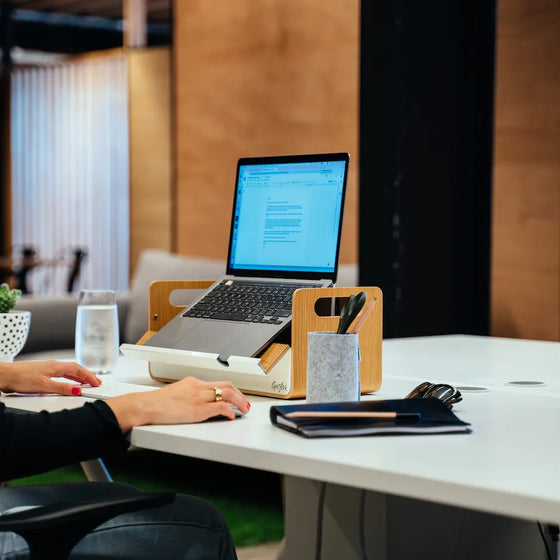
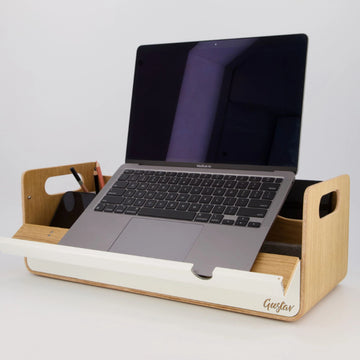
Brug af en laptopstander skaber visuel orden og fysisk plads på samme tid. Den løfter skærmen, frigør overflade under eller omkring enheden og definerer arbejdszonen tydeligere. At kombinere dette med et eksternt tastatur og mus er ofte forskellen på et skrivebord, der bare ser bedre ud, og et der fungerer bedre hele dagen.
Her bør design og funktion mødes. Et tilbehør, der forbedrer holdningen, men er besværligt at bære, bliver efterladt. I fleksibelt arbejde er bærbarhed en del af præstationen.
6. Skab én landingszone til papir
Papir har en tendens til at sprede sig. En printet dagsorden, håndskrevne noter, en kvittering, en skitse, et brev til postkassen – hver for sig virker det uskyldigt, indtil skrivebordet bliver et blandet arkiv. Målet er ikke at eliminere papir helt, for for mange fagfolk spiller det stadig en nyttig rolle. Målet er at begrænse det.
En enkelt bakke, mappe eller dokumentlomme skaber en klar landingszone. Alt papir går der først, i stedet for at flyde rundt på skrivebordet. Derfra kan du arkivere det, scanne det eller tage det med dig. Dette er særligt effektivt for arkitekter, planlæggere, konsulenter og kreative, der stadig bevæger sig mellem analogt og digitalt arbejde.
Uden den grænse bliver papir dekoration for ubeslutsomhed.
Sådan får du tips til organisering af arbejdspladsen til at holde
7. Design til en opsætning på to minutter
Hvis en arbejdsplads tager for lang tid at samle, springer folk dele over. De arbejder uden standeren, lader musen blive i tasken eller lader dokumenter ligge i bunker i stedet for at lægge dem væk. God organisering skal reducere indsatsen, ikke tilføje en ny rutine.
Sigt efter en opsætning, der tager to minutter eller mindre. Åbn organisereren, placer standeren, tilslut strømmen, start arbejdet. Den tilgang fungerer lige godt i hjemmekontorer som i touchdown-områder på større arbejdspladser.
Når du gennemgår en opsætning, så stil et enkelt spørgsmål: hvad forsinker dagens start? Svaret afslører som regel svagheden i organiseringssystemet.
8. Brug færre, bedre tilbehør
Organisering bryder ofte sammen, fordi der er for mange dele involveret. For mange etuier, for mange beholdere, for mange ting med uklar funktion. Premium arbejdspladsdesign fungerer bedst, når hvert objekt fortjener sin plads.
Det kan betyde én organiser, der bærer kerneværktøjerne, én stander der er nem at tage med, og ét overfladeelement, der definerer arbejdsområdet. Færre ting kan skabe mere kontrol, forudsat at de er veludformede og holdbare nok til regelmæssig bevægelse.
Her betyder materialekvalitet noget. Tilbehør, der holder formen, slides pænt og føles gennemtænkt, er nemmere at leve med over tid. De opbevarer ikke bare genstande – de skaber et mere roligt arbejdsmiljø.
9. Indbyg en nulstilling ved dagens slutning i rutinen
En god opsætning fortjener en ren afslutning. De sidste to minutter af dagen afgør morgendagens arbejdsplads. Læg kabler tilbage, sæt værktøjer på plads, ryd løst papir væk, og lad kun det blive, der skal blive.
I hjemmekontorer hjælper det med at adskille arbejde fra privatliv. I delte miljøer støtter det den næste bruger og holder standarderne ensartede på arbejdspladsen. For teams, der styrer fleksible kontorer, kan denne lille vane gøre en stor forskel for den oplevede kvalitet af miljøet.
Nulstillingen skal være simpel nok til, at den sker selv på travle dage. Hvis den kræver for mange beslutninger, holder den ikke.
10. Vælg systemer, der fungerer på tværs af steder
De stærkeste organiseringssystemer er ikke bundet til ét skrivebord. De flytter let mellem hjem, kontor og kundemiljøer uden at skulle genopfindes hver gang. Den konsistens giver folk en følelse af kontrol i fleksibelt arbejde.
En velgennemført bærbar opsætning betyder, at brugeren ikke starter fra nul hver morgen. Det hjælper også organisationer med at skabe bedre medarbejderoplevelser i hybride miljøer, fordi kvaliteten af arbejdspladsen bliver mindre afhængig af, hvor man tilfældigvis sidder.
Af den grund handler de bedste tips til organisering af arbejdspladsen sjældent om at tilføje flere møbler eller mere opbevaring. Det handler om at skabe et kompakt, gentageligt system, der er nemt at tage med, hurtigt at sætte op og holder styr på det nødvendige. Gustav nærmer sig organisering af arbejdspladsen præcis ud fra dette perspektiv: dit kontor skal være klar til at flytte, uden at miste komfort, klarhed eller professionelt udtryk.
Den mest effektive arbejdsplads er ikke den med færrest genstande. Det er den, hvor hver genstand har et formål, et sted og en grund til at blive.