Test eines Laptopständers fürs Homeoffice: Worauf kommt es an?

Ein Laptop auf einem Esstisch kann bis zum zweiten Videoanruf des Tages vollkommen unproblematisch wirken. Dann machen sich der abgesenkte Bildschirm, die vielen Kabel und der improvisierte Stapel Notizbücher bemerkbar. Eine sorgfältige Bewertung eines Laptopständers fürs Homeoffice sollte über das Aussehen hinausgehen: Der richtige Ständer verändert die Bildschirmhöhe, die Ordnung auf dem Schreibtisch und wie schnell aus einer gemeinsam genutzten Fläche ein richtiger Arbeitsplatz wird.
Für Berufstätige, die zwischen Zuhause, Büro und Kundenräumen wechseln, ist ein Ständer nicht einfach nur ein Zubehör. Er ist Teil eines mobilen Arbeitsplatzes. Die nützlichsten Designs lassen diesen Arbeitsplatz innerhalb weniger Augenblicke bewusst eingerichtet wirken, ohne dass ein Schreibtisch dauerhaft von Ausrüstung belegt bleibt.
Was ein Laptopständer leisten muss
Die erste Aufgabe ist ergonomischer Natur. Ein Laptopbildschirm sitzt konstruktionsbedingt niedrig, was bei langem Lesen, Schreiben und Telefonieren eine nach vorn geneigte Haltung begünstigen kann. Wird der Bildschirm auf eine angenehmere Sichthöhe angehoben, kann dies eine ruhigere, aufrechtere Arbeitsposition ermöglichen. Am wirkungsvollsten ist das in Kombination mit einer externen Tastatur und Maus, insbesondere bei längerer Schreibtischarbeit.
Die zweite Aufgabe ist praktischer Natur. Homeoffices befinden sich häufig in multifunktionalen Räumen, und auch ein eigenes Arbeitszimmer soll außerhalb der Arbeitszeit möglichst ruhig wirken. Ein guter Laptopständer sollte Ordnung schaffen, statt ein weiteres unhandliches Objekt zur Aufbewahrung hinzuzufügen. Er muss schnell aufgestellt, im Gebrauch stabil und am Ende des Tages einfach wegzuräumen sein.
Die dritte Aufgabe ist Mobilität. Hybrid arbeitende Menschen profitieren kaum von einem Ständer, der zwar hervorragend funktioniert, aber an einem einzigen Schreibtisch bleibt. Für Desk-Sharing-Umgebungen hilft ein tragbares Modell, das gemeinsam mit den wichtigsten Arbeitsutensilien transportiert wird, an jedem verfügbaren Tisch einen einheitlichen Arbeitsplatz einzurichten. Das Ziel ist nicht, überall ein fest eingerichtetes Büro nachzubilden. Es geht darum, die wesentlichen Elemente eines solchen Arbeitsplatzes schnell und gut zu schaffen.
Bewertung eines Laptopständers fürs Homeoffice: Die entscheidenden Kriterien
Eine hochwertige Oberfläche allein macht einen Ständer noch nicht für den täglichen Gebrauch geeignet. Diese Punkte sollten Sie vor der Auswahl prüfen.
Bildschirmposition und Arbeitshaltung
Sehen Sie sich zuerst an, wie der Ständer die Höhe und den Winkel Ihres Laptops verändert. Die ideale Position hängt von Ihrer Körpergröße, Ihrem Stuhl und der Bildschirmgröße ab; eine universelle Einstellung, die allen passt, gibt es daher nicht. Entscheidend ist, ob das Design den Bildschirm spürbar näher auf Augenhöhe bringt und dabei einen angenehmen Betrachtungswinkel beibehält.
Ein Ständer mit fester Höhe kann eine ausgezeichnete Wahl sein, wenn er sorgfältig für die typische Schreibtischnutzung proportioniert ist und eine klare, zuverlässige Aufstellung bietet. Ein verstellbarer Ständer bietet mehr Flexibilität, insbesondere wenn mehrere Personen denselben Schreibtisch nutzen oder die Arbeit zwischen verschiedenen Tischen wechselt. Der Nachteil liegt häufig in der optischen und mechanischen Komplexität. Mehr Verstellmöglichkeiten können mehr Teile, höheres Gewicht und einen größeren Zeitaufwand beim Aufstellen bedeuten.
Seien Sie bei Ihren Tastaturgewohnheiten ehrlich. Wenn Sie den Laptop nur für kurze Aufgaben verwenden, reicht es möglicherweise aus, ihn leicht anzuheben. Wenn er stundenlang Ihr wichtigstes Arbeitsgerät ist, sollten Sie eine separate Tastatur und Maus einplanen. Ein höherer Bildschirm bei gleichzeitiger Nutzung der Laptoptastatur kann die Belastung vom Nacken auf Handgelenke und Schultern verlagern.
Stabilität ohne großen Platzbedarf
Der Stabilitätstest ist einfach: Können Sie tippen, das Trackpad berühren oder den Bildschirm verstellen, ohne dass sich der Ständer bewegt oder klappert? Eine sichere Basis, durchdachte Kontaktpunkte und eine Konstruktion, die den Laptop gleichmäßig trägt, sind wertvoller als ein überdimensionierter, schwerer Rahmen.
Gleichzeitig sollte Stabilität keinen dauerhaften Anspruch auf den Schreibtisch erfordern. Homeoffice-Flächen reichen von kompakten Schreibtischen bis zu Küchentischen. Ein Ständer braucht daher eine Stellfläche, die sicher wirkt, ohne den umliegenden Arbeitsbereich zu beanspruchen. Das ist besonders wichtig, wenn noch Platz für ein Notizbuch, ein Dokument oder ein zweites Gerät benötigt wird.
Achten Sie auch darauf, wie der Ständer auf dem Tisch aufliegt. Schützende Kontaktflächen tragen dazu bei, dass sowohl der Ständer als auch die Tischplatte langfristig gepflegt aussehen. Kleine Details machen im Alltag einen Unterschied, insbesondere auf Holz, Glas oder lackierten Oberflächen.
Mobilität und schnelles Aufstellen
Ein tragbarer Ständer ist nicht automatisch der bessere Ständer. Wenn Ihr Laptop den festen Schreibtisch nie verlässt, bietet ein größeres Modell möglicherweise die gewünschte Höhe oder den bevorzugten Verstellbereich. Für hybrides Arbeiten ist Mobilität jedoch ein entscheidender Teil der Leistung.
Die besten mobilen Designs folgen einem klaren Ablauf: tragen, aufstellen, arbeiten, einpacken. Sie erfordern weder einen langen Aufbau noch ein separates Etui voller loser Einzelteile. Außerdem sollten sie sich auf Reisen bequem neben Laptop, Ladegerät, Tastatur und Notizbuch unterbringen lassen – beim Wechsel zwischen Räumen, Büros oder Besprechungen.
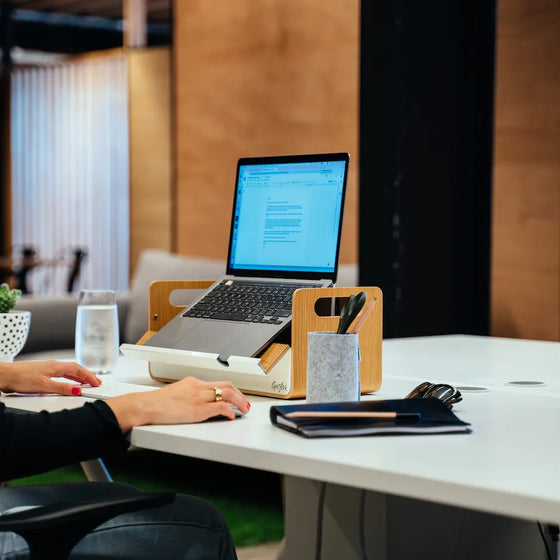
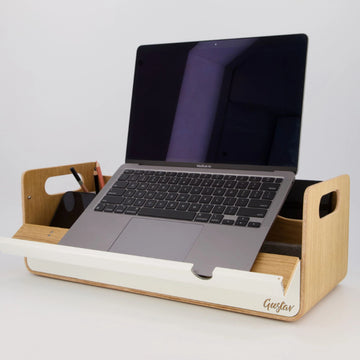
Hier bietet eine integrierte Organisation einen echten Vorteil. Gustav Original kombiniert einen Laptopständer mit einem Schreibtisch-Organizer und schafft so einen festen Platz für die Arbeitsutensilien, die sich sonst über den Tisch verteilen. Für Menschen, die an wechselnden Arbeitsplätzen oder in einem Homeoffice arbeiten, das jeden Abend geräumt werden muss, kann diese Kombination nützlicher sein als ein reiner Ständer.
Organisation ist Teil der Ergonomie
Ergonomie wird häufig auf die Bildschirmhöhe reduziert. In der Praxis unterstützt eine freie Arbeitsfläche jedoch ebenfalls eine bessere Haltung und leichtere Bewegungen. Wenn Ladegeräte, Stifte, Kopfhörer und Unterlagen um dieselbe kleine Fläche konkurrieren, wird es schwieriger, Tastatur und Maus bequem zu positionieren.
Ein Ständer, der zugleich einen Platz für wichtige Arbeitsutensilien schafft, kann diese Reibung verringern. Der Unterschied ist subtil, aber wertvoll: Statt den ganzen Tag wiederholt aufzuräumen, beginnen Sie mit einer klar begrenzten Einrichtung. Zu Hause wirkt der Arbeitsplatz dadurch professioneller. In einem Desk-Sharing-Büro unterstützt dies die Erwartungen an einen aufgeräumten Schreibtisch, ohne dass sich persönliche Arbeitsutensilien vorübergehend oder improvisiert anfühlen.
Wählen Sie den Organisationsgrad, der zu Ihrer Arbeit passt. Ein Berater, der Kabel, Adapter und Kundennotizen mitführt, profitiert möglicherweise von einem stärker strukturierten System. Wer hauptsächlich mit einem Laptop und kabellosen Peripheriegeräten arbeitet, bevorzugt vielleicht eine leichtere, minimalistischere Anordnung. Es geht nicht darum, mehr mitzunehmen, sondern um das, was Ihnen gutes Arbeiten ermöglicht.
Materialien, Oberfläche und Langlebigkeit
Ein Homeoffice-Ständer ist stets sichtbar. Material und Oberfläche prägen die Atmosphäre des Arbeitsplatzes, insbesondere in Räumen, in denen Arbeit und Wohnen nebeneinander stattfinden. Metall kann präzise und kompakt wirken, Holz Wärme und visuelle Ruhe vermitteln, während Elemente aus recyceltem Filz den Schreibtisch weicher wirken lassen und verhindern, dass kleine Gegenstände verrutschen.
Das Material sollte auch danach beurteilt werden, ob es für wiederholte Nutzung geeignet ist. Hält die Oberfläche das Ein- und Auspacken aus? Fühlen sich Kanten und Kontaktpunkte hochwertig verarbeitet an? Ist das Objekt so gestaltet, dass es durch regelmäßige Handhabung würdevoll altert, statt nach einer Saison abgenutzt auszusehen? Hochwertiges Design ist keine Dekoration. Es ist das Ergebnis durchdachter Proportionen, langlebiger Konstruktion und Details, die auch bei wiederholter Nutzung Freude machen.
Für Organisationen, die Zubehör in größerem Umfang auswählen, ist Beständigkeit ebenso wichtig wie die individuelle Wirkung. Ein hochwertiger Ständer mit Organizer kann in ruhigen Räumen, Projekttischen und Desk-Sharing-Bereichen eine durchdachte Arbeitsumgebung unterstützen. Er bietet Mitarbeitenden ein wiedererkennbares, praktisches Hilfsmittel und bewahrt zugleich einen einheitlichen visuellen Standard.
Welche Kompromisse Sie vor dem Kauf abwägen sollten
Jeder Laptopständer erfordert gewisse Kompromisse. Ein besonders kompaktes Modell bietet größeren Menschen möglicherweise nicht genügend Erhöhung. Ein stark verstellbares Design kann weniger elegant zu transportieren sein. Eine Lösung mit integriertem Organizer benötigt in der Tasche möglicherweise mehr Platz als ein schlanker Klapprahmen, kann dafür aber die losen Zubehörteile ersetzen, die sonst separat mitgeführt werden müssten.
Ihre Schreibtischeinrichtung sollte die Priorität bestimmen. Wenn Sie hauptsächlich in einem festen Homeoffice arbeiten und einen großen externen Bildschirm nutzen, dient ein Laptopständer möglicherweise vor allem als Halterung für ein Zweitgerät. Wenn Ihr Laptop Ihr wichtigster Bildschirm ist und Sie häufig den Arbeitsort wechseln, sollten Ergonomie, Mobilität und Organisation gleich stark gewichtet werden.
Es lohnt sich außerdem, die tatsächlichen Gegebenheiten Ihres Arbeitsplatzes auszumessen. Berücksichtigen Sie die Tiefe Ihres Schreibtischs, die Größe Ihres Laptops, die Nutzung einer separaten Tastatur und den Verlauf der Ladekabel. Der beste Ständer auf dem Papier kann sich falsch anfühlen, wenn er zu wenig Platz für Ihre Hände lässt, den Bildschirm zu weit nach hinten schiebt oder ein Kabel quer über Ihre Schreibfläche führt.
Ein besserer Standard für flexibles Arbeiten
Ein guter Laptopständer fürs Homeoffice sollte seinen Wert spürbar machen, ohne Aufmerksamkeit zu fordern. Er hebt den Bildschirm an, gibt Ihren Arbeitsutensilien einen festen Platz und lässt den Tisch vor Ihnen arbeitsbereit wirken. Für mobile Berufstätige sollte sich dieser Effekt ebenso leicht mitnehmen lassen wie der Laptop selbst.
Wählen Sie ein Design, das zu Ihrer tatsächlichen Arbeitsweise passt, nicht zu einer idealisierten Version Ihres Alltags. Wenn der Ständer eine angenehme Bildschirmposition, einen aufgeräumten Schreibtisch und einen schnellen Wechsel zwischen verschiedenen Orten unterstützt, wird Ihr Büro nicht länger durch einen einzigen Raum definiert.