Accessoires voor een Clean Desk Policy die werken

Om 9:15 is de gedeelde bank vol, laptopladers steken al over naar de volgende werkplek, en de ene persoon die georganiseerd aankwam, lijkt nu niet anders dan de rest. Daar bewijzen accessoires voor een clean desk policy meestal hun waarde. Niet als extra’s, maar als de kleine systemen die flexibel werken gecontroleerd, professioneel en makkelijk herhaalbaar maken.
Een clean desk policy wordt vaak gezien als een gedragsprobleem. In de praktijk is het meestal een ontwerpkwestie. Als mensen nergens verstandig hun gereedschap kunnen neerleggen, geen eenvoudige manier hebben om essentiële spullen mee te nemen, en geen structuur hebben om snel op te zetten en op te ruimen, keert rommel terug. De juiste accessoires overbruggen die kloof tussen beleid en dagelijks gebruik.
Waarom accessoires voor een clean desk policy belangrijk zijn
In hybride kantoren, werkplekken met desk-sharing en thuiswerkplekken die ’s avonds weer moeten overschakelen naar het gezinsleven, kan een bureau niet op permanentie vertrouwen. Mensen bewegen tussen ruimtes, taken en teams. Ze hebben apparatuur nodig die snelle overgangen ondersteunt zonder comfort of visuele orde op te offeren.
Dit is belangrijk voor meer dan alleen het uiterlijk. Een opgeruimd bureau verbetert de overdracht tussen gebruikers, beschermt vertrouwelijke informatie, vermindert kabelwirwar en maakt schoonmaken makkelijker. Het beïnvloedt ook hoe een werkplek aanvoelt. Rustige oppervlakken geven aan dat de ruimte doelbewust is ingericht. Dat heeft een directe impact op de werknemerservaring, vooral in kantoren die zijn gebouwd rond wendbaarheid en gedeeld gebruik.
Er is ook een praktische afweging. Een strikte clean desk policy kan onhandig aanvoelen als medewerkers te vaak moeten opruimen of elke ochtend hun werkplek helemaal opnieuw moeten inrichten. Accessoires moeten die wrijving wegnemen, niet vergroten. De beste accessoires helpen mensen hun dagelijkse gereedschap te dragen, neer te zetten en op te bergen zonder dat het inrichten een klus wordt.
Wat goede accessoires voor een clean desk policy echt doen
De beste accessoires voor een clean desk policy ondersteunen drie momenten van de werkdag: opzetten, actief gebruik en opruimen. Als een accessoire er alleen netjes uitziet op een foto maar mensen in het echt vertraagt, houdt het geen stand.
Ze zorgen voor een snelle start
Aan het begin van de dag moeten mensen snel een werkplek claimen en functioneel maken. Dat betekent meestal dat ze een klein aantal kernitems in één beweging van tas naar bureau brengen. Draagbare organizers, gestructureerde etuis en compacte werktassen zijn hier bijzonder effectief omdat ze de essentials bij elkaar houden in plaats van verspreid over zakken en losse vakken.
Een snelle start is belangrijk in hot-desking omgevingen waar mensen elke dag een andere plek kunnen kiezen. Het is ook belangrijk in thuiskantoren waar de werkplek ruimte deelt met eet-, woon- of gezinsactiviteiten.
Ze verminderen visuele ruis gedurende de dag
Een bureau kan technisch schoon zijn maar toch chaotisch aanvoelen. Visuele ruis ontstaat door kabels, gestapelde notitieboeken, niet-matching containers en persoonlijke spullen zonder vaste plek. Accessoires moeten dat verminderen door elk object een duidelijke plek te geven en te beperken wat op het bureau moet blijven liggen.
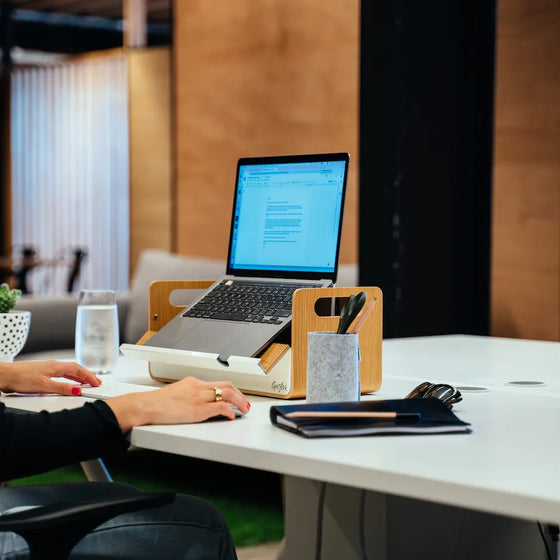
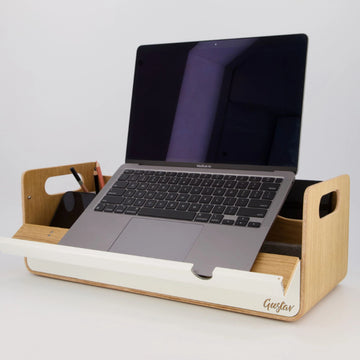
Bureaumatjes kunnen helpen een werkzone te verankeren en voorkomen dat kleine items over het oppervlak schuiven. Laptopstandaards tillen het scherm op, verbeteren de houding en verminderen de hoeveelheid apparatuur verspreid over het bureau. Organizers doen het meest zichtbare werk, maar hun echte waarde zit in het bij elkaar houden. Ze definiëren de grens tussen wat nu nodig is en wat opgeborgen kan blijven.
Ze maken opruimen haalbaar
Dit is het moment waarop de meeste policies slagen of falen. Als het opruimen aan het einde van de dag meer dan een minuut of twee kost, neemt de naleving af. Mensen laten een kabel liggen, dan een notitieboek, dan een headset, en het gedeelde bureau wordt van de ene gebruiker op de andere overgedragen.
Accessoires moeten een eenvoudige opruimroutine ondersteunen. De gebruiker moet losse items snel in één organizer of etui kunnen stoppen, snel kunnen loskoppelen, het oppervlak kunnen leegmaken en doorgaan. Als opslag meerdere stappen, meerdere containers of onhandige handelingen vereist, wordt het genegeerd.
De accessoirecategorieën die prioriteit verdienen
Niet elk kantoor heeft dezelfde inrichting nodig. Een creatief atelier, een kantoor in de publieke sector en een compacte thuiswerkplek hebben verschillende beperkingen. Toch ondersteunen een paar categorieën consistent clean desk policies goed.
Draagbare organizers
Draagbare organizers zijn vaak het meest effectieve startpunt omdat ze beweging en orde overbruggen. Ze stellen gebruikers in staat hun dagelijkse gereedschap samen te dragen, met minimale voorbereiding op een bureau te plaatsen en net zo snel weer mee te nemen aan het einde van de sessie.
Voor teams op de werkplek zorgen ze ook voor consistentie. In plaats van dat elke medewerker improviseert met boodschappentassen, losse hoesjes of stapels accessoires, wordt de organizer een herhaalbaar systeem. Voor de individuele gebruiker neemt het de kleine maar constante frustratie weg van het zoeken naar een oplader, pen, adapter of notitieboek.
Laptopstandaards
Laptopstandaards worden niet altijd gezien als hulpmiddelen voor een clean desk policy, maar dat zouden ze wel moeten zijn. Een goede standaard verbetert de ergonomie en verkleint de visuele voetafdruk van de laptopopstelling. Het laat de werkplek deliberateer eruitzien en stimuleert vaak ook een nettere kabelroute.
Er is een balans te vinden. Sommige vaste standaards bieden uitstekende stabiliteit maar zijn minder geschikt voor mobiel werk. In desk-sharing en hybride omgevingen maken draagbare standaards meestal meer zin omdat ze met de gebruiker meereizen en een consistente houding op verschillende locaties ondersteunen.
Tech-etuis en kabelbeheer
Kabels zijn een van de snelste manieren om de controle over een bureau te verliezen. Opladers, adapters, muizen en oordopjes zien er zelden rommelig uit als je ze apart bekijkt. Samen zorgen ze bijna direct voor rommel.
Een gestructureerd tech-etui lost dat deels op door kleine tools tijdens het vervoer bij elkaar te houden en van het bureaublad te houden als ze niet in gebruik zijn. Beter kabelbeheer vermindert ook de verleiding om apparatuur achter te laten bij een gedeeld bureau. Als de oplaadopstelling makkelijk in te pakken is en morgen weer makkelijk te vinden, ruimen mensen het veel beter op.
Bureaumatjes en afgebakende werkzones
In open kantoren zijn bureaus vaak visueel vlak en functioneel generiek. Een bureaumapje voegt definitie toe zonder volume. Het geeft aan waar de actieve werkplek begint en creëert een netter kader voor de zichtbare tools.
Dit is vooral nuttig in omgevingen met hoge esthetische standaarden. Het bureau blijft minimalistisch, maar voelt niet leeg of geïmproviseerd aan. In thuiskantoren helpen matjes ook om oppervlakken te beschermen en maken ze tijdelijke werkplekken doelbewuster.
Werktassen die het opruimen ondersteunen
De tas is belangrijker dan veel policies erkennen. Als een gebruiker geen geschikte tas heeft voor laptop, organizer en dagelijkse tools, blijft rommel vaak op het bureau liggen omdat het verplaatsen onhandig is.
Een goed ontworpen werktas ondersteunt het hele clean desk systeem. Hij moet de essentials veilig vasthouden, tech en documenten waar nodig scheiden, en het makkelijk maken om te schakelen tussen kantoor, thuis en een derde werkplek. Dit is vooral relevant in Europese hybride patronen waar woon-werkverkeer, fietsen en openbaar vervoer bepalen hoeveel mensen realistisch kunnen meenemen.
Accessoires kiezen voor naleving van het beleid, niet alleen voor het uiterlijk
Goed ontwerp helpt, maar accessoires voor een clean desk policy moeten worden gekozen op gedrag net zo goed als op uiterlijk. De vraag is niet of een item er premium uitziet op een werkplek. De vraag is of mensen het elke dag zullen gebruiken.
Dat betekent dat duurzaamheid belangrijk is. Als een scharnier loskomt, een etui inklapt of een oppervlak te snel beschadigt, voelt het accessoire niet meer betrouwbaar. Materialen zijn ook belangrijk, vooral voor merken en werkplekken die duurzaamheid zichtbaar willen maken in het product, niet alleen op de productspecificatie.
Het betekent ook dat draagbaarheid eerlijk beoordeeld moet worden. Sommige accessoires zijn technisch mobiel maar te omvangrijk om comfortabel mee te nemen tussen thuis en kantoor. Andere besparen ruimte maar gaan ten koste van gebruiksgemak. De beste keuzes combineren meestal een compact formaat met voldoende structuur om apparaten te beschermen en essentials goed te organiseren.
Voor werkgevers is standaardisatie vaak het overwegen waard. Een consistente set accessoires binnen teams kan de adoptie van beleid ondersteunen omdat verwachtingen duidelijker worden. Het versterkt ook de visuele identiteit van een werkplek en verbetert de gebruikerservaring voor medewerkers die tussen locaties wisselen.
Een netter bureau begint met betere werkplekgereedschappen
Een clean desk policy werkt als de werkplek het juiste gedrag makkelijk maakt. Accessoires maken deel uit van die infrastructuur. Ze helpen mensen minder los te dragen, slimmer op te bergen en met minder moeite in te richten.
Voor organisaties die investeren in flexibel werken is dat geen detail. Het is hoe gedeelde bureaus bruikbaar blijven, hoe hybride routines soepeler verlopen en hoe het kantoor de hele dag een rustige, professionele standaard behoudt. Gustav benadert dit met hetzelfde principe dat goed werkplekontwerp definieert: als het elke dag moet gebeuren, moet het eenvoudig aanvoelen. Dat is de echte waarde van accessoires die zijn gemaakt voor clean desk werken.