Best Bags for Hybrid Workers

Monday starts at home. Tuesday begins at a shared desk. By Thursday, you're moving between a client meeting, a train carriage and a touchdown space with nowhere to hide clutter. That is why the best bags for hybrid workers are not simply about carrying a laptop. They need to support a mobile way of working without adding friction to it.
A good work bag now does more than hold essentials. It protects devices, keeps tools organised, helps you set up quickly and still looks considered in a professional setting. For hybrid workers, and for the teams designing flexible workplaces around them, the right bag is part of the workspace.
What makes the best bags for hybrid workers?
The answer starts with movement. Hybrid work creates repeated transitions between locations, desks and modes of work. A bag that performs well in one fixed context can fail quickly when used across home, office, meetings and travel.
The best bags for hybrid workers balance five things well: protection, organisation, portability, comfort and appearance. Miss one, and the bag tends to become irritating in daily use. A sleek profile means little if cables disappear into the bottom. Generous storage is not especially useful if the bag becomes bulky on public transport. Likewise, a highly structured bag can feel limiting if your working day changes shape halfway through.
This is where trade-offs matter. There is no single best format for every role. A consultant moving between meetings has different needs from a designer carrying samples, or a workplace strategist commuting with a laptop, notebook, charger and lunch. The right choice depends on what you carry, how far you carry it, and how often you need to unpack and repack.
Start with how your day actually works
Most poor bag choices begin with an idealised picture of work. The better approach is to look at the real routine. Do you walk long distances from station to office? Are you often in shared workplaces with limited personal storage? Do you set up and clear down several times a day? If so, the bag has to work as a mobile organiser, not just a container.
For desk-sharing environments, easy access matters more than sheer capacity. You want compartments that separate your device, charger, notebook, mouse, cables and smaller accessories so everything is visible and ready. If your bag forces you to empty half its contents to find a pen or adapter, it slows down the workday in small but persistent ways.
For people who split time between home office and corporate office, structure becomes especially valuable. A bag with a defined place for each essential item reduces the chance of leaving behind the one thing you need that day. It also supports a cleaner desk, because your workspace can be set up with intention rather than spread out in a hurry.
Backpack, tote or brief-style bag?
This is usually the first practical decision, and it should be driven by use rather than habit.
A backpack is often the strongest option for workers who commute regularly, cycle, or carry a heavier setup. Weight is distributed more comfortably, and the hands-free format suits longer journeys. The drawback is that some backpacks prioritise capacity over refinement, which can make them feel overly casual or bulky in more polished office settings.
A tote-style work bag can feel lighter, sharper and easier to access during the day. It suits professionals who carry a moderate load and move through meetings where a softer, less technical look is preferable. The weakness is comfort. A tote that works for a short journey can become tiring if you are carrying a laptop, charger, bottle and documents across a full commute.
A brief-style bag sits between the two. It often offers a more formal silhouette with dedicated compartments and a cleaner external profile. For client-facing roles, that can be a strong fit. The compromise is that many brief bags are less forgiving when you need to carry extra layers, lunch or a few unexpected items.
In practice, the best choice is the one that matches your heaviest regular day, not your lightest one.
Protection should be specific, not generic
Laptop protection is a basic requirement, but not all protection is equal. The best bags use padded compartments that keep devices stable rather than letting them slide within a large open section. This matters when your bag is set down repeatedly in trains, meeting rooms or beneath shared desks.
It is also worth thinking beyond the laptop. Hybrid work often means carrying a charger, mouse, headset, notebook, documents and personal items in one bag. Without structure, harder accessories can knock against devices or create pressure points. Good internal organisation is part of device protection.
Materials play a role too. Durable outer fabrics, a stable base and quality zips improve long-term performance. This is less about marketing language and more about everyday wear. A work bag should hold its shape, protect what matters and still look presentable after months of regular commuting.
Organisation is what saves time
The strongest work bags do not simply store more. They help you work better by reducing visual and physical clutter.
Look for a layout that mirrors the way you set up. A dedicated laptop section, separate space for papers, quick-access pockets for smaller items and a secure compartment for valuables all make a real difference. The aim is not endless pockets for the sake of it. Too many compartments can become just as frustrating as too few. What matters is intuitive placement.
This becomes even more relevant in hot-desking environments. If your bag opens clearly and keeps your essentials visible, you can move from arrival to a functioning workstation in minutes. Pair that with a compact organiser or tech pouch, and your setup becomes much more consistent across locations.
For this reason, many hybrid workers are better served by a bag that works as part of a portable system. The bag carries the core load, while smaller organisers handle tools, cables and desk accessories. That creates flexibility without sacrificing order.
Comfort is easy to ignore until it is not
A bag can look excellent on a product page and still be wrong for a real commute. Comfort shows up in the details: strap width, handle placement, overall weight and how the bag sits when full.
If you are carrying your bag for more than a few minutes at a time, ergonomics matter. Padded straps, balanced weight distribution and a shape that stays close to the body all improve daily use. This is especially true for workers moving through stations, cycling to the office or walking between buildings on larger campuses.
A common mistake is choosing a bag that is already heavy before anything goes into it. Premium design does not need to mean unnecessary bulk. The better option is a bag that feels substantial because of its construction, not because of excess material.
Design still matters - perhaps more than ever
Hybrid work has changed what professional presence looks like. You may work from a kitchen table in the morning and sit in a project review that afternoon. The bag that carries your setup is now visible across all of it.
That does not mean it should be decorative. It means it should feel intentional. Clean lines, restrained detailing and considered materials age better and move more easily across settings. In a flexible workplace, visual calm has practical value. It supports a cleaner desk, reduces distraction and signals that mobility does not have to look improvised.
This is where a design-led approach stands apart. A well-made bag should complement the wider workspace, not clash with it. For professionals shaping offices as well as using them, that matters. The objects people carry help define the atmosphere of modern work environments.
A better way to choose the right bag
If you are selecting for yourself, start with three questions. What do you carry every day? How often do you move between locations? What frustrates you about your current setup? Those answers usually reveal whether you need more structure, more comfort or a more adaptable format.
If you are specifying solutions for teams, the question shifts slightly. You are not only choosing a bag. You are supporting a way of working. The right bag can reinforce clean desk policies, reduce setup time and help employees feel equipped rather than displaced when moving between workpoints.
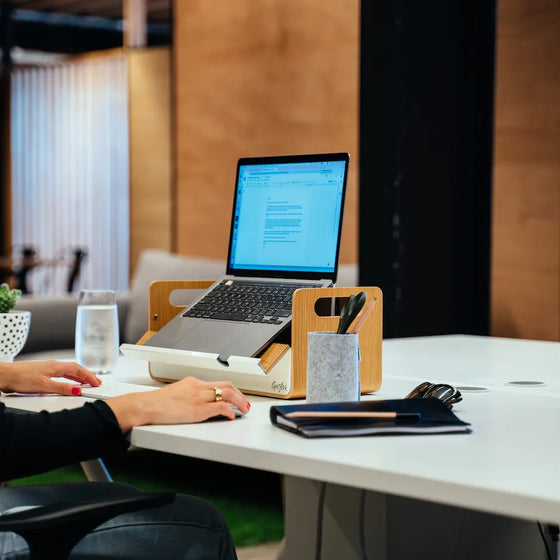
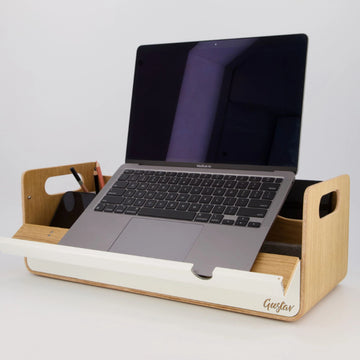
That is one reason premium, design-conscious workspace systems have become more relevant. A bag works best when it is part of a coherent mobile setup - alongside organisers, sleeves or portable desk tools that create a consistent experience anywhere. Gustav has built its approach around exactly that idea: your office, anywhere.
The best bags for hybrid workers do not try to do everything. They do a few essential things exceptionally well. They carry what matters, protect it properly, keep it organised and make movement feel easier rather than more chaotic.
Choose the bag that suits the reality of your working week, not the image of it. If it helps you arrive, set up and work with clarity, it is already doing more than carrying your laptop.