Desk Sharing Versus Assigned Seating at Work

At 09:15, a shared office can reveal whether its workplace strategy works. Some people are already focused at clear, well-equipped desks. Others are searching for a monitor, clearing a surface or carrying cables between floors. The question of desk sharing versus assigned seating is not simply about how many desks an organisation needs. It shapes how quickly people can begin meaningful work, how connected they feel to the office, and whether the space earns its place in a hybrid routine.
For workplace leaders, there is no universal winner. Assigned desks can create stability and belonging. Desk sharing can make a workplace more adaptable, sociable and efficient. The better choice depends on work patterns, team needs, technology and, crucially, the quality of the daily setup.
Desk sharing versus assigned seating: the essential difference
Assigned seating gives each employee a dedicated workstation. They can leave their monitor position, stationery, reference material and personal items in place, subject to the organisation’s policies. This familiar model suits roles that require a consistent setup, frequent access to physical documents or specialist equipment.
Desk sharing, sometimes called hot desking or bookable seating, allows different people to use the same workstations at different times. It is often part of a wider activity-based workplace, where colleagues choose spaces for focused work, collaboration, calls or project work. A desk is a resource rather than a permanent territory.
The distinction may sound straightforward, but successful implementation is not. A shared desk with poor technology, unclear booking rules and no provision for personal equipment is simply an inconvenience distributed across more people. Equally, an assigned desk in a sparsely used office can consume valuable space without improving employee experience.
What assigned seating does well
Assigned seating gives people a reliable base. For teams working in the office most days, that reliability reduces friction. Employees know where to sit, where their tools are and who is nearby. It can also make team neighbourhoods feel more cohesive, particularly where mentoring, fast decisions and informal knowledge-sharing matter.
There is a practical ergonomic advantage, too. A dedicated user is more likely to fine-tune chair height, screen position and desk accessories over time. People with accessibility requirements or carefully configured equipment may need this consistency rather than a different setup each morning.
For some individuals, a permanent desk also provides a sense of ownership. A modest amount of personalisation can make a large office feel more human. That should not be dismissed as sentimentality. Belonging affects how a workplace is experienced.
Yet assigned seating has limits. It can make teams less flexible when attendance varies, and it may preserve empty desks while meeting rooms and collaboration settings are in short supply. It can also encourage desks to become long-term storage, adding visual noise and making cleaning more difficult.
What desk sharing does well
Desk sharing can align office capacity with actual attendance rather than historical headcount. It gives organisations greater freedom to turn underused desk areas into settings that support the work people come together to do: project tables, quiet rooms, social areas or spaces for learning.
When well planned, it can make the office feel intentional rather than over-allocated. Teams can sit together for a workshop, choose a quieter area for concentrated work, or work near collaborators for a particular task. This flexibility is especially useful where office attendance changes by day, season or project.
A clean-desk standard is another genuine benefit. Clear work surfaces improve visual calm, help facilities teams maintain the office and make each desk ready for the next person. The objective is not an impersonal workplace. It is a workspace that can become personal and functional at the point of use.
The trade-off is that people must transport their essentials and recreate a comfortable workstation repeatedly. If that process takes ten minutes, desk sharing begins every day with a tax on attention. If it takes seconds, the model feels far more natural.
The decision should start with work, not desk ratios
A desk-to-employee ratio can inform space planning, but it should not make the decision on its own. Begin with evidence: how many people use the office on different days, which teams need proximity, and what types of work actually happen at desks. Booking data, occupancy observations and conversations with employees each reveal something different.
Consider the work itself. Finance, legal, design, engineering and client-facing teams may all have distinct requirements. Some people need dual screens and concentration. Others spend much of the day in workshops or meeting rooms. Some roles handle sensitive material that should not travel around an open office. A single policy for every department can be neat on paper and unhelpful in practice.
Look closely at peaks, not only averages. An office that appears half full across a month may be under significant pressure on Tuesdays and Wednesdays. If colleagues cannot find a suitable desk when they need one, the strategy will be judged by that experience, not by the annual utilisation figure.
A hybrid approach is often the strongest answer. Give certain roles, teams or individuals an assigned base where there is a clear operational or ergonomic need. Make other desks bookable and shared. Create team zones for days when collaboration matters, while retaining quiet settings for independent work. Flexibility does not require every desk to be identical or every person to work in the same way.
Make the shared desk ready before the employee arrives
The most effective desk-sharing environments remove setup friction. Every shared workstation should offer a consistent core: a clean surface, a comfortable adjustable chair, reliable power, straightforward display connections and clear guidance on using the space. Standardisation matters because it prevents each desk from becoming a new technical puzzle.
Personal equipment needs equal attention. Lockers or other secure storage should be close enough to make daily movement easy, not another journey across the building. Employees need a dignified way to carry a laptop, charger, notebook, headphones, documents and small personal items between their locker, desk and meeting room.
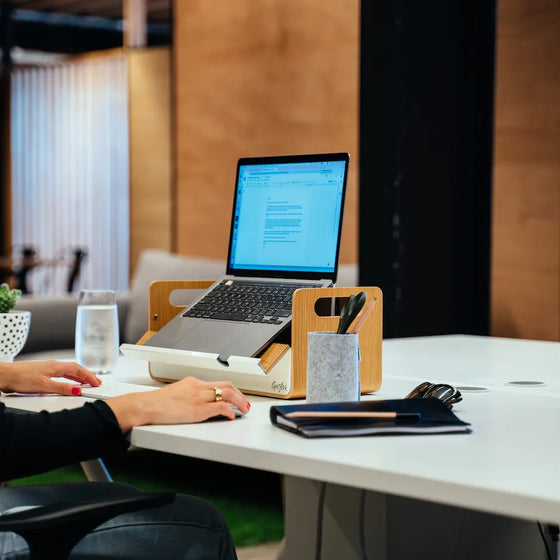
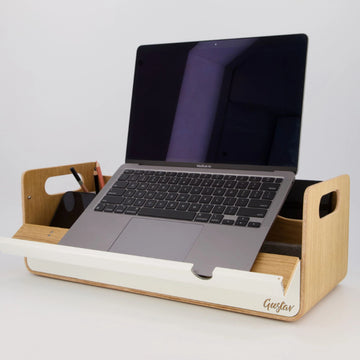
This is where portable workspace tools become part of the workplace system rather than an afterthought. A structured desk-sharing bag can keep essentials together in transit, while a compact organiser prevents cables and stationery from spreading across a shared surface. An ergonomic laptop stand helps turn a standard table into a more comfortable workstation when a fixed monitor is unavailable.
Gustav designs these tools around that transition: carry what matters, set up with purpose, and leave the desk clear for the next person. Premium materials and considered construction matter here because these are products used repeatedly, not occasional travel accessories.
Give people a repeatable setup ritual
The ideal shared-desk routine is calm and brief. Arrive, place belongings in a designated position, raise the screen to a comfortable level, connect power, and begin. At the end of the day, pack away in the same order and reset the desk. This consistency supports clean-desk policies without making them feel punitive.
Workplace teams should show people how to use the environment, particularly when a new desk-sharing model is introduced. A well-designed space cannot compensate for uncertain etiquette. Clarify booking expectations, desk release times, call-zone rules, storage arrangements and what should remain on the desk. Keep those rules few, visible and practical.
Measure experience as well as efficiency
Desk sharing is sometimes framed purely as an estate decision. That is too narrow. The relevant measure is whether employees can do good work when they are in the office. Ask whether they can find an appropriate desk, connect their equipment quickly, work comfortably and store their belongings securely.
Watch for small points of friction. Queues for lockers, clutter around docking stations, people reserving desks informally, or colleagues avoiding the office on high-demand days all indicate that the system needs adjustment. These signals are more useful than a polished floor plan.
Assigned seating deserves the same scrutiny. If dedicated desks are routinely vacant, if teams rarely sit near their nominal neighbours, or if storage has overtaken work surfaces, the layout may be protecting a habit rather than supporting work.
Choose a workplace people can use with confidence
The real choice is not between freedom and structure. Good workplace design provides both. Assigned seating brings certainty where consistency matters. Desk sharing gives organisations the flexibility to make better use of space and create settings for different kinds of work.
Whichever model you choose, make the first five minutes at a desk feel considered. When people can carry their essentials, create an organised ergonomic setup and leave no trace when they move on, the office becomes easier to use and more worthwhile to visit.