Guide to Desk Sharing Setup That Works

By 9:15, the same desk can be a touchdown space, a focus zone and a meeting base. That is why a clear guide to desk sharing setup matters. When people move between home, office and shared workpoints, the desk has to work immediately - without cable tangles, poor screen height or the quiet frustration of hunting for basic tools.
Desk sharing succeeds when setup is treated as part of the workplace system, not an afterthought. Good furniture and booking software help, but they are only half the picture. The real test is whether an employee can arrive, unpack, work comfortably and leave the desk clean in under two minutes.
What a good desk sharing setup needs to do
A desk-sharing environment has different demands from a fixed workstation. It must support different body types, different tasks and different levels of technical confidence, all while keeping the space visually calm. That creates a simple design brief: the setup should be fast to use, easy to reset and consistent across the office.
Consistency matters more than many teams expect. If one desk has a monitor at the right height, easy access to power and a clear landing space for personal equipment, but the next desk does not, employees stop trusting the system. They begin reserving favourite spots, leaving items behind or carrying makeshift equipment from place to place. The result is friction disguised as flexibility.
The strongest setups balance three things. First, ergonomics - people need a healthy working position without improvisation. Second, organisation - every essential item should have an obvious place. Third, portability - workers should be able to carry their working kit with them rather than rebuild it from scratch each morning.
Guide to desk sharing setup: start with the user journey
Most desk-sharing projects focus heavily on floor plans. Fewer start with the first five minutes of use. That is usually where the success or failure sits.
Picture the user journey. An employee enters the office, chooses or books a desk, places down their bag, connects their laptop, raises the screen, plugs in power and starts work. At the end of the day, they reverse the process and leave no trace behind. If any step feels awkward, the setup needs refinement.
This is why a desk should never rely on loose accessories scattered across the surface. Shared tools disappear, migrate or wear unevenly. A better approach is to build the environment around fixed essentials and personal mobile essentials. Fixed essentials might include a screen, power access and good lighting. Personal mobile essentials usually include laptop support, input devices, chargers, stationery and a compact organiser.
That division reduces waste and improves accountability. It also respects how people actually work in hybrid settings. They do not want to personalise the whole desk. They want to recreate a reliable working posture and keep their tools in order.
Ergonomics first, because poor comfort breaks adoption
A desk-sharing strategy can look excellent in a workplace presentation and still fail in daily use if comfort is poor. People will always work around discomfort. They will claim unofficial desks, spend too long adjusting furniture or avoid the office for focused work.
At minimum, the desk should support neutral posture. That means an adjustable chair, a usable desk height and a proper screen position. For laptop users, this is where many shared desks fall short. A laptop flat on the desk pushes the neck down and the shoulders forward. Over a full day, that is not a small flaw. It is the setup.
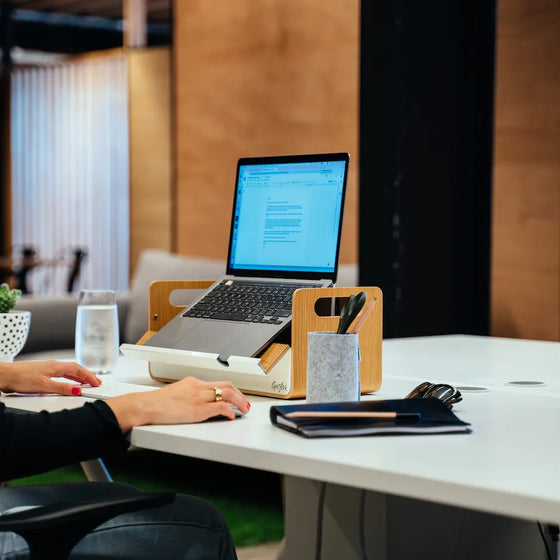
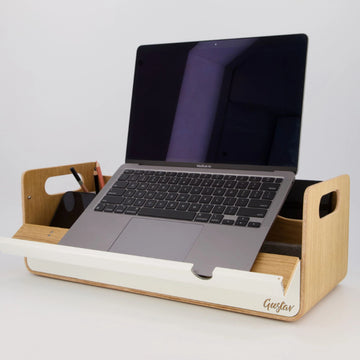
Portable laptop stands solve this neatly because they allow users to bring consistency with them. Pair that with a compact keyboard and mouse, and the employee can recreate a more ergonomic position almost anywhere. For employers and workplace planners, this is often a better investment than trying to make every desk infinitely custom through fixed equipment alone.
There is a trade-off, of course. Portable ergonomic tools depend on users carrying and maintaining them. Fixed monitor arms offer more built-in consistency but come with higher cost, more visual complexity and less flexibility across desk types. In most hybrid offices, the right answer is a mix of both.
Keep the surface clear without making it feel bare
A clean desk policy should not create a sterile one. The best shared desks feel intentional, not stripped back. They support concentration because there is less visual noise, yet they still offer the practical cues people need to get started quickly.
This is where material choices and accessory design matter more than they seem to. A desk mat can define the working zone. A cable solution can stop the usual tangle beneath the monitor. An organiser can keep pens, chargers and adapters in one place instead of drifting across the tabletop. Small details create visual calm, and visual calm improves perceived quality.
For many organisations, clutter is not just an aesthetic issue. It affects cleaning, resets between users and even whether people believe the desk is available. A workstation covered in miscellaneous items never feels truly shared. The cleaner and more legible the setup, the easier it is for teams to trust the system.
The mobile kit is where desk sharing becomes practical
The most effective desk-sharing offices usually give people a portable layer to the setup. This might be a desk organiser, a slim tech pouch or a work bag with a dedicated place for daily tools. The principle is simple: if the user can carry their workstation logic with them, the shared desk becomes easier to use and easier to leave.
This is especially valuable in offices with varied settings, such as focus desks, collaboration tables and project zones. Employees should not have to repack from scratch each time they change work mode. They should be able to move their essentials in one motion and set up again without thinking.
For design-led workplaces, the portable kit also helps maintain a more refined office aesthetic. Storage moves with the person, which reduces random personal overflow on desks and shared shelves. Gustav’s approach to mobile workspace tools speaks directly to this need: portable, well-crafted accessories that make desk sharing feel considered rather than temporary.
Plan for office standards, not individual heroics
One common mistake is assuming employees will simply figure out the best way to use a shared desk. Some will. Many will not. A reliable setup needs a clear operating standard.
That standard should cover what belongs on the desk, what the user brings, how cables are managed, how desks are reset and what ergonomic support is expected. It should also be visible in the physical design itself. If the workstation requires a training document to make sense, it is too complicated.
For workplace leaders, this is where product specification and policy need to meet. Architects and designers may define the desk environment, but facilities, HR and operations shape the everyday behaviours around it. The best results come when those groups agree on a setup logic early, instead of trying to correct habits after rollout.
Choosing the right setup for different desk-sharing models
Not every shared office needs the same solution. A high-turnover touchdown area near reception needs speed and simplicity. A project floor used by teams for several hours at a time may need stronger ergonomic support and more access to peripherals. A premium client-facing studio may prioritise visual order and material quality just as much as function.
That is why this guide to desk sharing setup should not be read as a single formula. The right answer depends on dwell time, task type, available storage and how often users move. If people stay at one desk most of the day, fixed equipment can do more of the work. If they move often, portability matters more.
There is also a sustainability angle. Over-equipping every workstation can lead to underused hardware and unnecessary replacement cycles. Smarter shared setups often use fewer, better elements - durable core infrastructure paired with personal accessories designed to travel and last.
What to review before you scale
Before expanding desk sharing across a floor or organisation, review the lived experience, not just the utilisation data. Are people arriving and settling in quickly? Do desks remain clear at the end of the day? Are there common workarounds, such as employees carrying extra stands, borrowing chargers or reserving the same spots repeatedly?
These behaviours reveal where the setup is either doing its job or asking too much of the user. Small adjustments can make a measurable difference. Better cable access, a more stable laptop stand, clearer storage logic or a more refined organiser system often solves more than a major redesign.
A well-resolved desk-sharing setup does not call attention to itself. It simply allows people to work with less friction, better posture and a stronger sense of order. In a flexible office, that is not a minor operational win. It is part of what makes the workplace worth coming in for.
The best shared desks do not try to feel personal. They feel ready.