How to Create Ergonomic Hot Desks

A hot desk that looks tidy at 9am can feel punishing by 11. A screen sits too low, the chair is never quite right, and by mid-afternoon the user is working around the desk instead of with it. That is usually where conversations about how to create ergonomic hot desks begin - not with furniture catalogues, but with the daily friction people feel when a shared workspace is not designed for fast, comfortable setup.
In flexible offices, ergonomics cannot depend on one person adjusting one desk once and leaving it there. The setup has to work for different bodies, different tasks and different arrival times. It also needs to look calm, support clean desk policies and avoid turning every shared table into a storage zone. The best hot desks do not ask users to compromise between mobility and comfort. They make both possible.
What ergonomic hot desks need to do
A traditional assigned workstation can be tuned in detail to one person. Hot desks cannot. That changes the design brief.
An ergonomic hot desk must be intuitive enough for quick adjustment, consistent enough to reduce guesswork and flexible enough to support laptop work, focused computer tasks and short collaborative sessions. If users need ten minutes to rebuild the desk every morning, the system is already too complex. If they cannot create a comfortable posture with the tools provided, the desk is not truly ergonomic, however refined it looks.
This is why good desk-sharing environments rely on a complete setup rather than a single product. Height-adjustable seating matters. So does screen positioning, cable control, storage for essential tools and a layout that leaves enough clear surface for writing and devices. Ergonomics in this context is not one feature. It is the combined effect of many small decisions.
Start with the posture problems hot desks usually create
Most hot desk discomfort comes from the same predictable issues. People work directly from laptops, which drops the screen too low and pulls the neck forward. They perch on a chair set for the previous user. Their keyboard and mouse end up too high, too close or off-centre. Bags, chargers and notebooks spread across the desk because there is nowhere else for them to go.
When that happens, even a well-designed office can feel improvised. The answer is not to over-engineer every station. It is to remove the recurring points of strain.
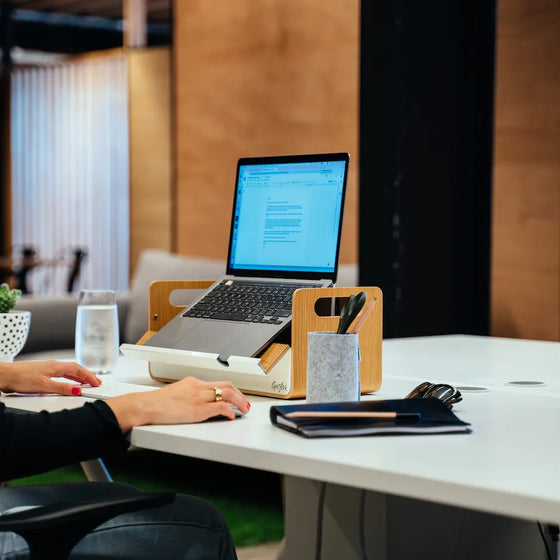
The first priority is screen height. If users regularly work from laptops for more than short periods, a portable laptop stand changes the posture immediately. Raising the screen encourages a more natural head position, but only if it is paired with an external keyboard and mouse. Without those, the user simply trades one awkward angle for another.
The second priority is reach. Hot desks should allow the main tools of work to sit directly in front of the user, with less-used items kept out of the immediate zone. This sounds basic, but it is often undermined by clutter or fixed desk accessories that suit nobody particularly well.
The third priority is adjustability. Chairs, screens and desk accessories should be simple to move and reset. In shared environments, elegant design matters, but usability matters more. If adjustment controls are hidden, confusing or too slow, people will skip them.
How to create ergonomic hot desks without visual clutter
The challenge is clear: shared desks need more ergonomic support than many offices provide, yet they also need to look cleaner and feel lighter than assigned workstations. That tension can be solved, but only with a more deliberate setup.
Begin with the desk itself. Keep the surface open and neutral. Avoid permanent personal storage and avoid filling the desktop with accessories that only make sense for one work style. The desk should feel ready, not occupied.
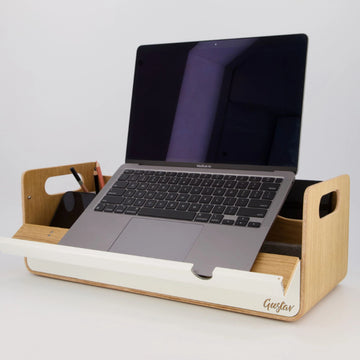
Then build the ergonomic layer through portable elements. A compact laptop stand, external keyboard, mouse, and a desk organiser or work mat can travel with the user or be issued as part of a desk-sharing kit. This approach is particularly effective in hybrid offices because it gives people consistency across locations. The same tools can support a calm setup at home, in the office or between meeting spaces.
Portable organisation does more than improve tidiness. It shortens setup time. When essential items are grouped in one system rather than loose in a bag, users can create a working posture in seconds. That is where product design has a direct workplace impact. The right accessories reduce friction, preserve the visual quality of the office and support better physical alignment.
The best hot desk layout is simple and repeatable
Consistency matters more than novelty. If every neighbourhood, floor or touchdown space is arranged differently, users waste time making sense of the desk before they can use it properly.
A repeatable layout helps people build a routine. The chair adjustment points should be obvious. Power access should be easy to reach without crawling under the desk. Monitors, where provided, should sit at a useful default height with enough movement to suit different users. Shared peripherals should be placed in the same location every time.
This is particularly relevant for larger organisations where hot desking supports activity-based working. In those environments, the desk is one part of a wider workplace system. If ergonomic setup varies widely between zones, the employee experience becomes uneven. A portable desk organiser or workstation kit can help standardise that experience without making every desk look identical.
Support different task types, not just one posture
Not every hot desk session lasts all day. Some users need a base for ninety minutes between meetings. Others need a focused workstation for deep work. That is why how to create ergonomic hot desks depends partly on intended use.
For short stays, the priority is instant setup. Users should be able to open a bag, place a stand, connect a keyboard and start working without hunting for cable ports or clearing someone else’s leftover equipment.
For longer sessions, the setup needs stronger ergonomic support. That may mean a proper monitor arm, more adjustable seating and enough desk depth to maintain comfortable viewing distance. It may also mean nearby lockers or shared storage so the desk itself stays uncluttered.
There is always a trade-off. A highly specified desk can improve comfort, but if it feels complicated or visually heavy, adoption may suffer. A very minimal desk looks elegant, but if users cannot work well for more than an hour, it will not perform. The right answer depends on how the office is actually used, not how it appears in plan view.
Why accessories matter in ergonomic desk sharing
In many offices, furniture gets most of the attention and accessories are treated as optional. In practice, accessories often determine whether the workstation works.
A laptop stand can restore screen height. A desk mat can define the working zone and reduce visual noise. A tech pouch or portable organiser can keep cables, input devices and daily essentials together. These are small components, but they solve the exact problems shared desks tend to create - inconsistency, clutter and poor setup speed.
For workplace strategists and designers, this is useful because it offers a scalable way to improve ergonomics without rebuilding the entire office. For end users, it creates a familiar ritual. Arrive, unpack, position, connect. A desk-sharing environment becomes more comfortable when setup is intentional rather than improvised.
This is one reason design-led workspace systems are increasingly relevant in hybrid environments across Europe. They align with clean desk standards, support mobility and make ergonomic behaviour easier to maintain.
Make user guidance part of the design
Even excellent products fail when people do not know how to use them. Shared desks should not rely on formal training sessions, but they do benefit from light-touch guidance.
A clear visual prompt at the desk can remind users to raise the screen, connect an external keyboard and adjust the chair before starting work. The language should be concise and practical. Too much instruction feels bureaucratic. Too little leaves ergonomics to chance.
It also helps to think beyond compliance. People are more likely to adjust their setup when the tools feel well made, easy to handle and suited to the wider environment. That is where premium design earns its place. Products that are portable, durable and visually resolved are more likely to be used consistently.
Create ergonomic hot desks that people want to use
The best shared desks do not feel temporary. They feel ready.
That readiness comes from a few disciplined choices: adjustable foundations, portable ergonomic tools, clear organisation and a layout that supports immediate use. It is less about adding more and more about selecting the right pieces so the desk can adapt quickly without losing its clarity.
For brands such as Gustav, that balance between mobility, ergonomics and refined design is central to the modern workspace. It reflects how people work now - across shared offices, home setups and changing routines, with less tolerance for clutter and less time to assemble a workstation from scratch.
If a hot desk asks users to lower their standards every time they sit down, the system is not finished. If it lets them work comfortably, calmly and without delay, it becomes something better than shared space. It becomes a workplace people can trust.