Política de Compartir Escritorios Que Realmente Funciona

Un escritorio se ve ordenado a las 9:00. A las 11:30, una persona ha tomado prestado un cargador, otra no encuentra un teclado y alguien está ajustando una silla que nunca se volvió a colocar después de la reunión tardía de ayer. Ese suele ser el momento en que una política de uso compartido de escritorios deja de ser un documento y comienza a convertirse en un problema operativo diario.
En oficinas híbridas, el uso compartido de escritorios no se trata simplemente de acomodar a más personas en menos espacio. Se trata de crear un lugar de trabajo que se sienta coherente, tranquilo y listo para usar. Cuando la política es vaga, los empleados improvisan. Cuando es demasiado rígida, las personas la evaden. El mejor enfoque está en el medio: lo suficientemente clara para apoyar el comportamiento, lo suficientemente flexible para adaptarse a los patrones reales de trabajo.
Lo que una política de uso compartido de escritorios debe hacer
Una política sólida de uso compartido de escritorios debe eliminar fricciones, no añadirlas. Establece expectativas sobre cómo se reservan, usan, reinician y apoyan los escritorios. Más importante aún, protege la experiencia del empleado en oficinas donde nadie puede depender de una configuración fija.
Eso significa que la política debe cubrir detalles prácticos que a menudo se tratan como menores. ¿Dónde se guardan los objetos personales durante el día? ¿Qué debe limpiarse al final del uso? ¿Qué equipo debe estar en cada estación de trabajo y qué artículos deben traer los usuarios? ¿Cómo deben dejarse los escritorios para la siguiente persona? Si estos puntos no se definen, el espacio de trabajo se vuelve rápidamente inconsistente.
También tiene un papel cultural. El uso compartido de escritorios pide a las personas que renuncien a un nivel de territorio personal. Algunos lo aceptarán con gusto. Otros sentirán que pierden comodidad, rutina o estatus. Una buena política reconoce esa tensión y la responde con mejor diseño, mejores herramientas y mayor claridad, no solo con reglas.
Por qué las políticas de uso compartido de escritorios suelen fallar
La mayoría de los fracasos provienen de una descoordinación entre la política y el entorno. Una empresa puede anunciar el uso compartido de escritorios mientras deja a los equipos con muy pocos casilleros, herramientas de reserva poco confiables o estaciones de trabajo que varían mucho en calidad. En ese escenario, la frustración es predecible.
Otro problema común es sobreestimar lo que los empleados tolerarán en nombre de la flexibilidad. Las personas pueden adaptarse a un modelo de escritorio compartido, pero aún necesitan un sentido de orden. Si cada mañana comienza con la búsqueda de cables, la limpieza de superficies, el ajuste de pantallas y el traslado de objetos sueltos por la oficina, el sistema se siente descuidado en lugar de moderno.
La política también puede fallar si está escrita solo para los equipos de instalaciones. En la práctica, el uso compartido de escritorios involucra a Recursos Humanos, TI, diseño de oficinas y cultura de equipo al mismo tiempo. Si falta una parte, toda la experiencia se resiente. Las expectativas de escritorio limpio sin almacenamiento no funcionan. Las reglas de reserva sin suficientes escritorios adecuados no funcionan. Las estaciones de trabajo compartidas sin consistencia ergonómica no funcionan.
Cómo construir una política de uso compartido de escritorios basada en el uso real
Las políticas más efectivas comienzan con patrones reales de trabajo. Antes de establecer reglas, observa cómo usan las personas la oficina. ¿Qué equipos vienen los mismos días? ¿Quién necesita pantallas duales, zonas de silencio o espacios de colaboración? ¿Quién se mueve entre pisos o ubicaciones durante la semana? El uso compartido de escritorios funciona mejor cuando refleja estos patrones en lugar de forzar a todos a un solo modelo.
Una vez claros esos patrones, define categorías de escritorios. No todos los escritorios deben servir para el mismo propósito. Algunos pueden ser para trabajo concentrado, otros para uso temporal, trabajo en proyectos o estancias cortas entre reuniones. Esto importa porque la política debe alinear el comportamiento con el entorno. Una estación de trabajo destinada a cuatro horas de trabajo concentrado no debe tratarse como un lugar casual cerca de una cafetería.
Luego establece un estándar para cada escritorio compartido. Aquí es donde se nota la calidad. Los empleados deben saber exactamente qué esperar cada vez que se sientan: una superficie limpia, acceso confiable a energía, periféricos estándar cuando corresponda, y una silla y pantalla que se puedan ajustar rápidamente. La consistencia es lo que hace que un entorno compartido se sienta profesional.
Lo no negociable a definir
Cada política de uso compartido de escritorios debe establecer claramente las reglas de reserva, expectativas de registro, estándares de reinicio al final del día y arreglos de almacenamiento. También debe explicar qué se espera que los empleados lleven consigo. En muchas oficinas, los esenciales portátiles para el trabajo marcan la mayor diferencia en la adopción porque reducen el tiempo de configuración y mantienen las herramientas personales organizadas.
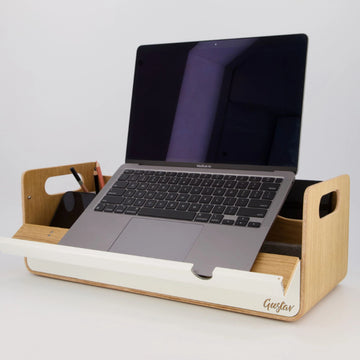
Esto puede incluir un soporte para laptop, dispositivos de entrada, cuaderno, auriculares y pequeños accesorios guardados juntos en un sistema portátil. La idea no es pedir a las personas que lleven más cosas, sino ayudarlas a llevar solo lo que importa, de manera que el escritorio se mantenga despejado y la configuración sea rápida.
La ergonomía no debe ser opcional
Aquí es donde muchas políticas se quedan cortas. Un escritorio compartido no puede significar una postura comprometida. Si se espera que los empleados trabajen en varios escritorios, el entorno debe permitir un ajuste ergonómico rápido. Las sillas, pantallas y accesorios deben ser fáciles de adaptar sin ayuda especializada.
Para los planificadores de oficinas y gerentes de espacios de trabajo, esto no se trata de añadir complejidad, sino de eliminar variaciones. Estandarizar elementos clave en los escritorios facilita el uso de cada estación de trabajo. Para los empleados, los accesorios ergonómicos portátiles pueden cerrar la brecha entre la infraestructura fija de la oficina y la comodidad personal. Esto es importante en entornos de uso compartido donde la consistencia se construye en parte por el espacio y en parte por lo que el usuario lleva consigo.
El papel del almacenamiento, la organización y la rapidez de configuración
Si hay una lección repetida en oficinas flexibles, es esta: el desorden se traslada. Sin una política adecuada de uso compartido de escritorios, las bolsas terminan en las sillas, los cargadores se enredan en las superficies y los objetos personales se esparcen en el espacio compartido. El resultado es ruido visual y una rotación más lenta entre usuarios.
Por eso el almacenamiento debe considerarse parte de la política, no un detalle secundario. Los empleados necesitan un lugar adecuado para abrigos, documentos y efectos personales. También necesitan una forma sencilla de trasladar sus herramientas de trabajo entre casa, oficina y escritorio compartido sin tener que reempacar todo desde cero cada día.
Los organizadores portátiles y los kits compactos para espacios de trabajo son útiles porque convierten la configuración en una rutina repetible. En lugar de reconstruir una estación de trabajo con objetos sueltos, el usuario llega con un conjunto definido de esenciales, los coloca en el escritorio y comienza a trabajar. Para los empleadores, eso apoya escritorios más limpios y un uso más predecible del espacio compartido. Para los empleados, reduce la fricción y preserva una sensación de control.
Cómo redactar una política de uso compartido de escritorios que los empleados sigan
Una política que queda en un manual es una cosa. Una política que la gente realmente sigue es otra. La diferencia suele ser la claridad.
Mantén el lenguaje directo. Explica qué deben hacer los empleados antes, durante y después de usar un escritorio. Evita la jerga inflada del lugar de trabajo. Si un escritorio debe limpiarse al final del día, dilo claramente. Si los escritorios deben reservarse con anticipación para ciertas zonas, haz que la regla sea fácil de encontrar y entender.
También ayuda explicar por qué existe la política. No en términos abstractos, sino operativos. Los empleados son más propensos a seguir las reglas de reinicio cuando entienden que el objetivo es un mejor comienzo para el siguiente usuario. Son más propensos a respetar las ventanas de reserva cuando ven cómo mejora la disponibilidad y la equidad.
Los gerentes también deben dar ejemplo con la política. Si el personal senior ignora las reglas de reserva, deja pertenencias o personaliza escritorios compartidos, el estándar se pierde rápidamente. El uso compartido de escritorios solo se siente equitativo cuando las reglas se aplican en toda la oficina.
Qué revisar después del lanzamiento
Una política de uso compartido de escritorios no debe considerarse terminada el día que se implementa. Los primeros meses mostrarán dónde las suposiciones fueron erróneas. Puede que descubras que ciertos equipos necesitan más vecindarios reservables, que las configuraciones de monitores varían demasiado o que el almacenamiento es insuficiente para el uso real.
Revisa tanto los datos duros como la experiencia vivida. Las cifras de ocupación importan, pero también los comentarios de los empleados sobre el tiempo de configuración, la comodidad y la consistencia. Si los escritorios están técnicamente disponibles pero aún se evitan, suele haber una razón. Puede ser la iluminación, la acústica, la distribución o la falta de equipo. La política debe evolucionar con esos hallazgos.
Para los lugares de trabajo orientados al diseño, esta etapa de revisión es donde la calidad se vuelve visible. Las oficinas compartidas más exitosas no solo funcionan. Se sienten intencionales. Los escritorios se reinician limpios. Las herramientas son fáciles de transportar. Las estaciones de trabajo apoyan la concentración sin parecer temporales o improvisadas.
Una política de uso compartido de escritorios a menudo se presenta como una medida de eficiencia espacial. En la práctica, es un estándar de diseño y comportamiento. Bien hecha, ofrece a las personas un lugar de trabajo flexible sin que se sienta transitorio. Ese es el verdadero punto de referencia: un escritorio compartido que aún se siente listo, profesional y claramente usable en el momento en que alguien se sienta.