Mobile Office Bag Essentials for Hybrid Work

A shared desk at 9am, a project room before lunch, a kitchen table in the afternoon: flexible work asks more of a work bag than simple storage. The right mobile office bag essentials let you arrive with everything you need, set up without spreading clutter, and leave the space as clear as you found it.
That is the real standard for a mobile workspace. It is not about carrying every possible accessory. It is about giving the tools you use every day a considered place, so your desk feels familiar wherever work takes you.
What mobile office bag essentials earn their place
An effective mobile office bag is built around a small number of items with a clear job. Each one should either support comfort, keep work organised, or make transitions between locations easier. If it does none of these, it is probably adding weight rather than value.
A laptop and a proper ergonomic setup
Your laptop is the centre of a mobile setup, but it should not dictate your posture. Working for extended periods with the screen low on a table can lead to a cramped, temporary setup that is neither comfortable nor practical.
A portable laptop stand earns its space because it raises the screen towards a more comfortable viewing height in seconds. Pair it with a compact keyboard and mouse when your work involves longer stretches of writing, analysis or design. For a quick meeting or short task, the laptop alone may be sufficient. For a full working day, the difference is substantial.
The key is to choose equipment that packs flat or nests neatly together. Bulky accessories quickly turn a work bag into something people leave behind, which defeats the purpose of a mobile workstation.
Power that stays contained
A charger is essential. A loose charger, cable and adapter collection is not. Small technology items are easy to misplace in a large compartment and are often the first source of visual noise at a shared desk.
Keep your laptop charger, charging cable, travel adapter, power bank and any essential display connector in a dedicated tech organiser. The benefit is not simply tidiness. When every cable has a fixed place, you can pack up with confidence and start the next day without searching through drawers, coat pockets or the bottom of your bag.
It is worth being selective here. Carry the connectors your usual work settings require, rather than every cable you have accumulated. A meeting room with wireless presentation tools calls for a different kit from a desk with a fixed monitor. Let the spaces you actually use determine what travels with you.
A compact organiser for daily tools
Pens, notebooks, access cards, earbuds and sticky notes can seem minor until they are scattered across a desk. A compact organiser gives these everyday tools a visible home, keeping the work surface calm and helping you see what needs to be packed away.
This matters especially in desk-sharing environments. Clear desk policies work best when employees are given a practical way to manage their belongings, rather than being expected to carry a collection of loose items between lockers, desks and meeting rooms.
A felt organiser can bring softness and colour to a more technical setup, while still keeping essentials close at hand. Look for a format that works both inside the bag and on the desk. That dual purpose reduces the number of separate items to manage.
Documents that remain protected and accessible
Digital work has reduced paper, not eliminated it. Client notes, sketches, printed agendas, signed documents and reference material still need a place in many professional routines. Folding papers around a laptop or placing them in an unstructured main compartment leads to creases, delays and unnecessary searching.
Choose a bag with a dedicated document section that keeps A4 papers flat and separate from chargers, bottles and other heavier items. If you regularly carry a notebook, allow it to live alongside your documents rather than in an external pocket where it can be easily forgotten.
There is a trade-off. A highly structured bag offers better protection and faster access, while a softer, open design can adapt to changing loads. For most hybrid workers, a combination works best: one protected section for a laptop and papers, plus flexible space for the items that vary from day to day.
Personal items with clear boundaries
A mobile office bag also needs to accommodate the human part of the working day. A water bottle, glasses, medication, hand cream, a small snack or a spare layer may be necessary, but they should not compete with your work equipment.
Separate pockets or upright compartments make a practical difference. They prevent a bottle from pressing against a laptop and stop smaller personal items from disappearing into the same space as cables. More importantly, they help the bag feel composed rather than overfilled.
Be realistic about capacity. If your commute includes a gym visit or an overnight stay, a dedicated work bag may need to be paired with another carry solution. Trying to make one bag hold a full workstation, clothing and everything else often compromises access to all three.
Build a bag around your working rhythm
The best bag contents depend on how you move through the week. A consultant travelling between client sites may prioritise document protection, adaptable charging and a presentation adapter. A designer moving between studio desks may need a laptop stand, mouse and sketchbook ready to hand. A workplace team member circulating through a large office may value a bag that opens into an instant desk organiser.
Start with the items you reach for every day. Then identify the friction points: the cable that goes missing, the notebook that bends, the keyboard that is too inconvenient to carry, or the desk setup that leaves you working at the wrong height. Your bag should solve these repeatable problems, not create a more elaborate packing routine.
A useful approach is to establish two layers. The first is your permanent core: laptop, charger, tech organiser, notebook, access card and ergonomic tools. The second is a variable layer for project materials, meeting equipment or personal needs. This keeps the essentials ready at all times while allowing the bag to adapt to a particular day.
Choose organisation that speeds up setup
A well-designed mobile office bag should do more than transport objects. It should reduce the steps between arriving and working. When you can place the bag beside you, lift out a complete desk organiser and raise your laptop, the workstation takes shape almost immediately.
That speed has a quieter benefit: it makes shared spaces feel more intentional. Instead of claiming a desk with a spread of loose belongings, you create a contained working zone that is easy to maintain and easy to clear. It supports both concentration for the individual and consideration for the next person using the space.
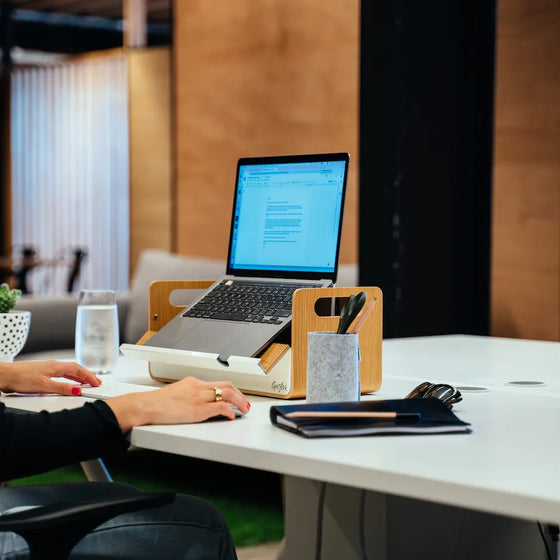
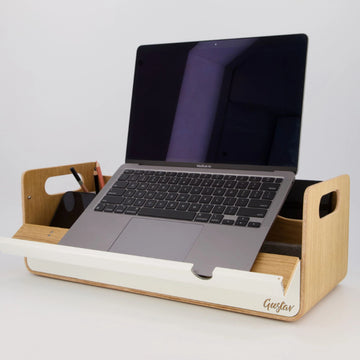
Gustav DeskMate is designed around this principle, carrying daily work essentials while unfolding into an organised mobile workstation. The format is particularly useful where people move between lockers, touchdown desks and meeting rooms, because the bag itself becomes part of the setup rather than something placed under the table and forgotten.
Material and construction matter on the move
Mobility puts accessories under regular pressure. Zips are opened repeatedly, handles carry weight, and internal compartments are asked to protect valuable equipment through commutes and office transitions. Premium construction is not an aesthetic extra. It is what allows an organiser or bag to remain dependable after daily use.
Consider the feel of the materials as well as their durability. A refined textile or recycled PET felt organiser can soften the visual character of a workstation, while sustainably grown wood brings structure and stability to a portable laptop stand. These materials also help a setup feel appropriate in a home office, an architectural studio or a corporate workplace without looking temporary.
Avoid choosing solely by the number of pockets. Too many narrow compartments can be as frustrating as too few, particularly when accessories change. Prioritise useful divisions, easy access and enough structure to protect the essentials you carry most.
Keep the reset as considered as the setup
The final test of a mobile office bag happens at the end of the day. Can you pack it in under a minute? Can you see whether the charger, access card and notebook are all there? Can the desk be returned to a clean, neutral state without a last sweep for cables?
Create a simple return position for each core item, and resist treating the bag as a catch-all. A brief reset protects your equipment, reduces morning friction and makes every new desk easier to begin from.
A mobile workspace should give you continuity, not more to carry. Choose essentials that support your posture, contain your tools and bring order to the places where work happens. Then your office can travel with you, ready to take its place on any table.