7 Sustainable Office Design Trends

A good office no longer starts with square metres. It starts with how people actually work - between home, shared desks, meeting rooms and quiet corners. That shift is reshaping sustainable office design trends, moving the conversation away from surface-level eco signals and towards spaces that waste less, adapt faster and feel better to use.
For workplace strategists, architects and facilities teams, that means sustainability is no longer a separate brief. It sits inside every decision about layout, material choice, storage, ergonomics and lifecycle planning. The most relevant offices now do two things at once: they reduce environmental impact and make flexible work more usable.
Sustainable office design trends are getting more practical
The most noticeable change is a welcome one. Sustainable design has become less performative and more operational. Rather than relying on a few visible gestures, organisations are looking closely at what gets specified, how long it lasts, how easily it can be repaired and whether it still works when teams change size or work patterns shift.
That practical lens matters because office fit-outs can become wasteful very quickly. A space designed around fixed ownership, oversized storage and single-purpose furniture rarely ages well. When teams move to hybrid schedules or desk-sharing models, those same choices often need replacing long before the end of their technical life.
The smarter approach is to design for change from the outset. That usually means fewer built-in assumptions, more adaptable components and a clearer focus on what people need every day to work comfortably and efficiently.
1. Flexible layouts are replacing static planning
One of the strongest sustainable office design trends is the move away from rigid floorplans. Offices are being designed as systems rather than fixed destinations, with spaces that can support focus work, collaboration, short stays and touchdown use without major reconfiguration.
This is not just a workplace strategy decision. It has a direct sustainability benefit. A flexible layout tends to stay relevant for longer, which reduces the need for frequent refits. If teams can shift between work modes within the same footprint, organisations can avoid the cycle of rebuilding space every time headcount or attendance patterns change.
There is a trade-off, though. Flexibility can become vague if it is not supported by clear tools and behaviours. Multi-use spaces only work when users can set up quickly, store essentials neatly and move without friction. Portable workspace elements, personal organisers and compact ergonomic supports play a bigger role here than many office plans acknowledge.
2. Materials are judged by lifespan, not just origin
Materials still matter, but the conversation is maturing. Specifiers are asking better questions: Will this surface age well? Can this item be maintained? Does it need replacing after a year of heavy use? Is the finish timeless enough to survive a broader office refresh?
That changes the design language of sustainable offices. Instead of chasing novelty, many projects are leaning into durable, honest materials and quieter palettes that do not date quickly. Wood from responsibly managed sources, recycled-content components and repairable product construction all support this direction when used with care and credibility.
The key point is that sustainable value is rarely about one material in isolation. A recycled item that wears out fast may be less responsible than a well-made product used for years. Premium craftsmanship, especially in high-touch daily tools, can be a sustainability decision as much as a design one.
3. Desk-sharing is driving demand for portable organisation
As desk ownership declines, storage has become a design issue rather than an afterthought. Employees still need access to tools, cables, notebooks and devices, but they increasingly carry these between locations. That has made portability central to modern office planning.
This trend is easy to underestimate. A desk-sharing office can look efficient on paper while feeling chaotic in practice if people arrive each morning to an empty surface and no easy way to create a functional setup. The result is visual clutter, awkward ergonomics and disposable stopgap solutions.
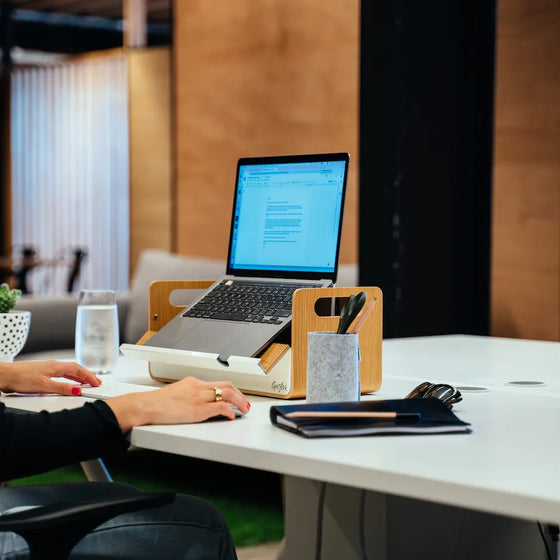
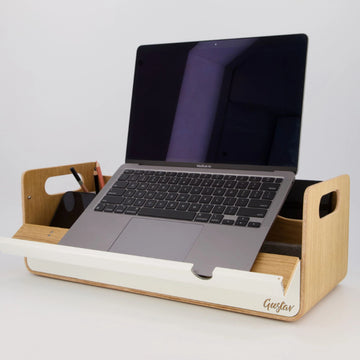
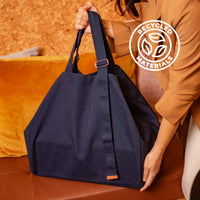
Sustainable workplaces are responding with mobile, repeatable systems that help people establish a clean workstation in seconds. Compact organisers, laptop stands, desk mats and carry solutions reduce dependence on excess drawers, duplicate equipment and ad hoc accessories. They also support a cleaner desk policy without making the user experience feel temporary or impersonal.
For brands such as Gustav, this is where sustainability, ergonomics and mobility naturally meet. Products that travel well, last well and help users work consistently across different settings solve more than one problem at once.
4. Smaller footprints need better ergonomic thinking
There is a misconception that sustainable office design always means using less furniture and less space. Sometimes it does. But smaller footprints only perform well when ergonomics are handled properly.
Hot desks, touchdown areas and shared project tables can all reduce underused space. Yet if those settings force poor posture, screen strain or constant compromise, they create another form of waste: a workplace that people avoid or use badly. That is why one of the more meaningful sustainable office design trends is the integration of lightweight ergonomic support into flexible settings.
Portable laptop risers, adaptable seating choices and accessories that improve posture without fixing the layout in place are becoming more relevant. They allow a shared environment to remain compact while still offering a professional standard of comfort. It depends on the workforce, of course. A creative studio with highly mobile teams may need different support than an administrative office with longer desk-based sessions. But the principle is consistent - efficient space should not come at the cost of usable work.
5. Clutter reduction is being treated as a design outcome
The visual quality of a workplace is often discussed as brand expression, but it also has environmental implications. Cluttered offices tend to accumulate duplicate tools, poorly managed storage and low-value accessories that are hard to maintain and easy to replace.
That is why calmer, more intentional workspaces are gaining ground. Designers are specifying fewer objects, better integrated storage and more disciplined desk surfaces. The aim is not minimalism for its own sake. It is to make the workplace easier to maintain, easier to reset and less dependent on surplus items.
This matters particularly in hybrid environments. When employees rotate through different locations, visual order supports fairness and consistency. A workstation should feel ready to use, not inherited from the previous person. Sustainable design, in this sense, is closely tied to clarity.
6. Residential comfort is being balanced with commercial durability
Soft textures, warmer finishes and home-inspired details are still shaping office interiors, especially as employers try to make shared spaces more welcoming. But the trend is becoming more selective.
The most successful projects are not simply making offices look domestic. They are taking the emotional strengths of residential design - comfort, warmth, material softness - and pairing them with the durability and maintenance standards required in commercial use. That balance is essential for sustainability.
A finish that looks beautiful on day one but performs poorly in a high-traffic environment is not a strong specification. Equally, purely technical environments can feel sterile and discourage use. The better route is a layered one: tactile materials where they add value, harder-wearing surfaces where they need to perform, and accessories that elevate the experience without creating excess.
7. Procurement is shifting towards long-term systems
Another important shift sits behind the scenes. More organisations are moving away from one-off product decisions and towards joined-up workplace systems. They are asking how accessories, furniture, storage and user behaviour fit together over time.
This is particularly relevant in large hybrid rollouts across Europe, where consistency matters across multiple sites and user groups. A sustainable procurement approach increasingly considers not only whether an item is responsibly made, but also whether it supports the wider workplace model. Can it move between locations? Does it still work in a home office? Can it support desk sharing without extra fit-out? Will it remain useful if teams scale up or down?
This systems view tends to produce better outcomes than chasing isolated products with strong marketing claims. It aligns sustainability with practicality, which is exactly where most workplace teams need it to be.
What these sustainable office design trends mean in practice
The common thread across these trends is simple: sustainability is becoming more tangible. It is showing up in offices that adapt rather than overbuild, in products that move with users rather than tying them to one desk, and in material choices judged by longevity rather than appearance alone.
For architects and designers, that means specifying with more restraint and more foresight. For facilities and workplace leaders, it means investing in tools that help flexible environments stay organised and comfortable over time. For end users, it means a better everyday experience - less friction, less clutter and more consistency wherever work happens.
The most convincing sustainable office is not the one making the loudest statement. It is the one that keeps performing, supports changing work patterns and still feels considered years later. That is where good design earns its place.